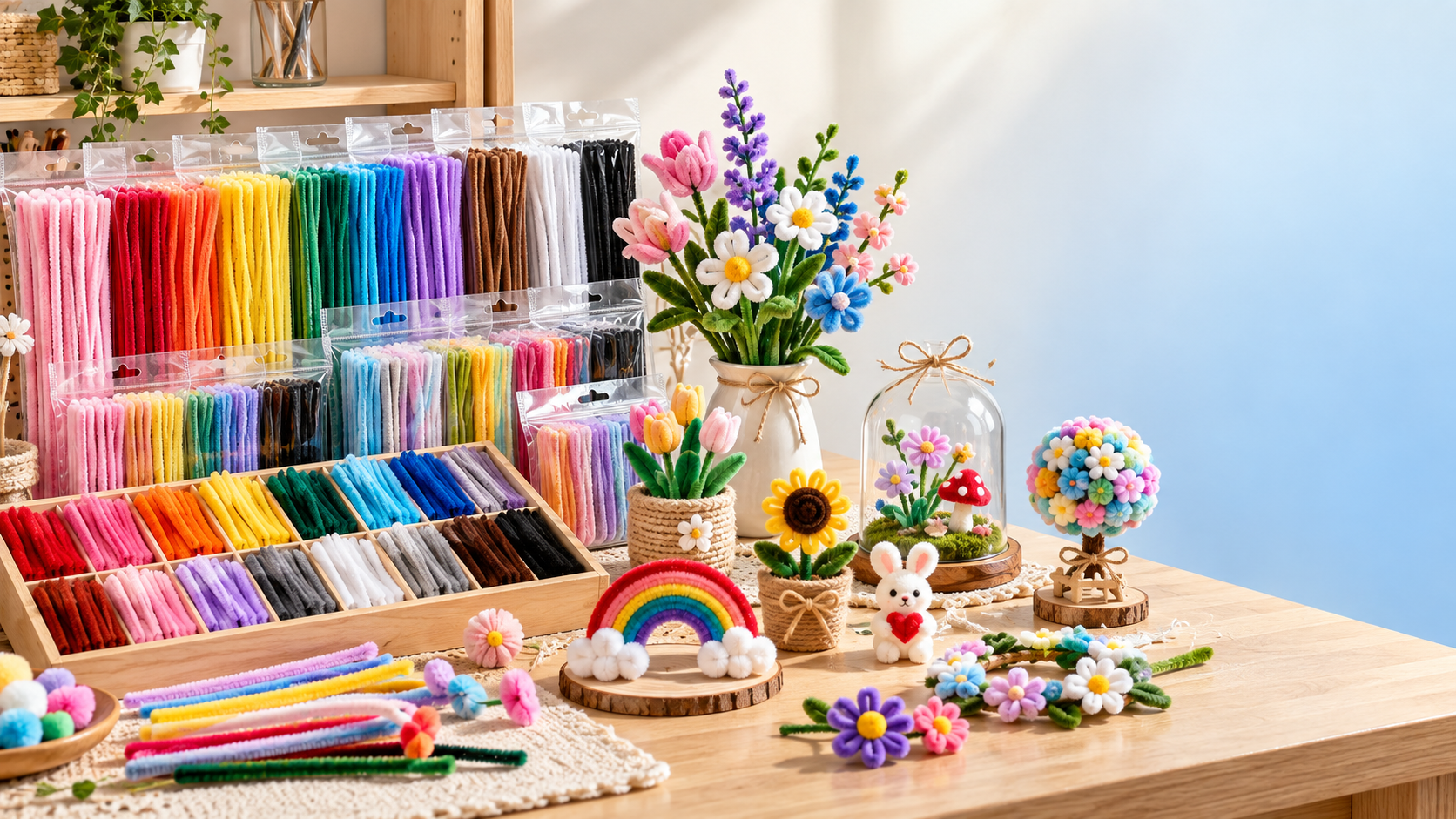
A bulk pipe cleaner diy kit can look economical when the outer carton promises a large piece count, yet the lowest apparent price often creates problems later: insufficient usable stems, weak wire cores, inconsistent colors, or retail packs that take too long to assemble. For buyers planning craft assortments, seasonal décor activities, classroom-style projects, or value-added gift kits, the right comparison starts with the cost of usable material rather than the number printed on the label.
The practical decision is to compare pack counts and unit costs against the intended project. A kit for simple flower shapes may tolerate shorter stems and a limited palette. A kit meant to support miniature home décor, character crafts, or retail-ready activity sets needs more reliable wire, denser chenille coverage, and color assortments that can be repeated across multiple production batches. Before requesting a quotation, define what one finished project consumes. That turns a vague “bulk” purchase into a measurable sourcing requirement.
Pack count is only the first number
Suppliers may describe packs by pieces, bundles, bags, or total weight. These terms are not interchangeable. A pack containing more pieces is not automatically better value if the stems are shorter, thinner, loosely twisted, or unsuitable for the intended craft. Procurement teams should ask for the actual stem length, diameter, wire construction, and quantity per color before comparing offers.
A useful starting point is to calculate the landed cost per usable stem. “Usable” matters because damaged, unevenly cut, poorly flocked, or tangled stems may not be suitable for a finished kit. Then calculate the material requirement per project. For example, a simple decorative item may need only a few stems, while a fuller animal, wreath, bouquet, or letter-form project can consume substantially more. The relevant cost is not the bag price; it is the material cost needed to make one complete, presentable project.
Calculate cost by project, not just by stem
Unit cost per stem is the base calculation, but it does not settle the buying decision. A better internal worksheet lists every component needed for the planned kit: pipe cleaners, eyes or embellishments where applicable, instruction sheets, bags, header cards, labels, and protective inner packaging. This shows whether a lower-cost material option creates additional sorting or packing work elsewhere.
Color allocation is a frequent source of waste. A 500-piece rainbow assortment may be attractive at first glance, but it is a poor fit when the project pattern repeatedly uses only white, green, red, and brown. The leftover colors remain inventory even though their cost was included in the original purchase. In that situation, a smaller assortment with controlled color ratios may deliver a lower cost per sellable kit.
Ask the supplier to clarify whether mixed colors are packed in equal quantities, approximate proportions, or a fixed formula. “Assorted” without a color breakdown makes project costing unreliable. It can also cause inconsistency between shipments, particularly when a design requires color matching across separate component packs.
Material quality changes the real yield
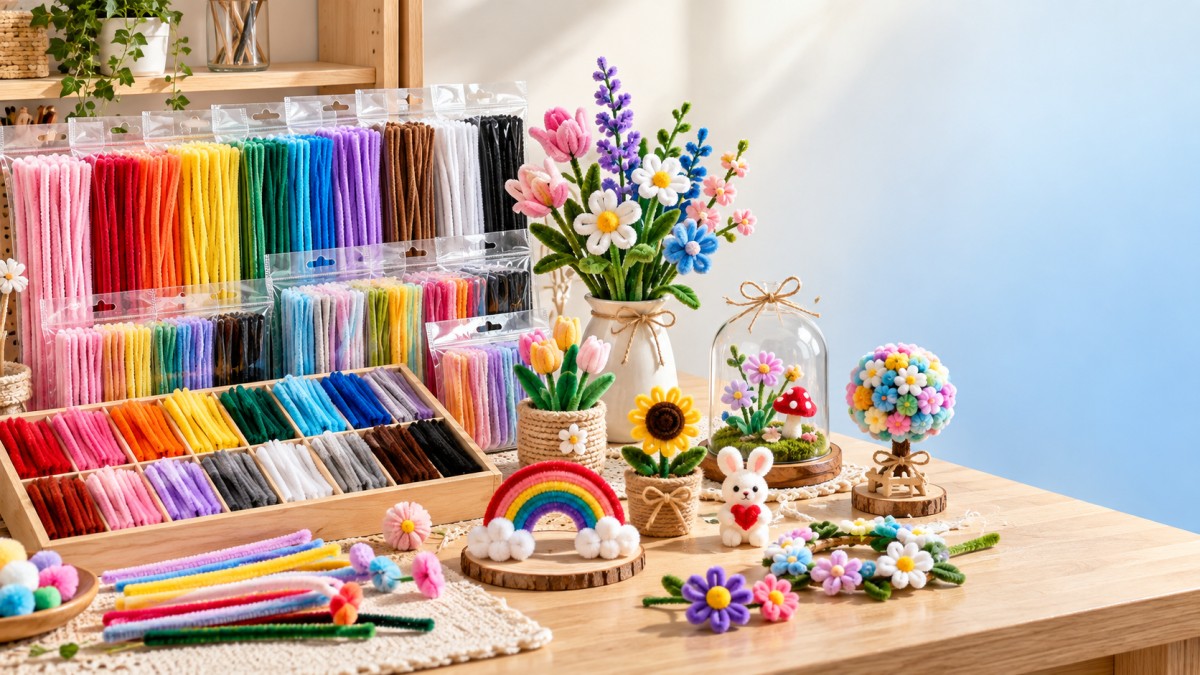
Pipe cleaners are simple components, but small material differences become visible in finished crafts. A stem should bend repeatedly without separating at the twist, hold a curved or coiled shape, and retain enough softness that the finished item looks covered rather than wire-heavy. Poorly secured fibers can shed while users twist, cut, or wrap the stems. In a retail kit, that creates a less tidy experience and can make instructions harder to follow because the shape does not stay in place.
Request representative samples before committing to a large order, especially when the finished project has defined forms such as petals, letters, small figures, or tabletop decorations. Review samples against the actual design rather than testing a stem in isolation. Test whether the ends can be folded safely inward, whether two stems twist together securely, whether colors remain consistent within the pack, and whether the finished object remains balanced after handling.
Length should also be evaluated in relation to cutting loss. A design may technically use one full stem, but a short section may be trimmed away to create neat ends. When repeated across thousands of projects, small offcuts can materially affect consumption. Longer stems can offer more flexibility, but only if their higher price is lower than the cost of added waste or the need to join multiple shorter pieces.
Choose a pack format that fits the selling model
Bulk bags are often appropriate when the buyer operates a downstream packing process or sells craft materials as loose refills. They reduce component packaging and can lower the initial material cost. However, they require staff or a co-packing process to count, sort, and combine the right colors. A bulk bag may therefore be inexpensive to buy but expensive to convert into retail-ready units.
Pre-counted project packs simplify assembly when every kit uses a known combination of colors and quantities. They are especially useful for promotions, workshop packs, children’s activity sets, and craft ranges that need predictable contents. The trade-off is that suppliers must perform more sorting and packaging, so the quoted unit price should be compared with the internal labor it replaces.
Retail-ready kits add further considerations: packaging durability, visibility of colors, instructions, barcode placement where relevant, and whether the pack protects the stems from crushing. Buyers should not assume the outer carton specification answers these questions. Request details for both the consumer pack and the master carton, including units per carton and how the contents are arranged during transit.
When finished décor belongs beside the DIY material range
Some assortments combine make-it-yourself activities with small ready-made gifts or desk decorations. In this case, the pipe cleaner kit should be evaluated as part of a broader product story, not as an isolated commodity. A cheerful finished piece can help a buyer create a coordinated seasonal display, encourage gifting, or offer an alternative for shoppers who want the decorative effect without a craft activity.
For a soft, colorful complementary item, the Positive Crochet Rainbow Plush, "Keep Shining, You're Amazing" Inspirational Emotional Support Gift, Handmade Pastel Rainbow Desk Decor for Friends, Coworkers, Self Care Encouragement can fit workspace, bedroom shelf, and encouragement-gift displays. Its pastel yarn construction, lightweight format, and message card make it visually distinct from a pipe-cleaner project while remaining relevant to small uplifting décor and gift-oriented assortments. It should be treated as a separate finished-goods option, not as a substitute for a material kit.
Questions that expose hidden cost differences
Supplier quotes are easier to compare when every supplier answers the same operational questions. Instead of asking only for the best bulk price, ask what the stated quantity includes and what conditions may change it. Useful points include:
- Is the piece count based on individual stems, bundles, or estimated weight?
- What is the length and diameter tolerance for each color?
- Can the color mix be adjusted to a project bill of materials?
- Are stems packed straight, tied in bundles, or compressed in bags?
- What inspection standard is used for loose fibers, exposed wire, and color variation?
- Can instructions, labels, or other kit components be packed together if needed?
- How are consumer packs protected inside the export carton?
These questions are not administrative extras. They reveal whether a quote supports repeatable supply. A supplier may offer a competitive per-piece rate but be unable to maintain a specified color ratio or pack configuration. That creates rework and delays when the product moves from sample approval to replenishment.
Use a comparison sheet before negotiating volume
Place each offer in one worksheet with columns for quoted price, quantity, usable stem dimensions, color distribution, sample observations, pack type, estimated project yield, packaging work, and freight-related carton efficiency. Avoid ranking suppliers solely by the first price received. A higher-priced option may require fewer stems per project, produce less waste, or arrive in a format that removes internal handling steps.
Volume negotiations are more productive after this analysis. Once the buyer knows the exact project requirement, it becomes possible to request a realistic pack configuration rather than simply asking for more pieces. The supplier can then quote on defined color counts, consistent dimensions, and an agreed packing method. That is usually a stronger basis for cost control than buying the largest available mixed bag and hoping it suits the final assortment.
The best bulk pipe cleaner diy kit is therefore the one with a transparent usable yield, a color mix matched to the intended design, material quality that holds up during making, and packaging that fits the route to market. Pack count remains important, but it becomes meaningful only after those conditions are established.
Leave A Message
If you are interested in our products and want to know more details, please leave a message here, we will reply you as soon as we can.

We specialize in supplying home decor, handicrafts, and daily necessities.


