Suitability depends on construction, not on the “pipe cleaner” label
Chenille stems are suitable for children’s DIY kits when their softness and shapeability are supported by controlled wire construction, age-appropriate dimensions, stable colorants, and documentation that matches the intended market. A stem that looks soft can still create a sharp-point or breakage risk if the internal wire is poorly cut, inadequately covered, or prone to fatigue after repeated bending.
For kit developers, the essential distinction is between a decorative chenille stem and a component designed for children’s use. The latter needs to remain safe not only when removed from the package, but also when twisted, folded, pulled apart, shared in a classroom, and handled with limited dexterity. A children’s chenille stems DIY kit should therefore be assessed as a complete product system: stems, attachments, packaging, instructions, age grading, and foreseeable use all affect compliance.
Why chenille stems work well in craft activities
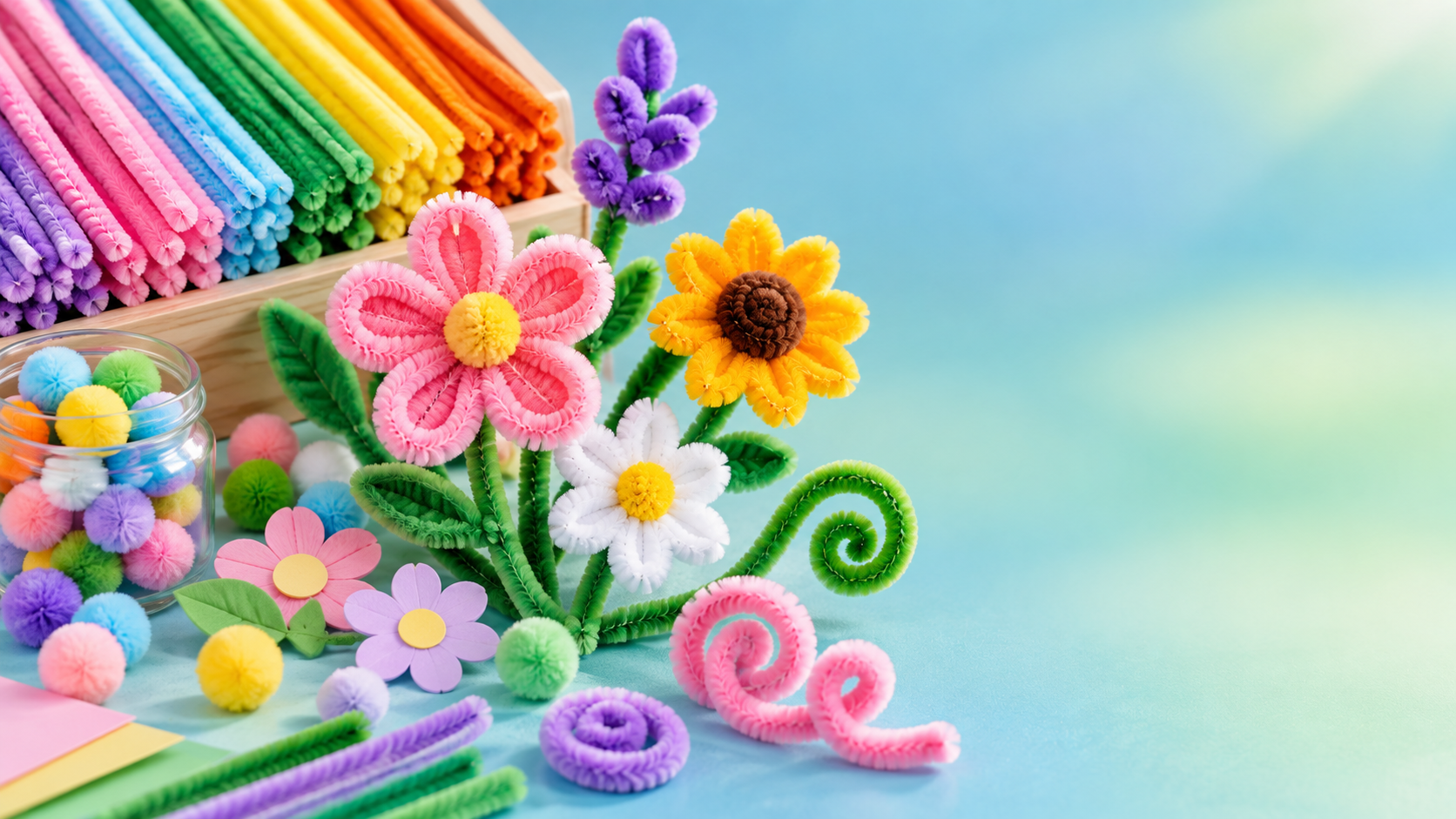
A conventional chenille stem consists of a flexible metal wire core wrapped with short textile fibers, often polyester or a similar synthetic pile. This structure provides a useful combination of properties for simple craft construction. Children can bend stems into loops, spirals, animal shapes, letters, flowers, and decorative frames without needing scissors, heat tools, adhesives, or rigid connectors for every step.
The fiber pile serves more than an aesthetic function. When evenly distributed and firmly anchored, it cushions the wire, reduces direct contact with the metal core, and creates friction between intertwined stems. That friction helps models hold their shape after twisting. Bright colors also make sorting and instruction-following easier in multi-component kits.
These benefits should not be treated as automatic proof of safety. Soft pile can conceal exposed wire ends, inconsistent winding, loose fibers, rusting wire, or color-transfer problems. The question is not whether chenille stems are generally child-friendly; it is whether the supplied construction has been specified and verified for the kit’s claimed age range and intended play pattern.
The internal wire is the primary mechanical safety issue
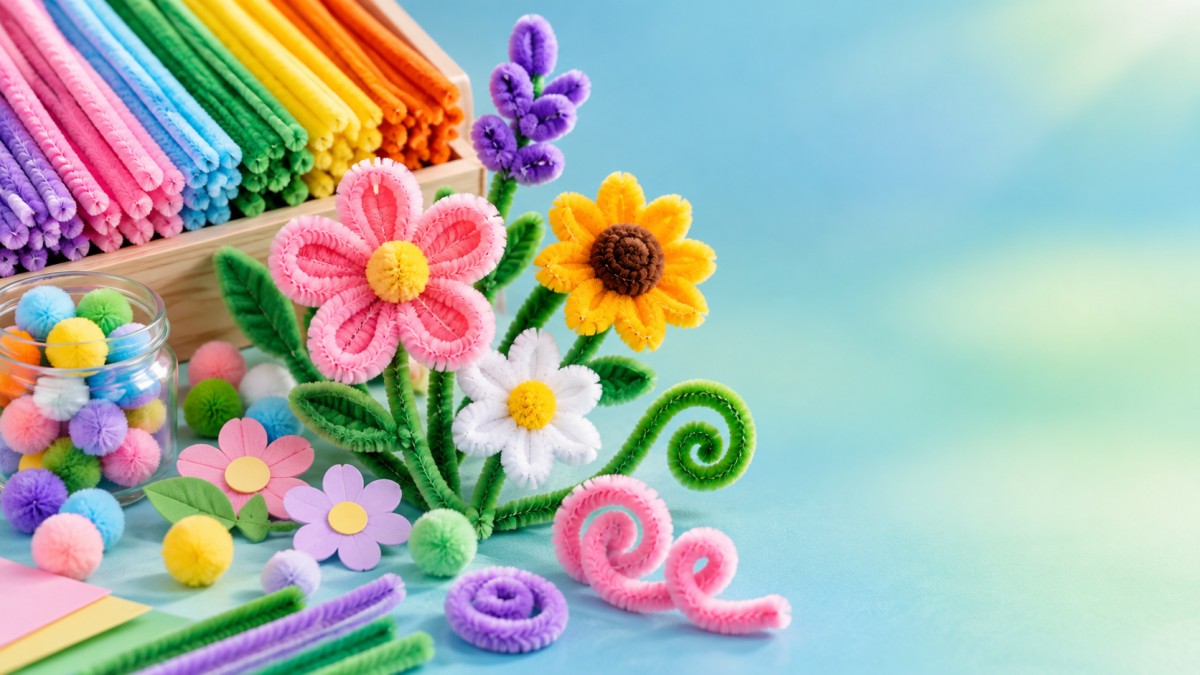
Most quality failures arise at the wire core. A chenille stem may be repeatedly bent into tight angles, twisted with another stem, untwisted, and re-bent. Each action stresses the wire and can shift or compress the surrounding fibers. If a wire end becomes exposed, it may scratch skin, snag clothing, or create a puncture hazard. If the wire fractures, the detached piece may become a small part or a sharp fragment.
Specification control should cover more than overall stem length and color. A meaningful technical specification normally defines the wire material and gauge, number of core wires where applicable, fiber material, pile density, twist consistency, end treatment, allowable exposed-wire length, and tolerance for cut ends. Suppliers should not be left to interpret “soft” or “safe” without measurable acceptance criteria.
End coverage deserves particular attention. A stem can appear adequately covered in a straight condition but reveal a wire tip after it is bent sharply. Evaluation should therefore include manipulation rather than a visual inspection of unopened bundles. Repeated bend testing, twisting, pulling at both ends, and checking the tightest bends are more relevant to real craft use than a single appearance check.
Longer, thicker stems are not always safer. They may be more durable, but they can also generate greater leverage when poked or swung. Very thin stems may be easy to shape but can fatigue or kink quickly. The appropriate balance depends on the activity: a simple preschool decoration has different material demands from a kit requiring repeated twisting into structured models.
Age grading changes the compliance threshold
Chenille stems should not be treated as suitable for all children merely because they are common craft materials. For products intended for children under three, detached components and broken wire pieces require especially careful scrutiny. In the United States, products subject to the small-parts requirements for children under three are assessed under 16 CFR Part 1501. A component or fragment that fits entirely within the prescribed small-parts cylinder can present a choking hazard.
Age grading should be based on the product’s intended use, instructions, included accessories, and reasonably foreseeable handling. A kit containing small pom-poms, plastic eyes, beads, sequins, or metal clips may create a small-parts issue even if the chenille stems themselves do not. Warnings should not be used as a substitute for an inappropriate design. If the activity inherently requires components that are unsuitable for a younger age group, the kit must be designed, labelled, and marketed for an age group that can use it safely.
For the US market, a product designed or intended principally for children aged 12 and under may fall within the scope of the Consumer Product Safety Improvement Act (CPSIA). Where the item is a toy, ASTM F963 is a key safety standard, with mechanical, flammability, and chemical provisions relevant to the finished product. Product classification matters: a craft kit sold as a children’s play product may be assessed differently from general-purpose adult craft supplies. The intended age and marketing claims must be consistent across packaging, online listings, test submissions, and factory specifications.
In the European market, children’s toy products commonly require assessment against the Toy Safety Directive 2009/48/EC and relevant harmonised EN 71 standards. EN 71-1 addresses mechanical and physical properties, EN 71-2 addresses flammability, and EN 71-3 covers migration of certain elements. The applicable standard set depends on the final product and its materials; citing EN 71-3 alone does not establish overall toy safety.
Chemical compliance is a material-and-process question
Chenille stems can involve dyed fibers, wire coatings, binding materials, and occasionally metallic or plastic decorative additions. Chemical assessment should therefore start with a bill of materials rather than a finished-product color chart. The same shade can be produced through different dye systems, and the same wire appearance can result from different coatings or surface treatments.
For US children’s products, CPSIA restrictions on total lead in accessible substrates and on certain phthalates may be relevant, depending on the material and product category. In Europe, EN 71-3 migration testing is frequently relevant for accessible toy materials, while REACH restrictions can also affect substances used in components and coatings. The exact testing programme should be determined from the finished kit’s destination market, age grade, product classification, and construction.
Colorfastness is a separate practical issue. A passing chemical result does not necessarily mean that dark red, blue, green, or black fibers will not transfer color under wet handling, saliva exposure, rubbing, or contact with paper and fabric. Because craft kits are often used in group settings, color transfer can become a quality complaint even where no regulatory limit has been exceeded. Incoming checks should include visual consistency and simple rub assessments under conditions relevant to the material specification.
Testing should reflect use, not only laboratory paperwork
A supplier declaration and a third-party report are useful only when they clearly identify the tested material, production source, product construction, applicable standard, and report scope. A report for a generic “pipe cleaner” assortment cannot automatically support a kit with different wire gauge, new colors, added glitter, plastic end caps, or attached embellishments.
Practical lot-release controls can be proportionate without duplicating full certification testing. Useful checks include:
- visual inspection for bare wire, uneven pile, oil contamination, corrosion, and color variation;
- measurement of stem length, diameter, wire position, and bundle count;
- manual bend-and-twist checks at both ends and at the midpoint;
- pull checks for fiber shedding, loose end coverings, and decorative attachments;
- package inspection for damaged bags, loose parts, incorrect warnings, and inconsistent age labels;
- traceability confirmation linking each shipment to material declarations, test reports, and production records.
Sampling plans should be risk-based. A first production run, a new dye lot, a wire supplier change, a change in fiber composition, or a revised end-finishing process should trigger heightened review. The most important control point is often change management: a compliant sample does not protect a later production run if the factory substitutes an input without re-evaluating its effect on safety.
Flammability and packaging are easily overlooked
Chenille fibers are generally lightweight and can be used near paper, cardboard, fabric, and seasonal decorations. That does not mean the stems themselves are automatically a high flammability concern, but the complete craft kit may include materials with different ignition behavior. Where toy flammability requirements apply, assessment should consider the final product as supplied, including costumes, textile parts, paper components, and decorative fibers where relevant.
Packaging can introduce separate hazards. Thin plastic bags, poorly secured staples, loose twist ties, and sharp-edged blister packs can undermine an otherwise well-designed kit. Instructions should state the intended age range, describe any necessary supervision, and avoid encouraging unsafe actions such as inserting stems into electrical outlets, using them near flames, or placing them in the mouth.
Seasonal craft assortments may combine multiple decorative materials. For example, reusable soft TPR window decorations such as Christmas Gel Window Clings - Xmas Santa Claus Snowman Snowflake Penguin Christmas Tree Gift Window Stickers for Kids can be packaged alongside a festive craft activity only after the combined set has been reviewed as one product. Reusability, easy removal from smooth surfaces, and non-toxic material claims do not remove the need to evaluate small parts, packaging, labelling, and age suitability across all included components.
What a defensible sourcing decision looks like
Chenille stems are a practical choice when a kit needs hand-shapeable structure with a soft tactile surface, but they should be sourced as controlled safety components rather than generic decorative supplies. The strongest approval basis combines a detailed material specification, market-specific compliance evidence, retained reference samples, incoming inspection criteria, and a formal process for approving changes.
The decisive evidence is not a colorful assortment photo or a broad claim that the stems are “non-toxic.” It is whether the wire stays enclosed after foreseeable manipulation, whether the full kit remains appropriate for its declared age group, and whether the documentation corresponds to the materials actually delivered. When those conditions are met, chenille stems can support creative, low-tool DIY activities without turning a simple craft component into an avoidable safety risk.
Leave A Message
If you are interested in our products and want to know more details, please leave a message here, we will reply you as soon as we can.

We specialize in supplying home decor, handicrafts, and daily necessities.


