Why Chenille Stems Lose Their Shape in DIY Kits
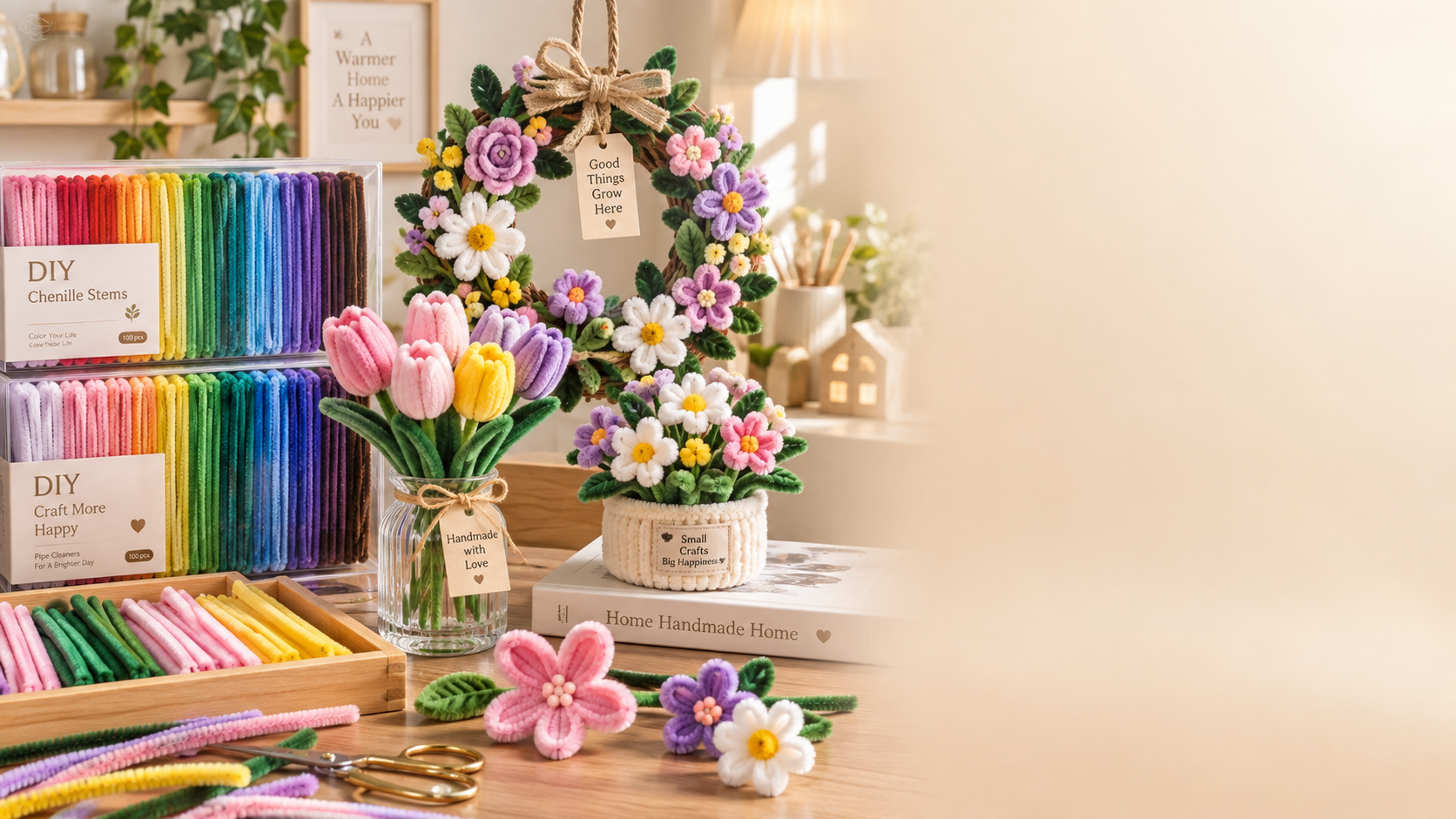
A chenille stems DIY kit is meant to feel easy: bend the stem, twist a few pieces together, and turn simple materials into flowers, animals, ornaments, or seasonal décor. When stems sag, flatten, spring open, or shed fuzzy fibers, that simplicity disappears. The finished piece may look untidy before it even reaches a desk, shelf, or gift bag.
Poor shape retention is rarely caused by one issue alone. It usually comes from the relationship between the inner wire, the plush fiber wrap, the intended craft design, and the way materials are packed and handled. For operators assembling kits or guiding users through a project, understanding those interactions makes it much easier to prevent disappointing results.
The wire core determines whether a stem can hold a bend
At the center of every chenille stem is a wire core. Its thickness, metal quality, and twist construction determine how the stem behaves after bending. A very light core can be easy for children or beginners to manipulate, but it may not support a large loop, an upright petal, or a figure with extended arms. A stem can look suitably plush in the package while offering little structural support once it is formed.
The opposite problem also exists. An overly stiff wire may resist shaping and then develop sharp kinks instead of smooth curves. Once the wire has been bent back and forth several times in the same location, metal fatigue can weaken it. The stem may not break immediately, but the bend becomes loose and the project starts to droop.
This is why a suitable wire is not simply “the strongest available.” It should match the craft task. Small pom-pom animals, wrapped wreath details, and flat card decorations can work with more flexible stems. Free-standing flowers, oversized bows, and three-dimensional home décor pieces need more support or an additional internal structure.
Fiber density affects both appearance and grip
Chenille stems get their soft appearance from fibers trapped between twisted wires. If the fiber fill is sparse, the wire becomes visible when the stem is stretched or curved. Sparse fibers also reduce friction when two stems are twisted together, so joints may slip apart. Users often interpret this as weak wire, even when the main issue is inadequate coverage around the core.
A dense wrap generally creates a fuller result, but density alone does not guarantee durability. Fibers must be held securely by the wire twist. Loose fibers can migrate toward the ends during handling, leaving bald areas in the middle. Excessive shedding is especially frustrating in kits that include light-colored felt, fabric, yarn, or unfinished wood surfaces, where stray fibers are easy to notice.
Before using the stems in a full project, make a quick handling check: bend one into a rounded loop, twist two together, then gently pull the joint apart. Look for exposed wire, fiber loss, or a loop that immediately relaxes. This small test reveals more than simply pressing the bundle through its packaging.
Repeated reshaping is a common but avoidable cause
Many DIY instructions show the final shape but not the order of forming it. As a result, users may bend a stem into a petal, decide it is too large, straighten it, and bend it again several times. Chenille stems are forgiving materials, but they are not designed for endless correction. Repeated bending compresses the fiber wrap and weakens the wire at the same point.
A better approach is to mark the intended fold point mentally or with a light visual reference before making the first bend. Form broad curves with fingers rather than pinching one narrow point. When a tighter detail is needed, use a rounded object such as a pen barrel as a shaping aid. This reduces abrupt creases and gives the finished form a cleaner, more stable profile.
Twisting also deserves attention. Two stems should be wrapped together with enough turns to lock the connection, but excessive twisting can crush the chenille surface and make the joint look thin. For projects with heavier decorative components, it is usually better to create a short reinforced section than to keep twisting the entire length.
Packaging pressure can flatten good material
A stem may leave production in acceptable condition and still arrive flattened. Tight bands, shallow cartons, heavy kit components, or long storage under compression can squash the fibers and leave permanent-looking lines. The wire may remain functional, yet the stem loses the round, fluffy profile users expect.
This is particularly relevant in mixed-material kits. Wooden parts, ceramic accents, plastic tools, or dense instruction booklets can press against soft craft materials during transport. Packaging should separate components that can damage each other rather than treating every item as equally durable. A simple inner sleeve, divider, or placement plan can protect the pile of chenille stems without making the kit unnecessarily complex.
Storage conditions matter as well. Keeping stems in a dry, uncompressed space helps preserve their appearance. If fibers have been flattened, gently rolling the stem between the palms or brushing it lightly with fingertips can restore some volume. It will not repair a damaged wire core, but it can improve the visual finish.
Match the stem to the project, not just the color palette
A frequent planning mistake is selecting chenille stems solely by color. Color matters in home décor, but construction matters more when the finished object must stand, hang, or keep a defined silhouette. A small decorative spider may need flexible legs; a vase of pipe-cleaner flowers needs stems that can support blooms; a wreath may need a firmer base plus softer decorative strands.
Consider the project in use, not only during assembly. Will it be handled repeatedly? Will it sit near a warm window? Does it need to retain a shape through shipping as a finished gift? Does a child need to bend it safely? These questions help determine whether chenille stems should be the main structure, a decorative wrap around another support, or a simple surface detail.
Not every seasonal craft requires chenille stems. Soft-yarn projects, for example, rely more on stitch tension and filling consistency than on a bendable core. A kit such as the Crochet Ghost with Pumpkin Hat Kit, Beginner Friendly Halloween Crochet Kit with Step-by-Step Video Tutorial, DIY Cute Ghost Plush Knitting Supplies, Spooky Season Decor Craft for Adults and Kids takes a different route to dimensional Halloween décor. Its soft yarn construction, pumpkin hat, and tiny matching pumpkin bag create a decorative result without requiring users to maintain shaped wire elements. For a beginner, choosing the right construction method can be as important as choosing the right theme.
Build quality checks into kit preparation
For kit operators, the most useful quality checks are practical rather than elaborate. Inspect a sample bundle for consistent length, color coverage, visible core wire, loose ends, and resistance after a simple bend-and-twist test. Then test the actual design with the selected stems. A material that performs well in isolation can fail when asked to hold a large felt piece, a pom-pom cluster, or a decorative wooden attachment.
Instructions should also acknowledge the material’s limits. Instead of telling users to “bend as desired,” specify where to fold, how many stems to combine for a stronger part, and when to secure an element with adhesive or thread. Clear directions reduce overhandling, which is one of the fastest ways to make a chenille stem look worn.
For home décor craft supply programs, stable quality depends on coordination across materials. Our Ningbo-based supply network includes two certified factories for handicrafts, wooden crafts, and fabric crafts, alongside established partners in ceramics, plastics, and handwoven products. Those partner companies are certified by major European and American retail chains. In mixed DIY kits, this kind of coordination helps keep soft components, structural pieces, and packaging requirements aligned instead of treating them as unrelated purchases.
A durable result starts before the first bend
When chenille stems lose their shape, the solution is not always to use more stems or twist them tighter. Start with the intended form and weight of the project, then assess the wire core, fiber coverage, packing method, and instruction sequence. A well-chosen chenille stems DIY kit should allow users to shape confidently without constant repair.
If a design must stand upright or travel as finished décor, test the stem in that exact configuration before finalizing the kit. That single step often identifies whether the issue is material selection, insufficient reinforcement, or handling that can be improved through clearer guidance.
Leave A Message
If you are interested in our products and want to know more details, please leave a message here, we will reply you as soon as we can.

We specialize in supplying home decor, handicrafts, and daily necessities.


