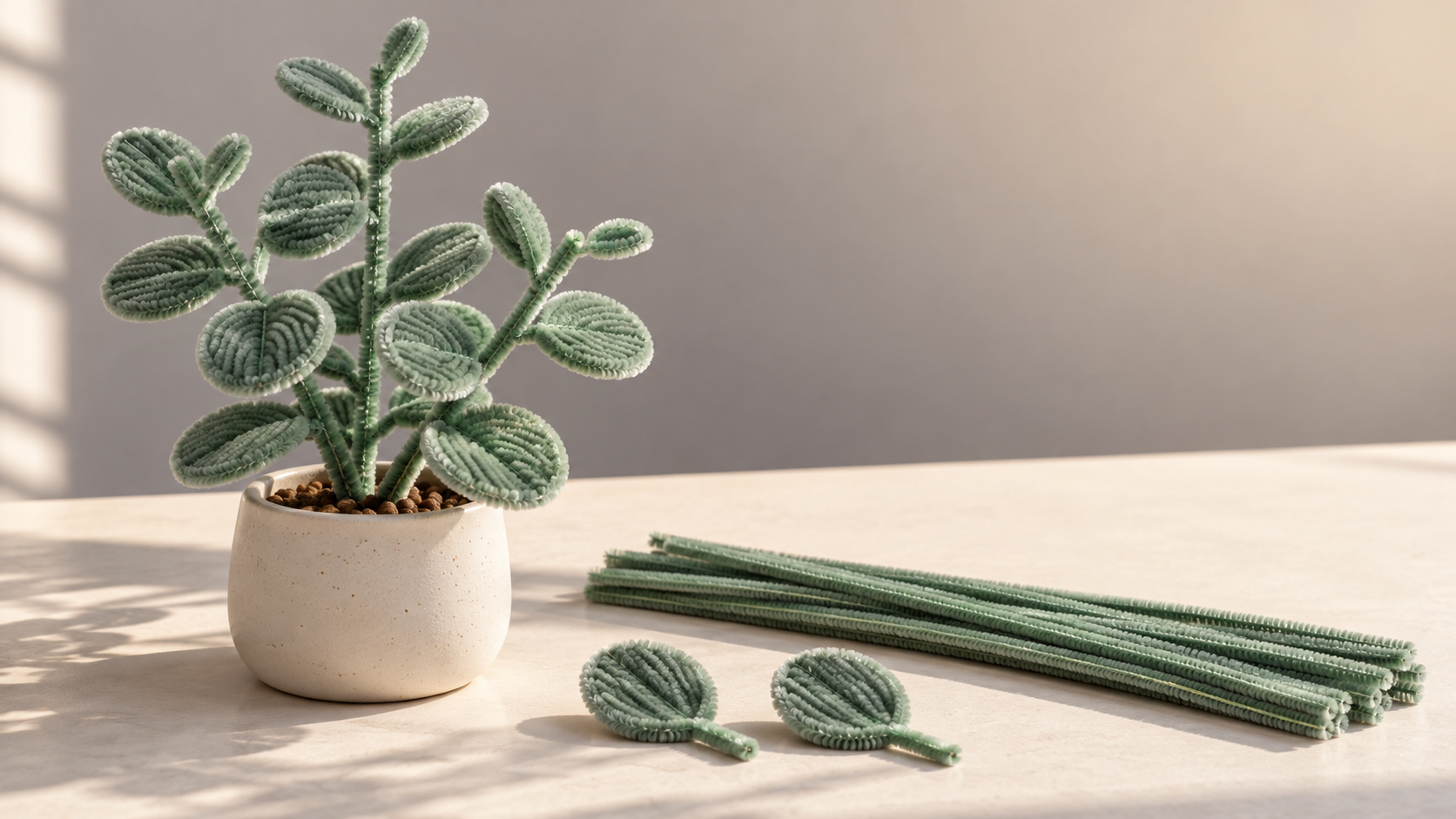
Choosing a Plant Pipe Cleaner Craft Kit for Your First DIY Display
Want to brighten a shelf or desk with greenery you make yourself? A plant pipe cleaner craft kit offers a playful way to create a low-maintenance display, even if you’re new to crafting. But the prettiest product photo doesn’t always point to the easiest first project. What matters is whether the kit helps you turn loose chenille stems into an arrangement that holds its shape, sits securely, and suits your space.
For a first attempt, look for a forgiving design rather than the largest bundle of materials. A modest plant with clear instructions is usually a better starting point than an elaborate bouquet with several unfamiliar techniques.
Choose the display spot before choosing the plant
Start with the empty space you actually want to fill. A desk beside a monitor needs a compact arrangement that won’t brush your hand or obscure the screen. An open shelf can accommodate broader leaves, while a narrow windowsill calls for a pot with a small footprint and a stable base.
Check the finished dimensions, not just the package size. If the listing gives no measurements, ask for the approximate assembled height and width, including the pot. A close-up photograph can make a tiny succulent look like a substantial centerpiece.
Color deserves the same attention. Muted greens tend to sit quietly beside wood, linen, and neutral ceramics. Bright green or multicolored stems create a more playful accent. Neither is inherently better; the question is whether you want the handmade plant to blend in or become the feature.
Read the materials list as an assembly plan
“Complete kit” is worth checking carefully. Some sets contain only pipe cleaners and instructions; others include a container, support insert, adhesive, and shaping accessories. Before ordering, work through the construction from leaf to finished pot.
- Leaves and stems: Are the required colors and quantities identified, with spare material for practice?
- Plant support: Does the design use a foam insert, another anchoring material, or a bundled stem structure?
- Container: Is the pictured pot included, or used only for styling?
- Tools and adhesive: Will you need your own scissors, cutters, pliers, or glue?
Missing tools can change both the cost and the experience. If a project requires hot glue, for example, you need a suitable work surface and careful handling. A no-glue design may be more convenient for a first session, provided the twisting and anchoring instructions are clear.
Look closely at material photographs, too. Chenille stems should appear reasonably evenly covered, without conspicuous bare wire. Thickness affects the result: fine stems can suit small details, but broad leaves may need extra support. Avoid assuming that a higher piece count means a sturdier finished plant.
Look for repeatable shapes, not just a “beginner” label
A beginner-friendly project usually asks you to learn one or two shapes and repeat them. Looped leaves, simple curls, and compact succulent forms leave room for small variations. A trailing plant with different leaf sizes, branching stems, and concealed joins asks for more judgment during assembly.
That doesn’t make a trailing design unsuitable. It simply makes an instruction preview more valuable. Look for close-ups showing where to bend, where to twist, and how individual pieces connect. An attractive finished photograph cannot explain those hidden joins.
Video guidance can help with hand movements, but printed diagrams remain useful when you need to pause at one step. If instructions depend on a QR code, check whether an account or app is required. You shouldn’t discover that halfway through the build.
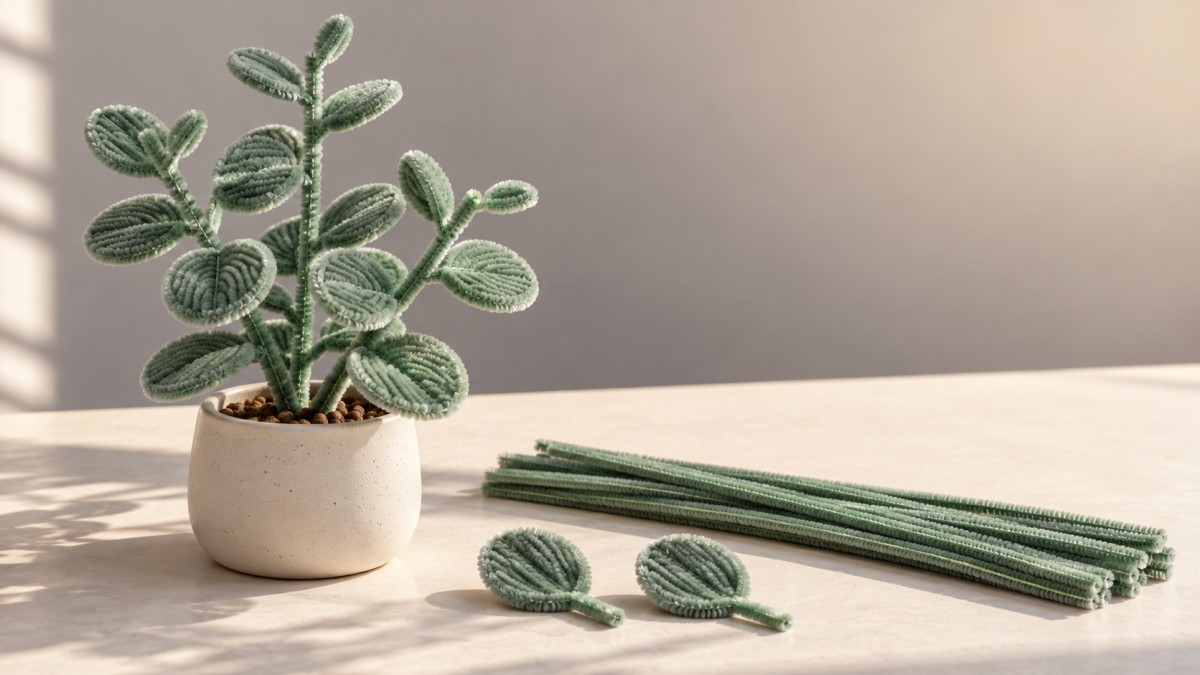
Expect a little unevenness in your first leaves. The better designs let you adjust a loop or reposition a stem without dismantling the whole plant. Repeatedly bending the same wire point can eventually cause breakage, so practice an unfamiliar shape on a spare stem before committing the pieces you need.
The pot and anchoring deserve more attention than they get
A plant can look convincing in your hand and still lean once placed on a shelf. Tall stems and leaves extending beyond the rim put more demand on the base. Check how the kit secures the arrangement and whether the support fits inside the supplied container.
Ceramic containers can add weight, although they are breakable. Lightweight plastic is easier to handle but may need a more compact arrangement. A woven outer pot can soften the look, yet the internal support still does the structural work. Judge the assembled combination rather than the container material alone.
This is where coordinated sourcing matters. Our Ningbo-based home-decor business operates two certified factories covering handicrafts and wooden and fabric crafts, alongside partnerships in ceramics, plastics, and handwoven products. For a kit buyer, the practical takeaway is simple: a well-matched container and support are more useful than an impressive assortment of loosely related components. Factory credentials alone don’t establish that a particular kit is easy to assemble.
Keep seasonal styling separate from the core project
If your plant will sit near a window, you can change the surrounding decoration without rebuilding it. For a spring display, Spring Window Clings Gel, Jelly Window Stickers for Glass Refrigerators Home, Welcome Spring Window Decorations - Flowers Butterflies Bird, Kids‘ Love offers colorful flower, butterfly, and bird motifs in soft TPR material. The clings are intended for smooth surfaces such as glass and can be removed and stored for another season.
Treat them as a separate backdrop, not as components of the craft kit. A few motifs beside a compact green plant may be enough; covering the whole window can overwhelm a small arrangement. Follow the product’s surface and age guidance, especially in classrooms or nurseries, and keep craft wire, loose parts, and adhesives away from young children.
What is worth paying extra for?
For your first plant pipe cleaner craft kit, prioritize usable instructions, spare stems, and a reliable base over decorative packaging or a large color selection. Compare the total project cost, including anything you must buy separately. A cheaper stem-only bundle may suit someone with tools and containers already at home; it may be poor value if you’re starting from nothing.
Before checkout, confirm three things: the finished size fits your chosen spot, the materials list explains how the plant stands up, and the instructions show the actual joins. If those details are missing, ask the seller. A smaller, well-explained project is a sensible first purchase—and gives you a clearer idea of what you’ll enjoy making next.
Leave A Message
If you are interested in our products and want to know more details, please leave a message here, we will reply you as soon as we can.

We specialize in supplying home decor, handicrafts, and daily necessities.


