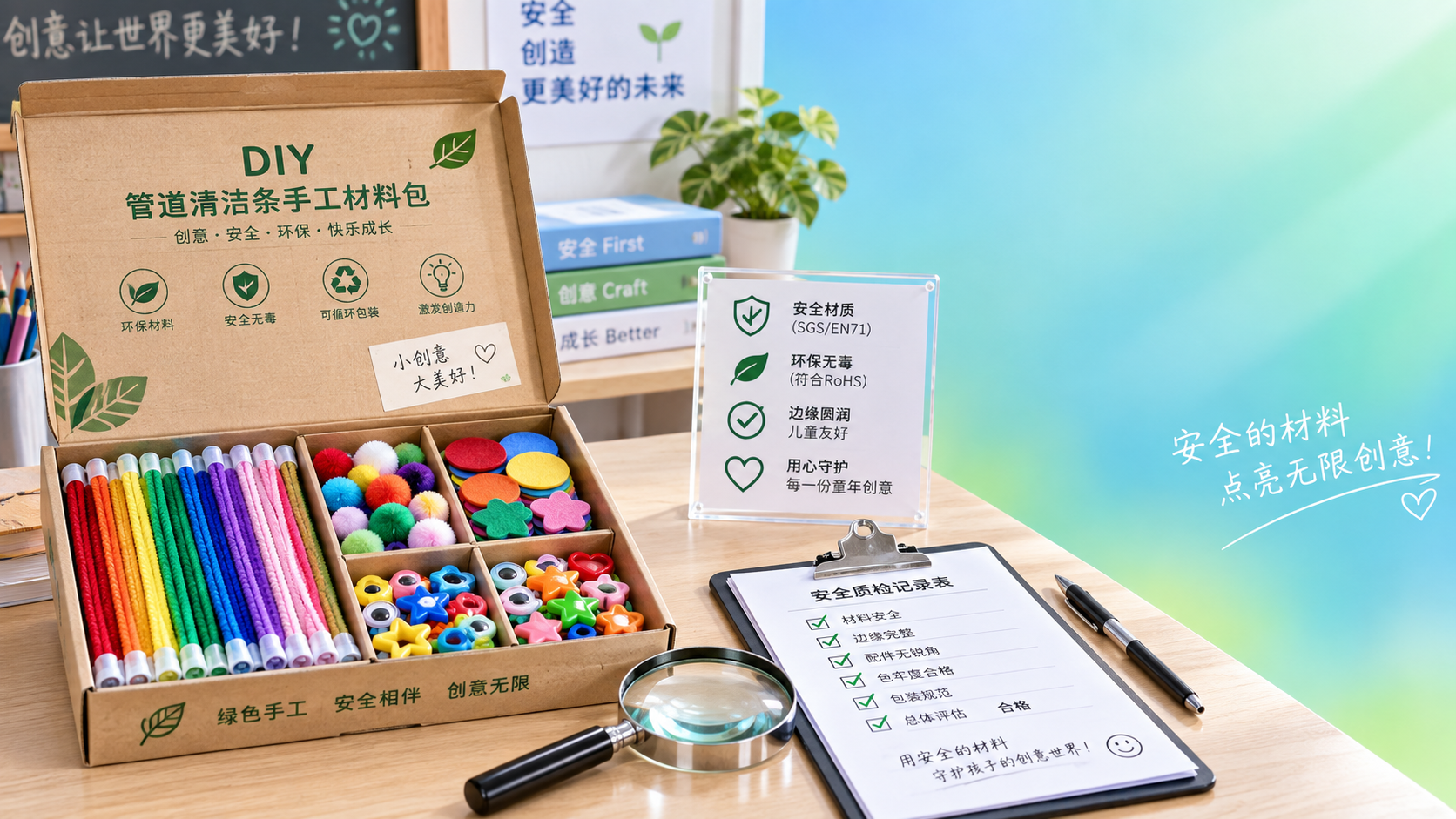
Safety Checks for Pipe Cleaner DIY Kits Sold in Schools and Youth Programs
Before a pipe cleaner diy kit reaches schools or youth programs, every component should pass practical safety checks for materials, construction, packaging, and age suitability.
For quality control and safety managers, evaluating wire ends, small parts, coatings, fabric accessories, and labeling prevents avoidable risks while supporting reliable classroom activities.
A structured inspection process also strengthens supplier accountability, improves purchasing decisions, and gives educators greater confidence that creative activities are appropriate for their intended participants.
Start With a Risk-Based Approval Decision
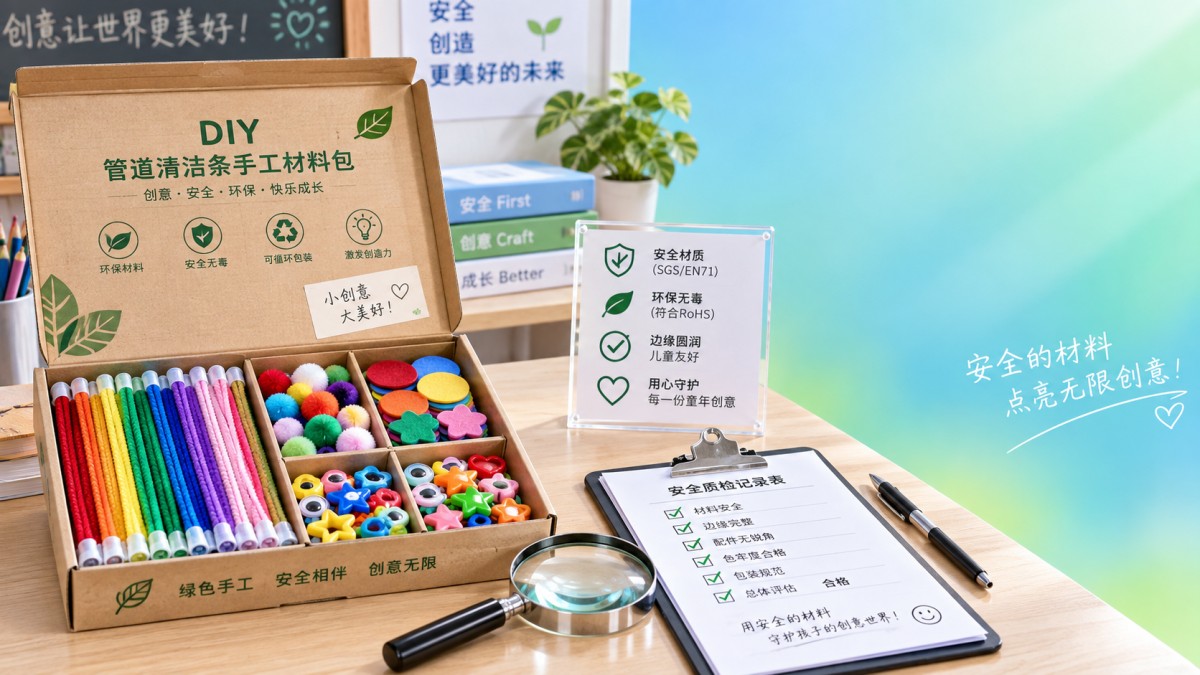
A pipe cleaner diy kit should never be approved solely because it looks colorful, inexpensive, or popular with children and teachers.
The first decision is whether the kit's actual contents, participant age range, supervision conditions, and intended project complexity align with program safety requirements.
Quality managers should request a complete bill of materials before approving samples, including pipe cleaners, beads, adhesive items, fabric pieces, instruction sheets, and packaging.
Each component needs separate evaluation because a kit can appear compliant overall while one small accessory creates an unacceptable choking, puncture, chemical, or entanglement risk.
Schools usually need more conservative controls than consumer craft retailers because activities may involve mixed-age groups, limited supervision, shared materials, and repeated handling.
Document the expected users clearly: preschool participants, elementary students, teenagers, parent-child workshops, or supervised youth clubs require different product specifications and warning language.
Approval should also consider the planned use. A short supervised classroom craft has different exposure conditions from a take-home kit used without trained adult oversight.
Inspect Wire Construction and Pipe Cleaner Ends
Wire construction is the central safety concern in any pipe cleaner diy kit because exposed metal can scratch skin, puncture fingers, or snag clothing.
Inspect both ends of every pipe cleaner sample under normal lighting and magnification. Fibers must fully cover and securely retain twisted wire ends.
Pull apart fibers near each end during incoming inspection. If wire becomes visible easily, the product may become hazardous after ordinary bending and repeated shaping.
Check whether the wire core breaks, splinters, or protrudes after several bends. Classroom users often twist, fold, and untwist materials more aggressively than expected.
A practical bend test should simulate common projects such as flower stems, animal legs, letters, bracelets, and connected decorative shapes made during group activities.
Require suppliers to define wire gauge, wire type, fiber coverage, and end-finishing methods. Vague descriptions such as “soft craft wire” are insufficient for approval.
Sharp-edge testing should focus on realistic failure points, especially cut ends, joints, twisted sections, and pipe cleaners removed from tightly packed bundles.
For younger users, consider shorter pre-cut lengths or alternative construction materials when project requirements do not depend on a flexible internal wire structure.
Control Small Parts, Decorative Accessories, and Detachment
Many kits contain more than pipe cleaners. Pom-poms, plastic eyes, beads, buttons, sequins, clips, magnets, and miniature decorations can change the product risk profile.
Small-part assessment must reflect the youngest intended user, not the oldest user shown in promotional photographs or the most capable participant in a youth program.
Inspect attached accessories by applying reasonable pulling, twisting, and handling forces. Decorative parts should not detach during normal assembly, transport, or classroom distribution.
Loose components should be counted against the age grade and project instructions. A product intended for older children may require specific warnings or restricted access procedures.
Magnets require especially strict control. Small or poorly retained magnets can create severe ingestion hazards and should be avoided in broadly distributed youth craft kits.
Foam shapes, plastic eyes, and pre-cut felt pieces should also be checked for clean edges, consistent dimensions, and material integrity after repeated handling.
When suppliers offer customization, do not assume a familiar base kit remains safe after adding branded charms, seasonal ornaments, or promotional accessories.
Any design change should trigger a documented review because a new color, decoration, closure, or package format may introduce materials outside the original approval scope.
Verify Materials, Coatings, and Chemical Information
Material safety checks should cover both visible craft materials and hidden production inputs, including dyes, coatings, adhesives, plasticizers, inks, and surface treatments.
Request current test reports and declarations applicable to the destination market. Documents should identify the tested product, component scope, laboratory, date, and relevant standards.
Do not accept generic supplier statements that fail to match the final kit configuration. Different colors, fabrics, coatings, and accessory batches may require separate confirmation.
Odor is not a complete chemical assessment, but strong or unusual smells during sample inspection should trigger further investigation before the product enters school procurement.
Check whether colored fibers shed excessively. Loose flocking or lint can create cleanup problems, contaminate shared spaces, and increase exposure concerns for sensitive participants.
Adhesives included with a pipe cleaner diy kit deserve separate review. Confirm the container closure, application method, drying behavior, warning statements, and age appropriateness.
For kits without adhesives, instructions should avoid directing children to use unapproved household glues that may introduce unknown chemicals or unsuitable application methods.
Some craft suppliers also produce broader DIY assortments. For example, an OEM ODM Custom Cute Animal & Plant Needle Felting DIY Kit, Forest Frog Snail Hedgehog Monstera Wool Felting Starter Set with Instruction, Custom Pattern Box Logo Handmade Craft Kit for Adults Beginners Gift Home Table Decor requires separate needle-access controls.
That comparison matters because procurement teams should assess each craft format by its components, rather than transferring safety assumptions from one creative category to another.
Review Packaging, Instructions, and Age-Grading Accuracy
Packaging is part of the safety system. It must protect components during shipping while preventing loose items, damaged wire ends, and missing warnings at distribution.
Inspect inner bags, trays, closures, and outer cartons after vibration or drop simulation. Weak packaging can create scattered small parts before the kit reaches instructors.
Age grading should be supported by the actual contents and foreseeable use. It should not be selected simply to expand the potential retail audience.
Instructions should identify necessary adult supervision, safe handling practices, cleanup expectations, and any accessories that must remain away from younger siblings or participants.
Clear visual instructions reduce misuse, but images must not encourage unsafe behavior such as placing materials near the face, wrapping wire tightly, or sharing damaged pieces.
Confirm that mandatory warnings remain visible after multipacks are divided for classrooms. Teachers may distribute inner units without retaining the original outer carton.
Traceability information should identify the supplier, batch or lot, production date where applicable, and a reliable contact point for safety or quality incidents.
Build a Repeatable Supplier Quality Control Process
Reliable safety performance depends on process control, not one successful sample. Supplier approval should combine factory capability review, documentation checks, inspections, and corrective-action expectations.
For each pipe cleaner diy kit, establish an approved sample that defines acceptable wire coverage, accessory counts, color matching, packaging condition, and instruction version.
Incoming inspection criteria should include visual examination, bend testing, pull testing, component counting, odor observations, packaging checks, and confirmation of required labeling.
Use defect categories that reflect actual risk. Exposed wire, detached small parts, missing warnings, and incorrect age grading should be treated more seriously than minor appearance variation.
Require suppliers to notify buyers before changing materials, sub-suppliers, factories, coatings, accessory sources, or packaging formats. Uncontrolled substitutions can invalidate prior evaluations.
A capable supply network can support stable sourcing, but certifications alone do not replace product-specific inspections, specification control, and verification of final assembled kits.
When working with manufacturers that supply home decor crafts, fabric crafts, wooden items, plastics, ceramics, and handwoven products, confirm which factory controls each component.
This is especially important for customized sets because packaging may be assembled in one location while pipe cleaners, decorative accessories, and printed materials originate elsewhere.
Use Findings to Make Clear Release Decisions
Release decisions should be simple and defensible: approve, approve with corrective action, hold for additional evidence, or reject based on defined safety requirements.
Photograph defects, retain inspected samples, record lot information, and communicate findings in supplier-friendly language that identifies the problem, requirement, and expected correction.
For recurring classroom purchases, monitor complaints from teachers and program coordinators. Reports of poking, shedding, missing pieces, or confusing instructions can reveal production drift.
Safety managers should also review incident patterns by age group and project type. A kit may perform well in supervised older groups but fail in younger sessions.
The goal is not to eliminate creativity or overcomplicate purchasing. It is to ensure that engaging craft activities are supported by materials designed for real conditions.
Conclusion
A safe pipe cleaner diy kit is the result of disciplined checks across wire construction, small parts, materials, packaging, instructions, age grading, and supplier control.
For quality control and safety managers, the strongest approach is a documented, risk-based process that evaluates finished kits as children and educators will actually use them.
When those checks are built into sourcing and release decisions, schools and youth programs can provide creative projects with fewer avoidable incidents and stronger compliance confidence.
Leave A Message
If you are interested in our products and want to know more details, please leave a message here, we will reply you as soon as we can.

We specialize in supplying home decor, handicrafts, and daily necessities.


