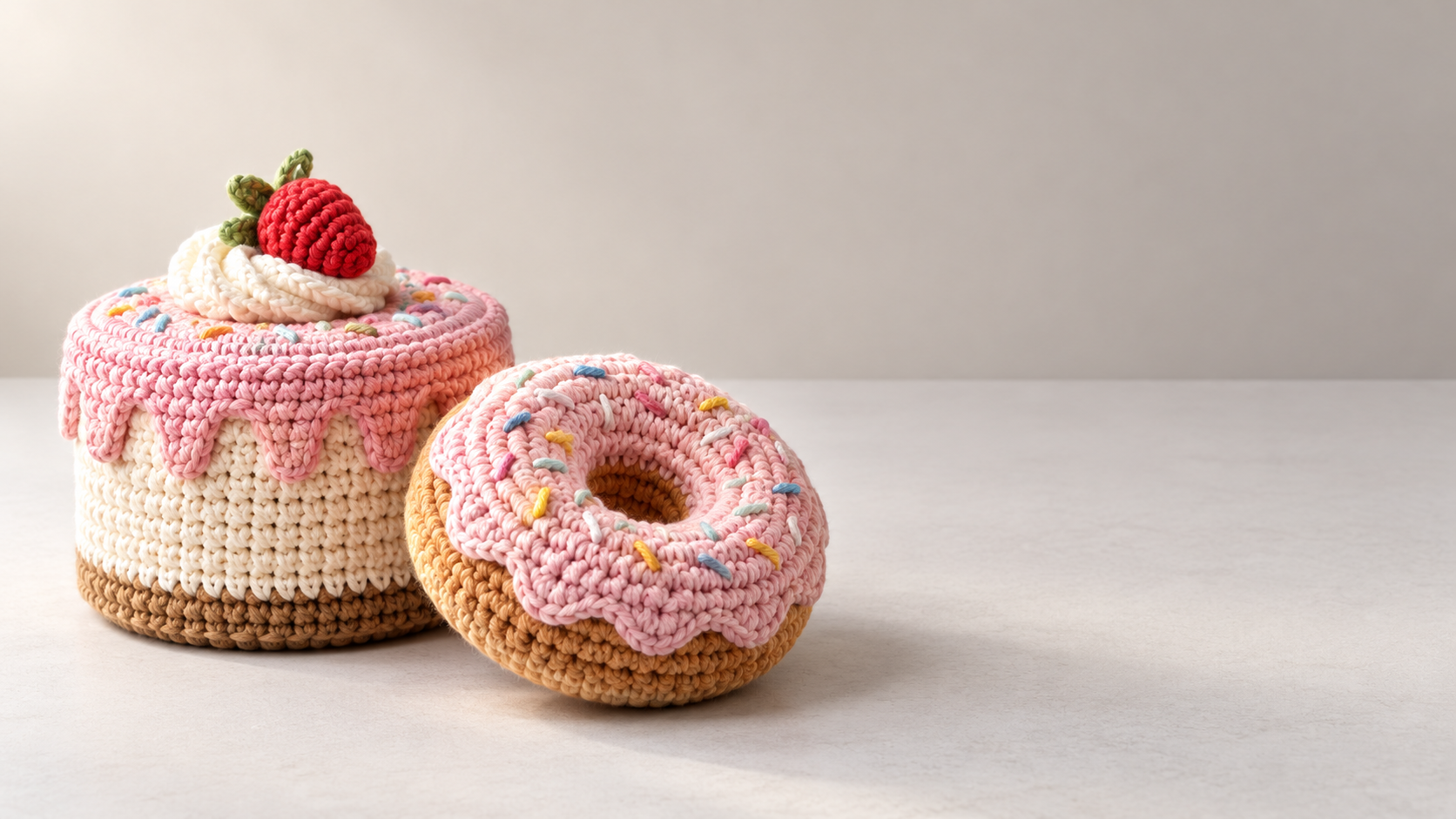
Amigurumi Dessert Crochet: Basic Stitches Behind Cakes and Donuts
What turns a few loops of yarn into a miniature cake or a perfectly rounded donut? Amigurumi dessert crochet relies on a small set of foundational techniques, including the magic ring, single crochet, increases, and decreases. Understanding how these work together helps you create neat shapes, secure stuffing, and decorative details that give each piece its character. Whether you are exploring handmade accents for a cozy kitchen or researching how crocheted desserts are made, this guide explains the basic stitches behind these playful home decor pieces.
The fabric matters as much as the shape
Amigurumi is the practice of crocheting or knitting small stuffed forms. For dessert-inspired decor, crochet produces a dense outer shell that holds filling and supports recognizable shapes. A cake needs a reasonably flat top and upright sides; a donut needs a rounded body without losing its central hole.
Smooth cotton yarn makes individual stitches and embroidered details easy to see. Acrylic can create a softer appearance, while plush yarn gives a fuzzy finish but makes stitch counting and corrections harder. Neither fiber alone guarantees a better result. Yarn structure, hook size, tension, and stuffing all affect the finished piece.
The useful test is simple: gently stretch a sample. If obvious gaps appear, the fabric may reveal filling once stuffed. A smaller hook can help, but excessively tight work becomes difficult to stitch and may distort the shape.
Four techniques behind most dessert shapes
A magic ring closes the starting point
A magic ring creates an adjustable loop into which the first round is worked. Pulling the yarn tail tight closes the center, making it useful for cake tops, cherries, and small decorative balls. Secure the tail afterward; a closed center can loosen if the end is merely trimmed. A chain-ring start is another option, although it may leave a more visible opening.
Single crochet builds the shell
Most patterns use single crochet because its short, closely packed stitches create firm fabric. In US terminology, insert the hook into the next stitch, yarn over and pull up a loop, then yarn over and pull through both loops. Check terminology before starting: UK double crochet describes this same stitch.
Continuous rounds avoid a joined seam, but the beginning of each round becomes difficult to locate. A removable stitch marker prevents counting errors. Joined rounds can make some color changes easier to manage, though their join may remain visible.
Increases add width; decreases remove it
An increase usually means working two single crochets into one stitch. Distributed around a circle, increases expand a cake top or curved body. Too many can create ripples; too few can make a supposedly flat surface cup upward. Tension also influences whether a circle lies flat.
A decrease combines two stitches into one. The commonly used invisible decrease works through the front loops of two neighboring stitches, reducing the visible bulk of a standard decrease. It is particularly helpful on exposed rounded surfaces. Consistent placement matters: uneven decreases can pull the filling into an unintended point or ridge.
Why cakes and donuts need different construction
A round cake often begins with an expanding flat circle. Once it reaches the intended diameter, rounds without increases form the sides. Working through the back loops for a transition round can create a defined edge between the top and wall. A separate base may then be sewn on, with stuffing added before the opening closes.
A donut cannot simply be treated as a ball with a dent. Its opening must be built into the structure. One approach starts with a chain joined into a ring, then uses shaped rounds to build the body around that opening. Another forms a stuffed tube and joins its ends. The first requires careful shaping and closure; the second needs an inconspicuous end seam.
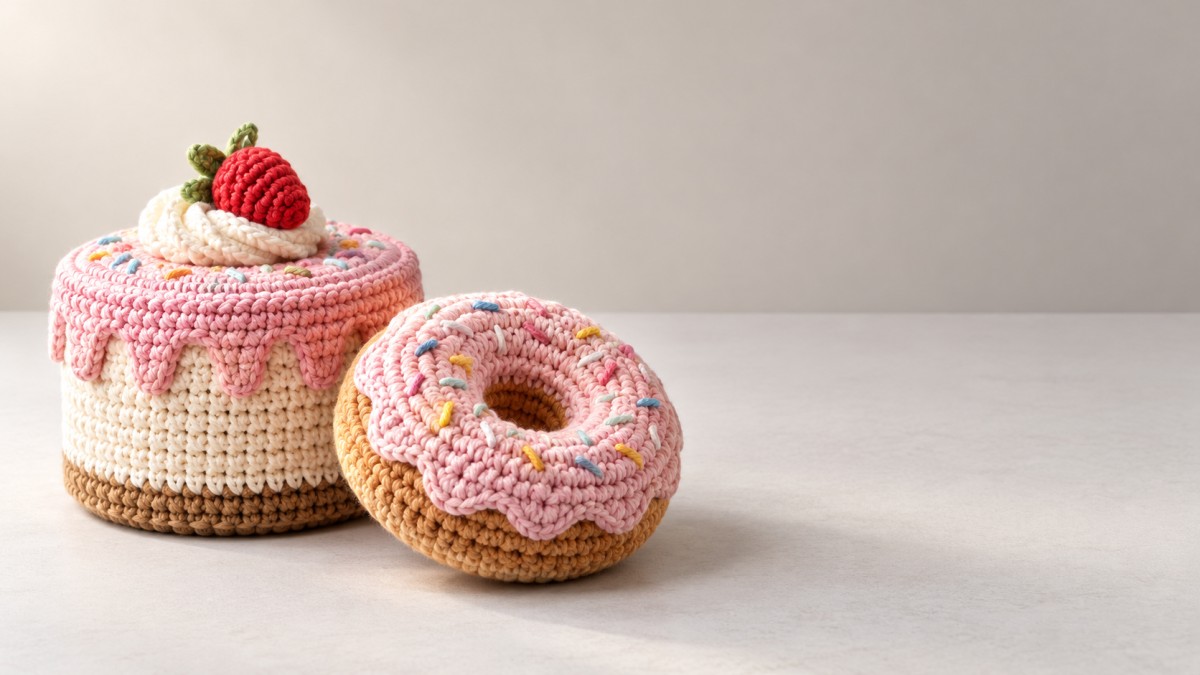
Stuffing is part of the shaping process. Add small amounts and distribute them evenly. Overfilling a cake can turn its flat top into a dome, while uneven filling makes a donut lumpy. If the center hole narrows excessively, check the stuffing quantity and construction before trying to stretch it wider.
Frosting should decorate, not disguise weak construction
Crocheted icing may be a separate layer attached to the base. Chains, slip stitches, and taller stitches can create scallops or dripping edges. Secure these details at enough points to prevent curling without pulling the underlying fabric out of shape.
Embroidered sprinkles keep the surface relatively low-profile. Beads, buttons, and glued embellishments introduce different attachment and safety considerations. A dessert intended as shelf decor should not automatically be presented as a child’s toy; intended use, detachable parts, and destination-market requirements need separate review.
For display, keep crocheted desserts away from exposed food, grease, and steam. They are decorative textiles, not serving accessories. Care instructions should reflect the complete construction, including filling and attached details, rather than relying only on the yarn label.
Reading a sample as a home decor product
For a home decor assortment, inspect more than the front-facing photograph. Check whether the base sits steadily, filling shows between stitches, color changes look clean, and seams remain secure under gentle handling. Compare samples against agreed dimensions and appearance tolerances rather than expecting handmade pieces to be perfectly identical.
Our Ningbo-based business supplies home decor crafts, handicrafts, and daily necessities through two certified factories: one for handicrafts and another for wooden and fabric crafts. Partnerships also cover ceramics, plastics, and handwoven products, with partner companies certified by major European and American retail chains. That network supports coordinated sourcing, but certification scope and relevance still need confirmation for each product.
Mixed-material seasonal displays illustrate why those distinctions matter. Crocheted pumpkin-colored donuts could sit on a kitchen shelf while Halloween Window Gel Clings Ghost Pumpkin Bat Witch Cat Boo Blood Decal Stickers for Halloween Home Party Window Decorations add imagery to nearby glass. These reusable soft TPR decorations serve a different purpose from textile accents. Confirm surface compatibility and removal instructions, and test an inconspicuous area rather than assuming every wall finish is suitable.
To understand an amigurumi dessert, look first at its silhouette, then its stitch fabric, and finally its finishing. For a new design, a plain, unembellished sample is especially revealing: if the cake stands straight and the donut holds an even ring before frosting is added, the underlying construction is doing its job.
Leave A Message
If you are interested in our products and want to know more details, please leave a message here, we will reply you as soon as we can.

We specialize in supplying home decor, handicrafts, and daily necessities.


