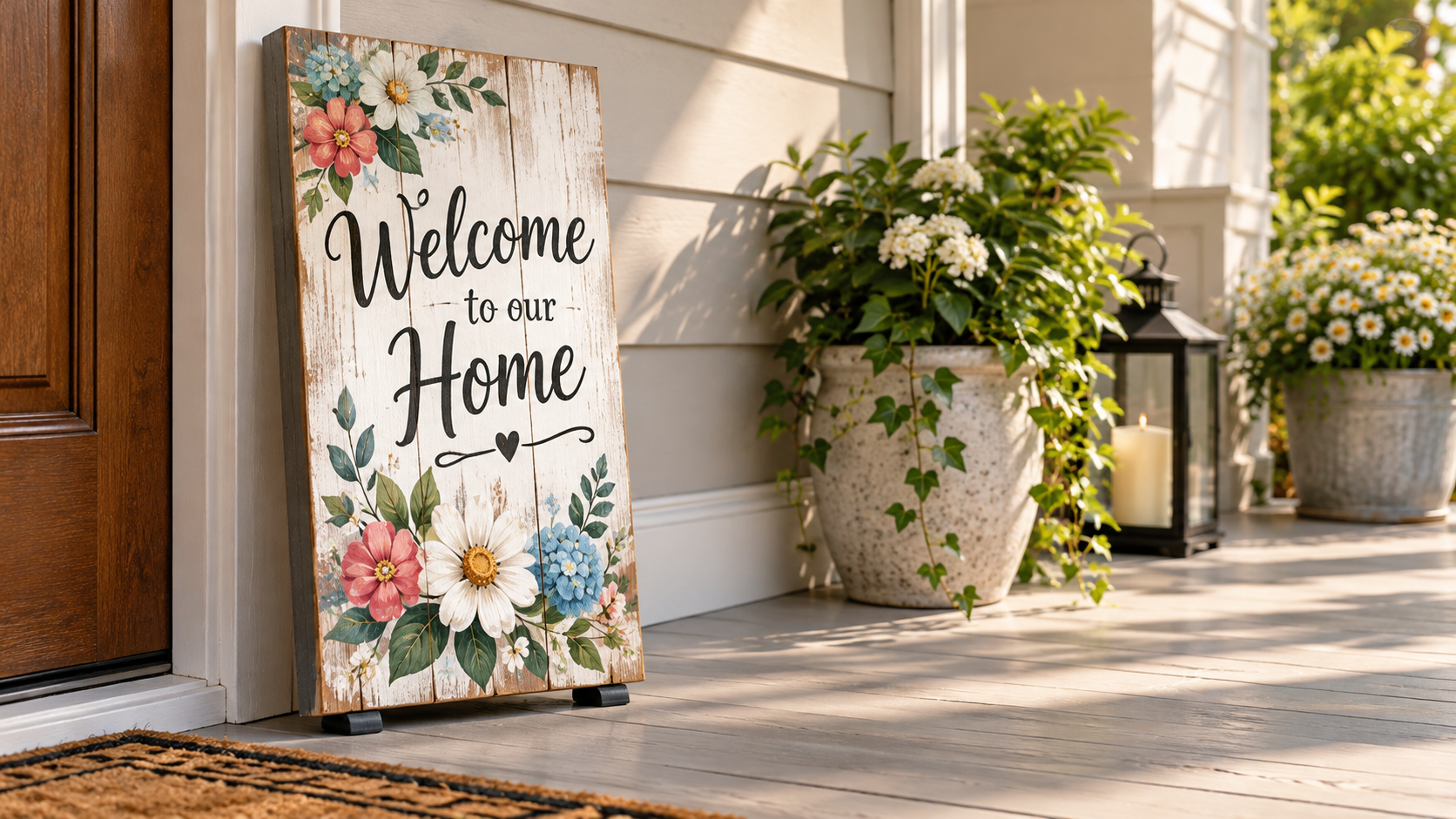
Handmade Wooden Porch Decor: Preventing Peeling Paint and Warping
A welcoming porch starts with details that last, but peeling paint and warped wood can quickly take the charm out of a favorite decoration. A rustic sign may survive several seasons beneath a deep roof, then begin curling after being moved beside the steps. The difference is often exposure, not workmanship alone.
Protecting handmade wooden porch decor means managing moisture, sunlight, and changing temperatures together. A suitable exterior finish helps, but it cannot compensate for standing water, unfinished edges, or wood that was painted while damp. Before buying another sealer, work out where the water is getting in.
Read the damage before reaching for paint
Peeling and warping often share a moisture problem, but they need different repairs. Paint loses adhesion when the surface underneath is dirty, damp, weathered, or incompatible with the coating. Wood changes shape as it absorbs and releases moisture, particularly when one face gets wetter than the other.
- Peeling along the bottom edge: look for contact with wet flooring, splashback, or exposed end grain drawing up water.
- Blisters on a sunny face: investigate trapped moisture and the conditions during the last painting job. Appearance alone does not establish the cause.
- A board cupping across its width: check whether its back stays damp against a wall while the front dries in sunlight.
- Failure around screw holes or joints: inspect for loose fixings, cracks, and places where water collects.
Press suspicious areas gently with a blunt tool. Soft, crumbly wood needs more than a cosmetic repair. Replacing a deteriorated panel is usually more sensible than sealing decay beneath another coat.
Choose for the porch you actually have
“Covered porch” can mean anything from a sheltered entryway to an open-sided veranda exposed to wind-driven rain. Check the intended use of a decoration, not just whether its styling looks outdoorsy. An indoor wooden sign does not become weather-resistant because it has a distressed finish.
Cedar and some other naturally durable woods can be useful outdoors, but durability does not mean immunity to movement. Pine can also work when properly dried, prepared, finished, and sheltered. For plywood, ask whether the panel and adhesive bond are suitable for the exposure. Ordinary MDF is a poor choice where edges can repeatedly get wet.
Construction deserves as much attention as species. Wide, thin boards are more prone to noticeable cupping than smaller components. Glued joints, rigid crosspieces, and tightly fixed boards can create problems if they prevent natural movement. Check the back, bottom, and hanging holes—not only the painted front.
Our Ningbo-based home decor business operates two certified factories covering handicrafts and wooden and fabric crafts, alongside partner suppliers in ceramics, plastics, and handwoven products. That range highlights a useful buying distinction: materials need different exposure checks. Factory certification should not be treated as proof that a particular wooden piece is suitable for unsheltered outdoor use; ask for its care instructions.
Repair the surface without trapping the problem
Move the piece somewhere dry and ventilated before refinishing. Remove hardware where practical and clean away dirt and surface contamination with a method suitable for the existing coating. Let the wood dry thoroughly. A surface that feels dry can still hold moisture deeper inside, especially around joints and thick edges.
Scrape away loose paint, then sand sound edges smooth so the repair does not leave a ridge. Remove sanding dust before coating. If the decoration is old and its paint history is unknown, check for lead before sanding or scraping and follow applicable local guidance.
For a mildly warped piece, allow gradual drying with air reaching both faces, then reassess its shape. Do not soak it and clamp it flat as a routine fix: that can split joints or produce only a temporary correction. Severe distortion, cracking, or failed laminations often makes replacement the better option.
Use a compatible exterior coating system
For a painted finish, choose an exterior wood primer and topcoat that are compatible with each other and the existing surface. Bare areas, knots, and tannin-prone woods may require particular primers. Follow the coating manufacturer’s preparation, temperature, humidity, and recoating instructions rather than relying on a universal drying time.
Protect accessible backs, edges, end grain, and drilled holes as well as the face. This slows uneven moisture uptake; it does not make wood waterproof. Keep drainage openings clear. Thin, properly applied coats are preferable to a heavy layer that skins over before curing underneath.
A clear finish is not automatically an upgrade over paint. Exterior clear coatings need their own maintenance, and some can yellow or alter decorative colors. Avoid applying an unspecified “waterproof sealer” over craft paint without checking compatibility and testing an inconspicuous area.
Change how the decoration sits, not just its finish
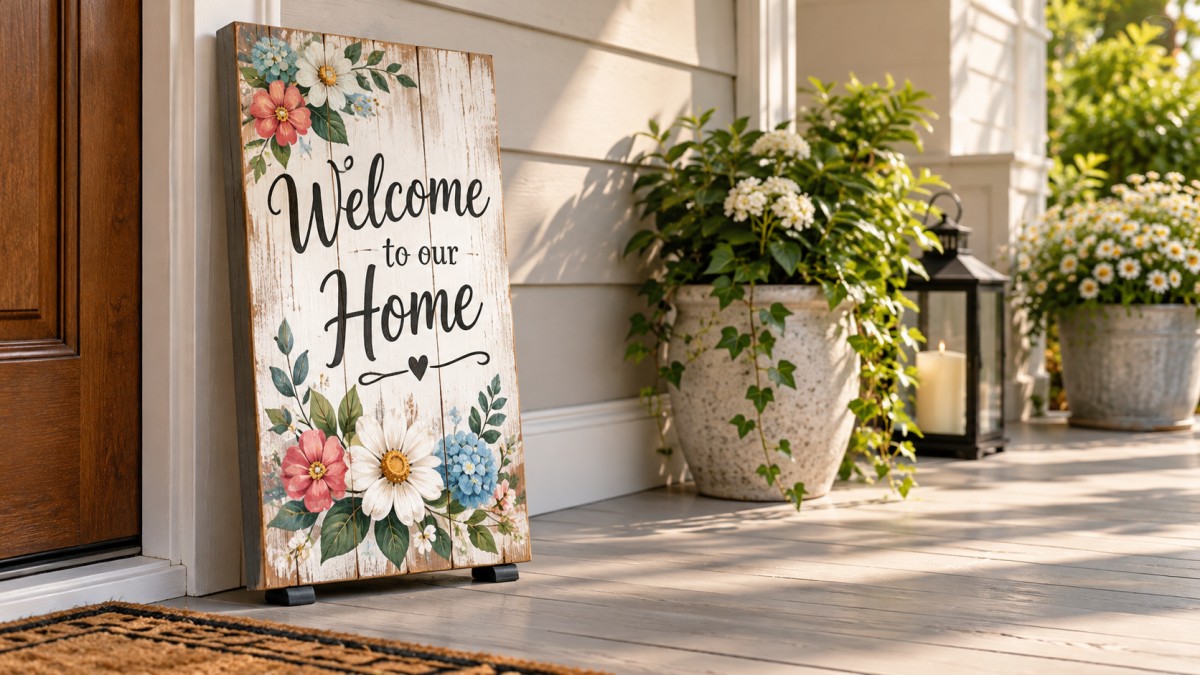
A few placement changes can prevent repeat repairs. Raise freestanding signs off damp flooring using stable, nonabsorbent feet that do not trap water. Leave ventilation behind wall-mounted pieces. Move decorations away from roof runoff, sprinkler spray, and spots where rain rebounds from steps.
Painted wooden planters need extra care. Use a removable growing pot or a suitable liner arrangement that keeps wet soil away from decorative wood while allowing drainage. Empty saucers before they overflow. A sealed exterior cannot protect a planter that stays wet from inside.
You can also keep one durable wooden welcome sign and shift seasonal color to the inside of nearby glass. For example, Spring Window Clings Gel, Jelly Window Stickers for Glass Refrigerators Home, Welcome Spring Window Decorations - Flowers Butterflies Bird, Kids‘ Love uses colorful soft TPR designs that attach to smooth surfaces and can be removed and stored for another season. This avoids repeatedly fastening seasonal accents through painted wood. Keep them off the wooden finish and follow the product’s placement and age guidance.
Catch the small failures before another wet season
Inspect handmade wooden porch decor when changing seasonal displays and after prolonged wet weather. Focus on bottom edges, joints, hanging points, and any surface facing strong afternoon sun. Repair small coating breaks once the underlying wood is dry, rather than waiting for sheets of paint to lift.
Before storage, clean and dry each piece, then keep it off damp floors in a ventilated space. Avoid wrapping damp wood tightly in plastic. If the same edge peels again after a careful repair, stop adding paint: check its contact with water, its ventilation, and whether that piece belongs in a more sheltered position.
Leave A Message
If you are interested in our products and want to know more details, please leave a message here, we will reply you as soon as we can.

We specialize in supplying home decor, handicrafts, and daily necessities.


