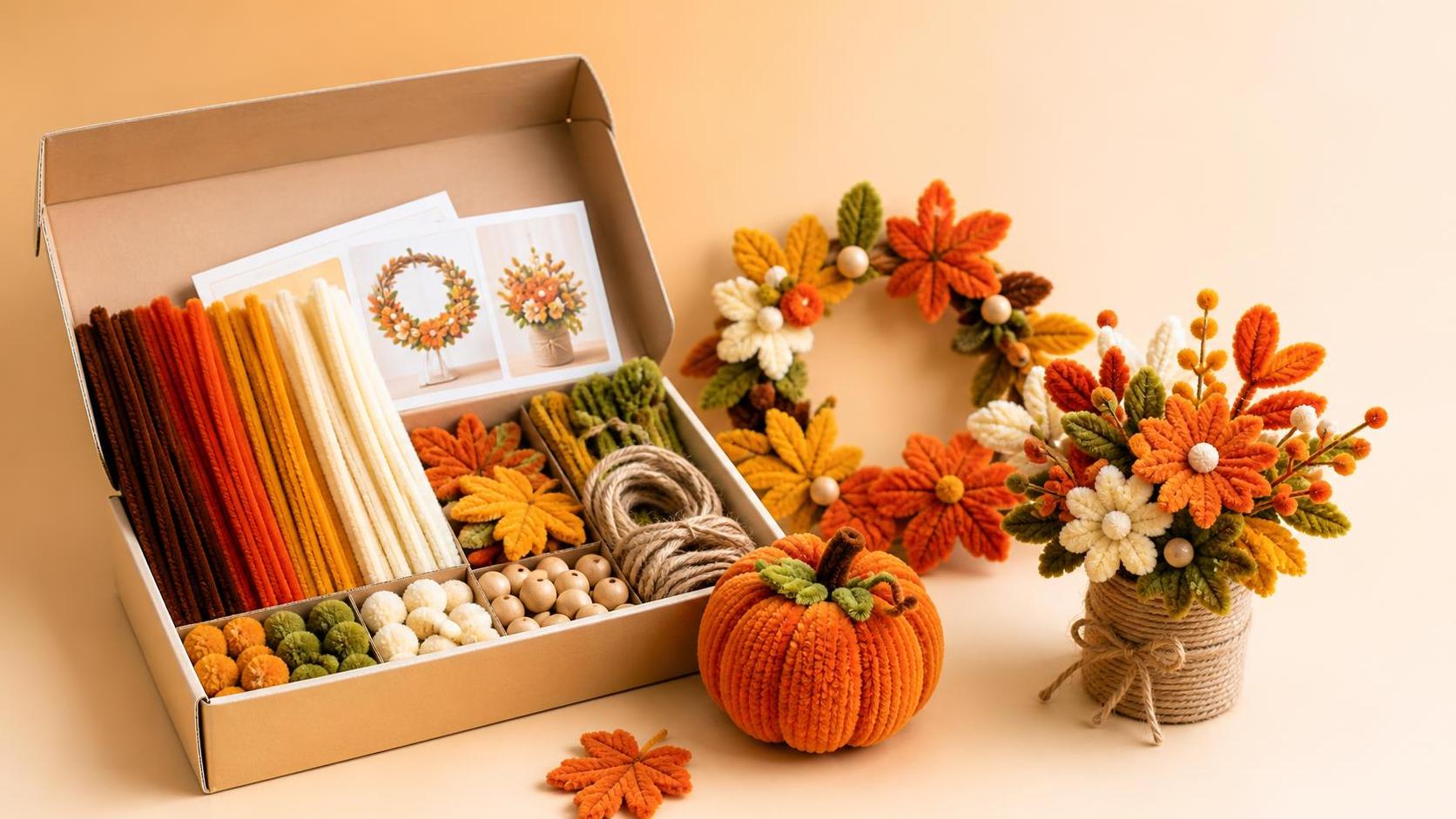
Custom Chenille Stem Craft Kits for Kids turn simple fibers, color, and shape into hands-on projects that can become small home decorations, seasonal displays, gift tags, table accents, or classroom artwork. A well-planned kit keeps creative work accessible without making every project look identical. The stems bend easily, hold their form after shaping, and pair naturally with felt, paper, wooden pieces, pom-poms, yarn, beads, and lightweight fabric details.
For home decor craft assortments, the strongest kit concepts balance open-ended play with a clear visual result. A child can follow a basic pattern to make a flower, animal, wreath, star, or miniature ornament, then vary the colors and details. This gives the finished piece enough structure to display on a shelf, hang near a window, attach to a greeting card, or include in a seasonal table setting.
What Makes a Chenille Stem Kit Work Well
Chenille stems, often called pipe cleaners, are built around a flexible wire core covered with soft chenille fibers. Their practical value comes from the combination of bendability and surface texture. The wire allows loops, spirals, stems, legs, petals, and frames to hold their intended shape. The fuzzy exterior softens the appearance, adds color, and helps small decorative components sit in place during assembly.
A custom kit should specify more than a general color assortment. Stem length, thickness, coating density, wire flexibility, colorfastness expectations, and pack arrangement all affect the final project. Shorter stems can suit compact ornaments and small character crafts, while longer stems allow larger flowers, crowns, mobiles, and free-standing forms. A very soft stem may be easier to twist but may not support a broad decorative shape. An overly rigid core can make detailed work difficult and may require additional attention to exposed ends.
Color selection should reflect the intended project rather than simply offering every available shade. A spring flower kit might need fresh greens, yellow, pink, lavender, and white, with a few darker stems for outlines. A winter decoration kit can use red, forest green, white, silver-toned accents, and natural wood elements. Keeping the palette intentional makes it easier to create an attractive result even when the assembly method is simple.
Designing Projects for Display Around the Home
Craft kits become part of the home decor category when the finished item has a clear place to go. Small projects can be designed as refrigerator decorations, gift-wrap toppers, hanging ornaments, napkin rings, pencil toppers, place cards, or window ledge accents. Larger projects may become floral hoops, lightweight door hangings, tabletop trees, or wall garlands.
The display condition matters during project design. Chenille stems are suitable for lightweight indoor decorations, but they are not a structural material for heavy objects or outdoor exposure. A flower bouquet made primarily from stems can stand in a small lightweight vase if the wire stems are grouped and supported. A large wall piece may need a paperboard, felt, or wooden base so that its shape does not sag. Adhesive-backed parts should be selected with the display surface in mind; a decoration intended for painted walls should not assume the same adhesion behavior as one intended for glass or smooth tile.
Scale is another frequent source of disappointment. A project card may show a wide wreath or a tall animal figure, but a kit with only a small number of stems cannot reproduce the visual density. The bill of materials should match the demonstrated design. If variations are encouraged, the instructions can show the minimum quantity needed for the basic version and identify optional materials for fuller or more detailed results.
Seasonal Themes Without Excess Waste
Seasonal kits work best when the core materials remain useful after the primary holiday has passed. Orange, brown, red, yellow, and green chenille stems can create pumpkins, leaves, acorns, turkeys, woodland animals, or general autumn flowers. Instead of relying on a large number of single-purpose cutouts, a kit can use reusable color families and a smaller set of printed guides. This reduces leftover components that have no role beyond one design.
Autumn window decorations can add a complementary layer to a chenille stem craft display. For example, soft, flexible, reusable TPR clings can be placed on clean glass while handmade leaves or pumpkins are arranged nearby on a sill, table, or hanging branch. A coordinated visual treatment may include warm harvest colors, but the materials should remain separated in the instructions because they attach and store differently.
For a related seasonal surface decoration, Fall Gel Window Clings for Glass Windows, FallThanksgiving Clings Gel Stickers,Hello Fall Leaves,Pumpkin for Autumn Holiday Window Decor uses soft TPR material intended for smooth surfaces such as glass. Reusable clings should be removed carefully, kept free from lint, and stored flat or according to the product packaging, while chenille stem projects should be protected from crushing to preserve their shaped details.
Materials That Add Value Without Overcomplicating Assembly
Chenille stems are versatile, yet a kit made only of stems can limit the finished appearance. Supplemental materials should each serve a recognizable purpose. Pom-poms can become heads, berries, flower centers, or animal noses. Felt pieces work well for wings, ears, leaves, and backing panels. Wooden beads can add a natural detail to garlands, figures, and hanging ornaments. Paperboard shapes provide flat surfaces for labels, faces, or layered decorative motifs.
- Pre-cut felt reduces the need for scissors during projects that depend on symmetrical ears, petals, or leaf shapes.
- Wooden components can add weight and visual contrast, although holes, edges, paint coverage, and dimensional consistency should suit the selected craft method.
- Paper instructions benefit from thick enough stock to remain readable after repeated handling, especially when they include cut-out templates or color reference panels.
- Decorative cord or ribbon creates an obvious hanging point for ornaments and wreaths, but its length should be practical for the intended display rather than supplied as an arbitrary extra.
Material combinations should be tested as an assembled object, not only as separate parts. A bead may fit over a stem but slide down if the project has no twist stop. Felt can look clean in a flat layout yet fold awkwardly when attached to a rounded chenille form. Glue dots may work on paper but detach from a fuzzy surface. Where adhesives are included, the instruction sequence should explain which parts need a clean, dry contact area and which elements can be secured by twisting instead.
Instruction Cards Need Real Assembly Logic
A craft kit is easier to use when the instruction card follows the actual order of construction. Starting with a recognizable shape often prevents confusion. For a flower, that may mean forming the petal loops first, tightening the center, attaching leaves, and only then adjusting the stem. For an animal, the body and head can be formed before smaller ears, eyes, or tail details are added.
Vague direction such as “twist into shape” leaves too much room for failure. Useful instructions identify the number of stems used in each step, whether a twist should be tight or loose, where to leave an exposed tail for the next component, and how to hide or turn inward a wire end. Small diagrams can be helpful, but the drawing must show the front and back when the distinction affects the result.
Custom Chenille Stem Craft Kits for Kids often benefit from a project difficulty marker, although the marker should describe the construction rather than make broad claims about suitability. A simple two-stem flower and a multi-part hanging mobile require different levels of coordination, time, and assistance. Separating designs by assembly complexity also prevents a compact starter kit from being judged against a more elaborate craft set.
Safety and Finishing Details
Because chenille stems contain wire, the cut ends deserve attention in both production and project instructions. Ends can be turned inward, covered by a pom-pom or felt part, or incorporated into a secure twist. A finished decoration should be examined for protruding wire points, loose beads, detached small parts, and adhesive residue before it is placed in a living area or packaged as a gift.
Safety statements should stay specific to the actual materials and validation available for the item. It is better to describe a component accurately than to use broad language that is not supported by testing or documentation. When a kit contains glue, paint, beads, sequins, magnets, cords, or small wooden pieces, the packaging and instructions need to account for their individual handling characteristics. Storage matters as well: loose components can be kept in divided bags or small inner boxes so that color assortments remain usable after the first project.
Finished chenille stem crafts should be treated as lightweight decorative items. They can collect dust because of their fuzzy surface. A gentle shake, soft dry brush, or low-contact cleaning method is usually more appropriate than washing or soaking. Moisture can affect paper, wood, fabric embellishments, and certain adhesives, while repeated compression can flatten the chenille pile and deform loops or petals.
Customization Begins With the Project Story
Customization is most effective when it starts with a defined project theme and assembly route. Color changes alone may produce a different assortment, but they do not necessarily create a coherent kit. A garden theme may use flower stems, leaf cutouts, mini pots, and plant labels. A winter cabin theme might combine evergreen shapes, snowflake details, wooden tags, and simple hanging loops. A home celebration theme can focus on table markers, wall accents, or handmade decorative initials.
Packaging format should support the project sequence. Components can be grouped by project, sorted by color, or divided into stages. A mixed bulk bag is compact but can make sorting tedious. Individual project packets provide clearer organization but add packing complexity and material use. For multi-project sets, a hybrid approach can work: shared color packs for common stems, plus smaller packets for distinctive embellishments and printed project cards.
Artwork and labels need enough room to communicate the contents, material composition, project count, handling notes, and any required warnings. The visible package should match the actual contents. When an illustrated design uses extra accessories not included in the set, that difference should be clear. Otherwise, the kit can create an avoidable mismatch between the displayed craft and the achievable result.
Production and Packing Controls
Stable craft kit quality depends on small operational details. Stem bundles should be counted consistently, and mixed-color assortments need a defined tolerance approach before packing begins. Printed instruction sheets should be checked against the latest component list. Felt shapes, beads, cord lengths, and wooden pieces must be verified in the same configuration used for the final pack, since substitutions can change both assembly steps and visual balance.
Compression during transport deserves practical consideration. Chenille stems generally recover from moderate packing pressure, but oversized pom-poms, delicate paper shapes, and pre-formed samples may not. Flat-packed elements should remain flat, while shaped display examples may need separate protection. If a kit includes reusable window clings or similar soft decorative sheets, they should be kept away from surfaces that could transfer ink, dust, or texture onto the cling material.
Before release, the assembled sample should be made using only the components placed in the retail pack. This simple control exposes missing quantities, unclear instructions, poor adhesive compatibility, imbalanced color allocation, and packaging that does not preserve the materials in usable condition. The value of a custom craft kit comes from that connection between the idea on the package and the decoration that can actually be made at home.
Leave A Message
If you are interested in our products and want to know more details, please leave a message here, we will reply you as soon as we can.

We specialize in supplying home decor, handicrafts, and daily necessities.


