
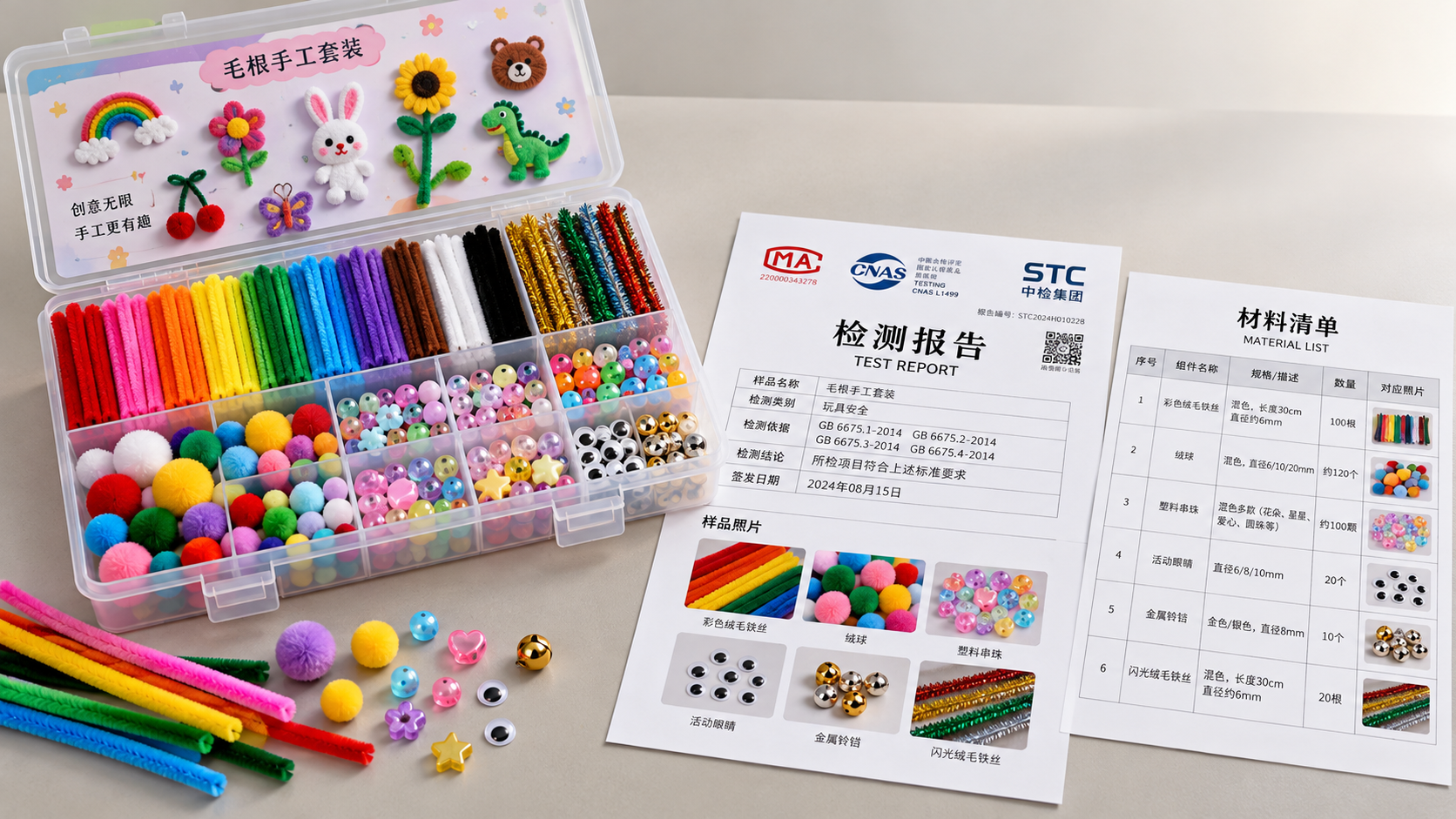
Before approving a pipe cleaner craft kit wholesale order, quality control and safety teams need product-specific evidence covering physical hazards, material safety, labeling, and traceability.
Sharp wire ends, detachable components, and unsuitable materials can create safety concerns, especially in children’s kits. Attractive samples and supplier assurances cannot establish compliance.
Request applicable test reports, material declarations, market-specific compliance documents, and production records. Check that each document matches the actual kit, intended age group, and destination market.
For home decor and craft buyers, the strongest approval package connects tested samples to production goods and defines when material or design changes require reassessment.
Which Safety Documents Should You Request First?
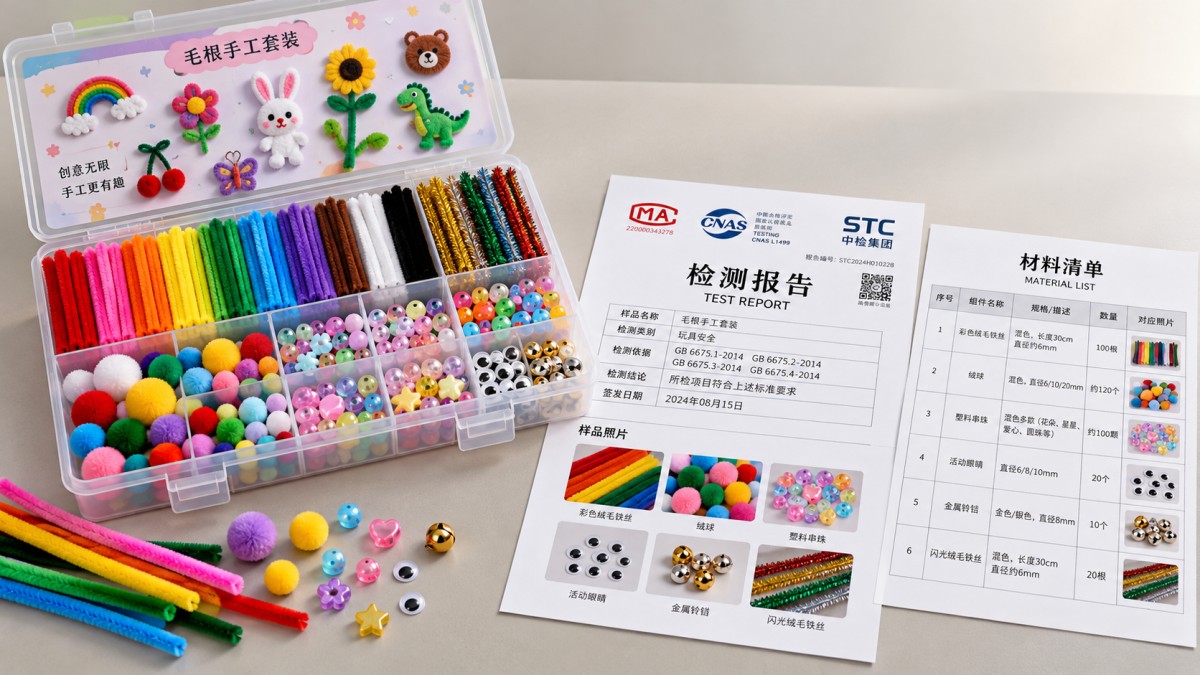
Start with a documented product classification. A children’s craft kit, adult hobby set, and decorative arrangement may face different requirements, despite sharing similar components.
Request the complete component list, intended users, proposed age grading, packaging artwork, instructions, destination countries, and available reports before deciding whether additional testing is necessary.
Use the following checklist to organize your initial review. Each record should identify the relevant product or materials clearly enough to support an approval decision.
Does the Evidence Cover the Intended Market and Age Group?
For the United States, determine whether the kit is a toy and whether it qualifies as a children’s product. Those classifications affect testing and certification obligations.
Children’s toys may require testing against applicable ASTM F963 provisions incorporated into federal requirements, alongside relevant lead, phthalate, small-parts, and other rules where applicable.
Where required, the responsible manufacturer or importer issues a Children’s Product Certificate using supporting results from a CPSC-accepted laboratory. A laboratory report alone is insufficient.
For EU toy sales, request evidence supporting applicable toy safety requirements, the EU Declaration of Conformity, CE marking, technical documentation, and relevant chemical restrictions.
EN 71-1, EN 71-2, and EN 71-3 commonly address mechanical properties, flammability, and migration of certain elements. Confirm which provisions apply to the specific kit.
For products classified as general consumer craft supplies or decorations, assess applicable general product safety, chemical, and traceability duties. Toy documentation cannot automatically establish suitability.
Age grading should reflect foreseeable use, marketing, component dimensions, and required skills. An older-age label cannot resolve a classification that conflicts with the product’s presentation.
Do Reports Address Exposed Wire and Small Components?
Pipe cleaners contain a metal core that may become exposed during cutting, twisting, or repeated bending. Request applicable sharp-point, sharp-edge, and use-and-abuse test results.
Ask whether testing represents how users will assemble the supplied projects. Instructions requiring wire cutting or tight bends should receive particular attention during risk assessment.
Review pom-poms, beads, eyes, connectors, and other accessories individually. Their dimensions and attachment methods influence choking hazards, particularly when parts detach during foreseeable handling.
Where scissors, needles, glue, or other tools are supplied, include them in the assessment. A report covering chenille stems alone leaves the complete kit unevaluated.
Check instructions for wire-end handling, necessary supervision, and tool use. Warnings should communicate residual risks clearly, while design controls address hazards that can reasonably be reduced.
Which Material Declarations Are Actually Useful?
Request a bill of materials identifying fiber composition, metal core, coatings, dyes, plastic accessories, adhesives, and relevant packaging materials. Record supplier references for each component.
A useful declaration identifies the material, issuing company, date, applicable restrictions, and supporting evidence. Broad claims such as “eco-friendly” or “safe” provide little verification value.
Testing should follow applicable requirements and the material risk assessment. Depending on composition and market, relevant checks may include lead, restricted phthalates, or element migration.
An SDS supports handling and hazard communication for relevant substances or mixtures, such as certain adhesives. It does not replace finished-product testing or compliance documentation.
Similarly, factory audits and retailer approvals describe supplier systems or commercial acceptance. They do not demonstrate that every component in your specific kit meets requirements.
How Can You Confirm Reports Match Production?
Compare report photographs and descriptions against approved samples, specifications, and packaging. Verify model numbers, component quantities, colors, dimensions, materials, and any supplied assembly tools.
Where several SKUs share one report, request the documented grouping rationale. Confirm that representative samples cover relevant differences in materials, colors, accessories, and construction.
Review laboratory identity, report completeness, testing dates, methods, and results. Verify accreditation scope where relevant, and confirm CPSC acceptance for applicable US children’s product testing.
A report’s age alone does not determine validity. Consider changes to the product, suppliers, applicable requirements, and any retailer rules governing report acceptance periods.
Request traceable authenticity checks when reports appear altered or inconsistent. Use independently verified laboratory contact details when confirming whether a report was genuinely issued.
What Should Trigger Retesting or a Shipment Hold?
Require written notification before suppliers change materials, component sources, coatings, dimensions, accessories, or assembly methods. Evaluate each change before accepting continued reliance on existing reports.
Retesting decisions should follow applicable rules and the significance of the change. New pigments, exposed-wire designs, or added accessories may introduce hazards absent from previous samples.
Hold approval when critical evidence is missing, samples differ from reports, or mandatory labeling remains unresolved. Record each issue, responsible owner, and required closure evidence.
Before shipment, verify that inspected goods match the approved specification and packaging. Retain purchase-order references, batch identifiers, inspection records, and approved samples for investigation.
Apply the Same Discipline to Related Seasonal Decorations
Home decor assortments often combine craft kits with window decorations. Assess each product separately because intended use, material composition, and foreseeable handling can differ substantially.
For related seasonal assortments, review Spring Window Clings Gel, Jelly Window Stickers for Glass Refrigerators Home, Welcome Spring Window Decorations - Flowers Butterflies Bird, Kids‘ Love alongside its own documentation.
These soft TPR decorations offer removable, reusable designs for smooth surfaces in homes, classrooms, and nurseries. Request evidence supporting safety claims and the intended applications.
Descriptions such as “non-toxic” require substantiation. Classroom placement or child-focused marketing should prompt a classification review, including foreseeable handling and any relevant detachable-part hazards.
Approve the Documented Product, Then Control Changes
A reliable pipe cleaner craft kit wholesale approval links classification, applicable testing, material evidence, labeling, and traceability. Missing connections deserve attention before purchase approval.
Use a clear release rule: approve only when evidence matches the ordered kit and destination requirements, with unresolved hazards closed and production changes controlled.
This gives quality and safety teams a defensible decision, helps purchasing resolve gaps early, and provides records needed if a complaint or shipment issue arises.


