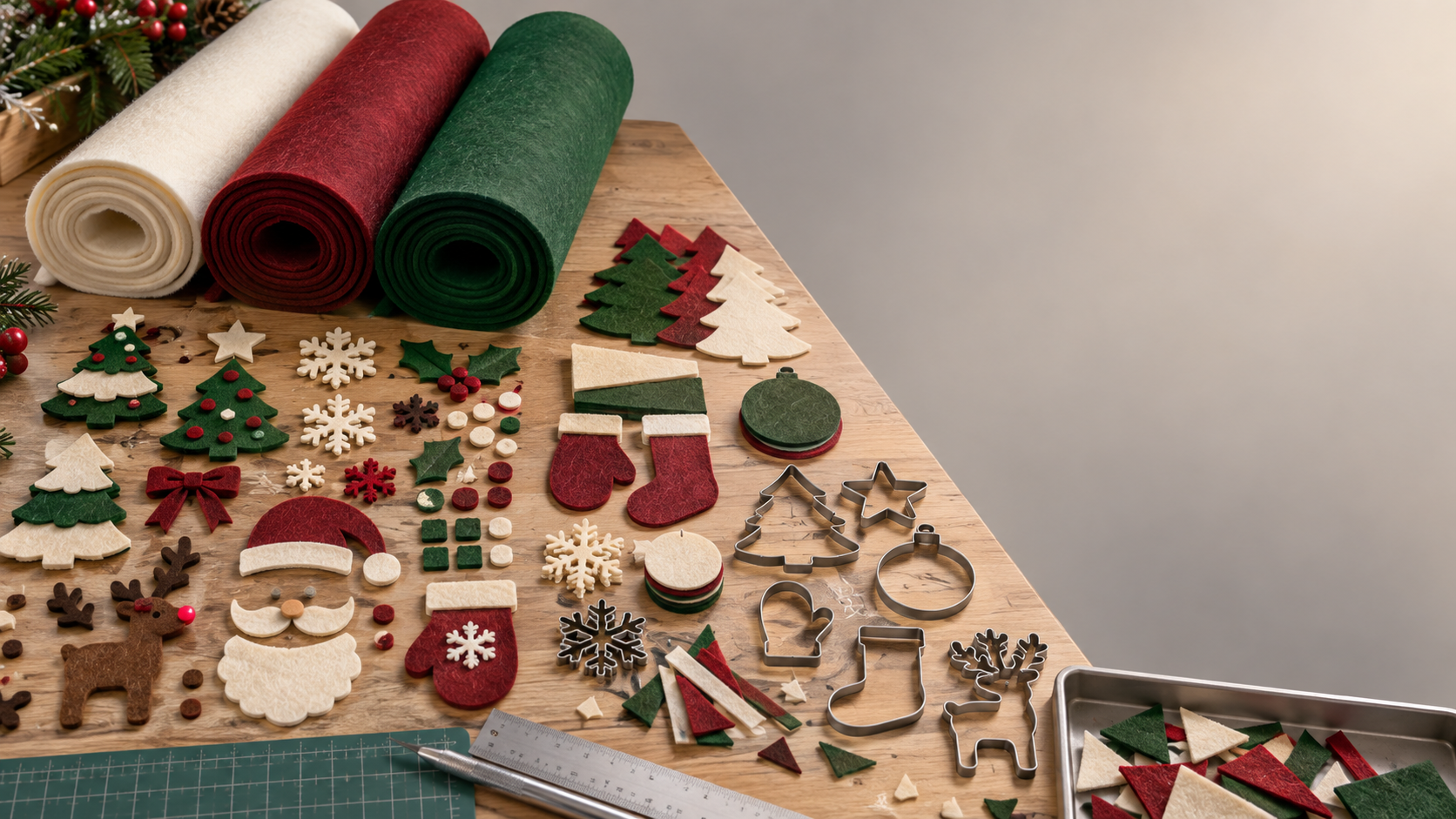
Waste allowance is not a generic percentage added to every order. For bulk wool felt craft supplies, it should be calculated from the usable yield of the actual pattern, material specification, and quality standard. A simple decorative shape cut from one color can use material efficiently; a layered ornament with narrow parts, matched colors, and clean display-facing edges cannot.
The purchasing objective is to buy enough felt to complete the planned production quantity without tying up unnecessary cash in surplus stock. The most reliable approach is to calculate material need from the cutting layout first, then add allowances for the losses that the layout and production process are likely to create.
Start with net material consumption, not the finished item size
Begin with the total area or length of felt that becomes finished components. If a home decor craft uses a front panel, backing, appliqué pieces, hanging loop, and small accents, list each felt component separately. Do not estimate from the overall size of the final ornament. Empty spaces between pieces, seam margins, directional placement, and rejected cut parts are part of the real material requirement.
For sheet felt, calculate the area of every component and multiply it by the planned production quantity. For felt supplied by the roll, convert the pattern into the length required at the available roll width. The better method is to ask the factory or cutter for a nesting layout: a visual arrangement showing how many pieces fit across and along the material. This reveals yield more accurately than adding a flat allowance to a rough area estimate.
A practical purchasing formula is:
Order quantity = net material requirement ÷ expected usable yield + contingency for approved production risk.
Usable yield is the portion of received felt that can actually become approved components. It is affected by offcuts, defects, shade restrictions, cutting accuracy, and the need to retain material for replacement pieces.
Separate the sources of waste before setting the allowance
Combining all losses into one unexplained buffer makes quotes hard to compare and later orders hard to improve. Break the allowance into categories so the supplier, cutting team, and buyer are working from the same assumptions.
The largest avoidable error is treating cutting waste and quality risk as the same thing. Tightening a cutting layout may reduce offcuts, but it will not solve a color-lot problem. Conversely, buying extra material does not fix a pattern that is poorly suited to the sheet or roll dimensions.
Pattern complexity changes the calculation more than order volume
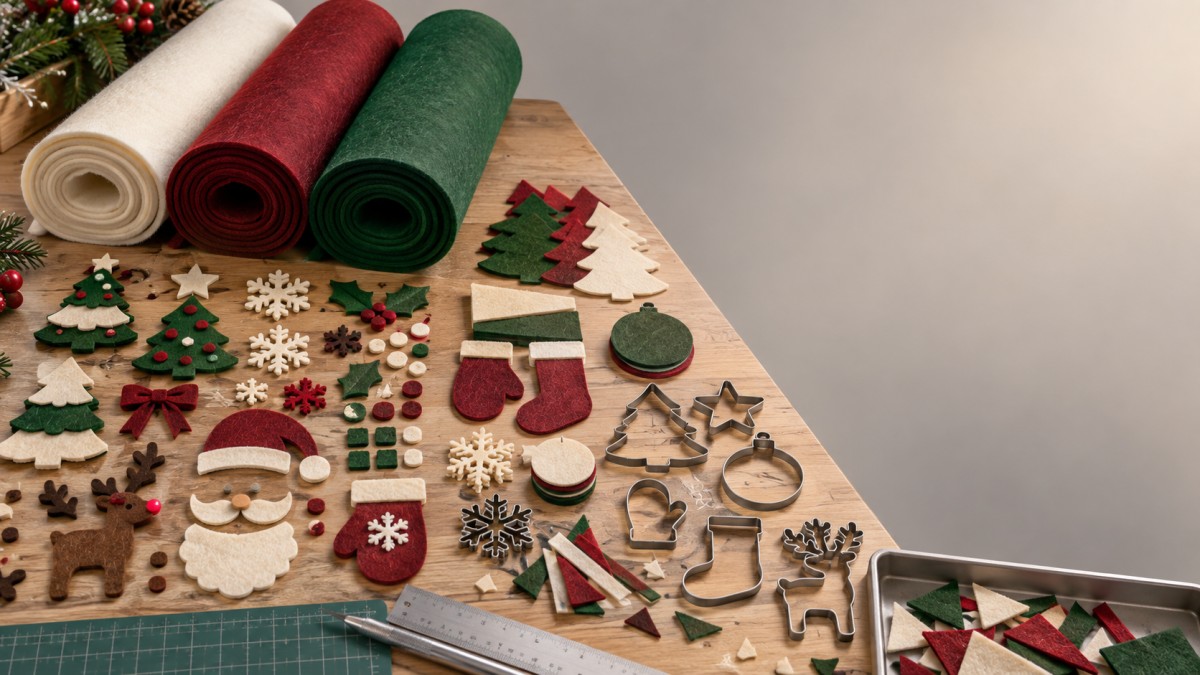
Simple geometric cuts generally produce predictable yields. Waste becomes harder to control when the design contains branches, lettering, scalloped edges, tiny accessories, or several nested colors. These shapes generate more small offcuts, and small offcuts are not automatically reusable. They are only useful when a later component matches the color, thickness, finish, and size needed.
Layered home decorations require another check: calculate each color independently. A multi-color design may have excellent total material utilization while still running short of one critical color. Do not offset a shortage of red felt with surplus white felt simply because the total square-meter purchase looks sufficient.
Thickness also matters. Thin felt may allow closer cutting but can shift or stretch during cutting. Stiffer or thicker felt may hold its shape better yet require wider separation between cuts, especially when using dies. When comparing quotations for wool felt, make sure the proposed thickness and density are aligned with the approved sample. A lower-cost material that cuts differently can create a false saving if it changes yield or rework rates.
Use a tiered allowance instead of one universal buffer
A useful internal method is to classify each order by risk. Low-risk orders use repeat patterns, a single stable color, straightforward cuts, and an established material specification. Medium-risk orders add several shapes or colors but use a proven process. High-risk orders include new designs, strict shade matching, intricate cuts, premium visual standards, or compressed delivery windows.
Set the allowance after reviewing the risk tier, rather than copying the previous order’s percentage. The allowance should be expressed in the same unit as the purchase: sheets, linear meters, kilograms, or rolls. For materials sold in fixed roll lengths or sheet packs, round up to the purchasable unit only after the yield calculation. Rounding too early can conceal excess inventory; rounding too late can leave production short.
For repeat programs, retain actual consumption records by SKU. Track received quantity, accepted material, cutting scrap, post-cut rejects, and remaining usable stock. After several production runs, those records are more valuable than a generic industry rule because they reflect the real pattern and factory process.
Build the allowance around the quality requirement
Not every part of a felt decoration needs the same surface quality. A visible front panel may require clean, consistent felt with no noticeable marks, while an internal backing or hidden reinforcement may accept smaller usable offcuts. Separating these components in the bill of materials can improve yield without lowering the consumer-facing appearance.
That approach should be agreed before production begins. If the specification simply says “wool felt” without defining color, thickness, surface appearance, and permitted use of minor variations, the factory must make assumptions during cutting. Those assumptions often appear later as disputes over scrap responsibility or unexpected requests for extra material.
The same discipline is useful when sourcing a mixed seasonal range. A buyer may combine fabric crafts with items such as Christmas Gel Window Clings - Xmas Santa Claus Snowman Snowflake Penguin Christmas Tree Gift Window Stickers for Kids, which use reusable soft TPR rather than felt. They should remain separate in the material plan: their festive retail theme may align, but their material yields, storage needs, and production losses do not.
What to send the supplier before requesting a material quote
A vague request for bulk wool felt craft supplies usually produces a vague allowance. Send enough information for the supplier to calculate, or challenge, the yield properly:
- Finished component drawings or cutting files, including seam allowance and orientation restrictions.
- Required felt composition, thickness, density or hand-feel, color references, and acceptable variation.
- Planned order quantity by SKU and by color, not only the total program quantity.
- The intended cutting method: hand cutting, laser cutting, die cutting, or automated knife cutting.
- Which components are display-facing, which may use offcuts, and what defects are unacceptable.
- Packaging and delivery timing, particularly when a replacement material lot could delay a seasonal launch.
Ask the supplier to state whether the quoted quantity includes cutting loss, material inspection loss, and replacement reserve. A quote can look lower simply because one party has excluded these items. Comparing like-for-like assumptions is more useful than comparing headline material quantities.
Do not let a large order create false confidence
Higher volume can improve nesting because more patterns are available to arrange together. It can also reduce the impact of one damaged sheet or short roll. However, volume does not eliminate waste from directional layouts, strict lot matching, or intricate shapes. A large order placed with an untested pattern may magnify an incorrect yield assumption.
For a new design, approve a small cutting trial before locking the final purchase quantity. The trial should use the intended material and cutting method, then record the actual number of acceptable pieces obtained from a known quantity. This is especially important for seasonal home decor, where late material replenishment may have limited value after the selling window has passed.
Turn the calculation into a purchasing control
Before issuing the purchase order, compare three figures: theoretical net consumption, the supplier’s planned usable yield, and the final quantity rounded to the selling unit. Then identify who owns each risk. If the material supplier controls color consistency but the factory controls cutting layout, those responsibilities should not be hidden inside one “waste allowance” line.
A defensible allowance is specific enough to explain, yet flexible enough to reflect the design. That gives purchasing teams a clearer material budget, reduces last-minute replenishment, and makes future felt orders easier to price from actual consumption rather than guesswork.
Leave A Message
If you are interested in our products and want to know more details, please leave a message here, we will reply you as soon as we can.

We specialize in supplying home decor, handicrafts, and daily necessities.


