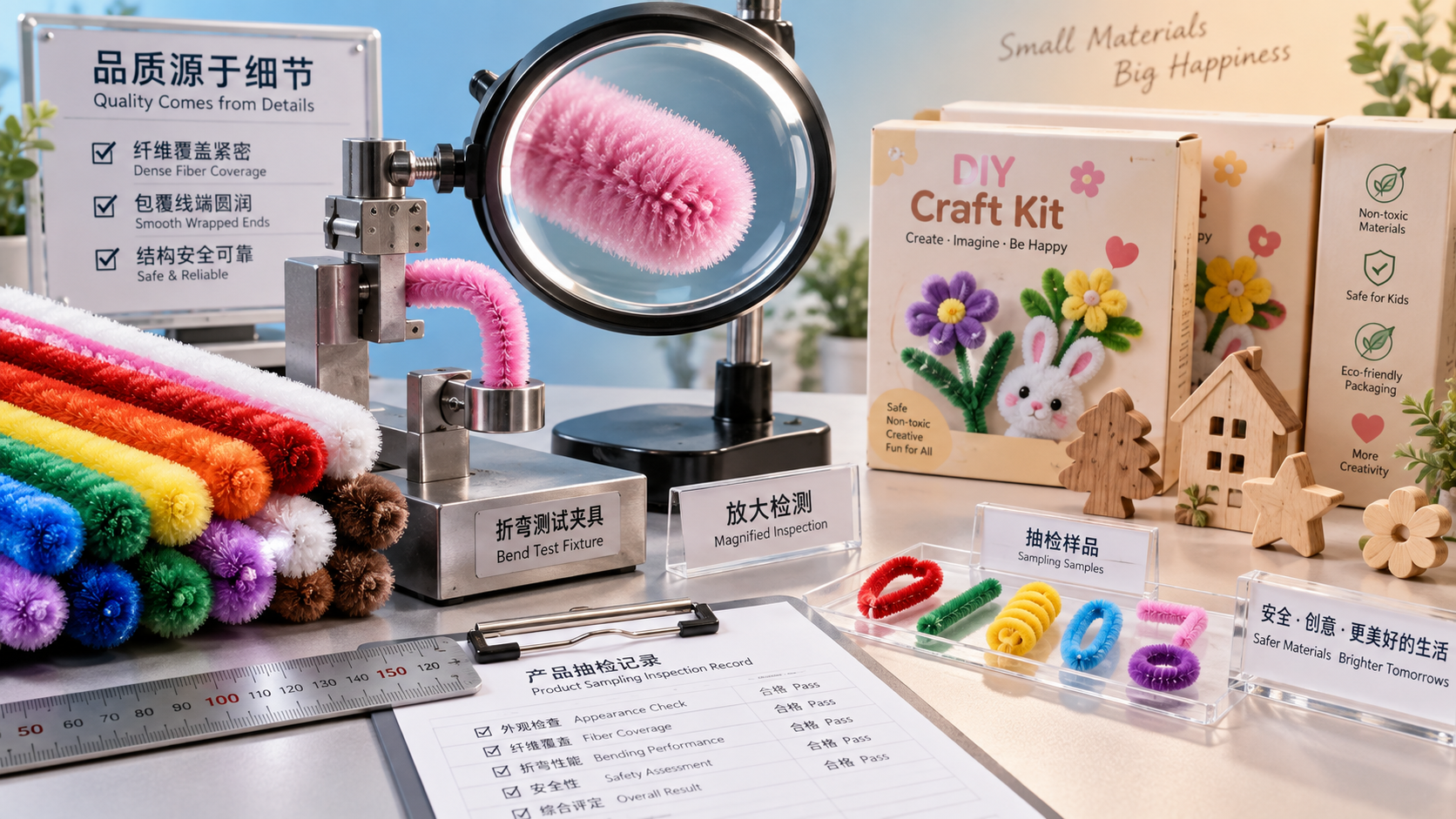
How to Verify Wire End Safety from a Pipe Cleaner Craft Kit Producer
For quality and safety managers, wire-end verification should be a release requirement, not a final visual check after production has already been approved.
A dependable pipe cleaner craft kit producer must demonstrate that every exposed wire end is contained, durable, compliant, and appropriate for the stated consumer age group.
The practical objective is simple: prevent scratches, punctures, wire exposure, ingestion hazards, and avoidable retail complaints before craft materials enter distribution channels.
Verification should combine supplier documentation, incoming inspection, functional testing, packaging review, and corrective-action controls instead of relying on supplier assurances alone.
When these controls are documented consistently, buyers can make faster approval decisions while protecting consumers, brand reputation, and long-term supply continuity.
Start With the Highest-Risk Wire-End Questions
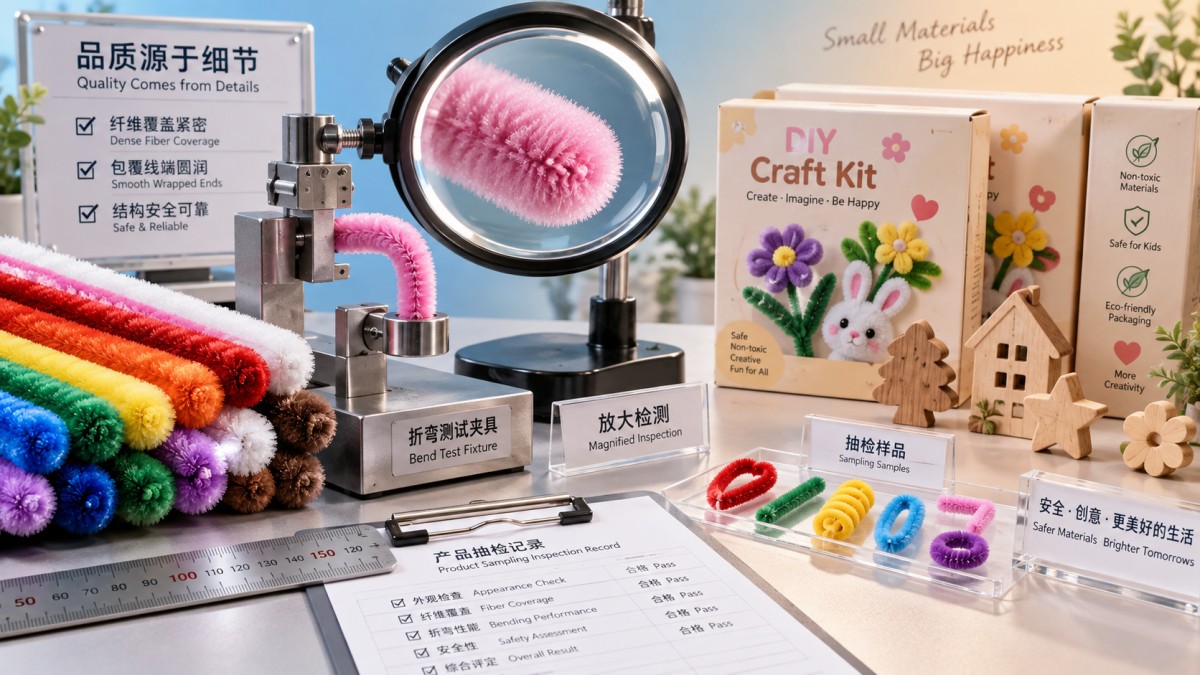
Before reviewing samples, define which failure modes would make the kit unacceptable. Sharp protrusions, loose caps, unraveling fibers, and exposed metal strands require immediate attention.
Ask the pipe cleaner craft kit producer how the wire ends are finished. Common methods include folded ends, wrapped fiber coverage, plastic end caps, heat-sealed coverings, or concealed construction.
A folded wire end is not automatically safe. The fold must remain closed after twisting, bending, pulling, and repeated handling by consumers.
Inspect both ends of every pipe cleaner sample, including pieces inside bundled packs. A single unprotected end can create a batch-level safety concern.
Evaluate whether the end treatment remains effective after normal craft use. Children and adults may twist stems, form shapes, untangle pieces, and reuse materials repeatedly.
Confirm that wire ends cannot migrate through the chenille covering. Dense fiber coverage is useful, but it should support a robust mechanical finish rather than replace one.
Quality teams should also distinguish between visual acceptability and functional safety. A smooth-looking end may still become sharp when compressed or pulled.
Request Evidence Before Approving Production
Supplier declarations are useful, but they should be supported by traceable evidence. Request specifications, construction drawings, approved samples, test records, and production inspection procedures.
The specification should state wire type, diameter, coating, fiber composition, end-treatment method, permitted tolerances, and the intended age-grade classification for the finished kit.
Ask whether the producer uses incoming material controls for metal wire. Consistent wire diameter and coating quality reduce the chance of breaks or irregular cut edges.
Review the factory’s work instructions for cutting and end finishing. They should identify tooling, inspection frequency, defect examples, and escalation actions for exposed wire.
A credible pipe cleaner craft kit producer should provide batch traceability. Lot numbers should connect finished packs to wire sources, production dates, operators, and inspection records.
Request recent internal quality reports rather than only a polished audit presentation. Defect trends reveal whether wire-end issues are measured, understood, and actively controlled.
Corrective-action records are particularly valuable when historical defects occurred. Check whether the factory identified root causes, validated improvements, and monitored recurrence after implementation.
Perform Practical Pull, Bend, and Abrasion Checks
Incoming inspection should reproduce realistic handling conditions. Use a documented sample plan that covers different colors, production lots, pack positions, and wire-end orientations.
Begin with a tactile inspection. Wearing appropriate protective gloves, run fingers carefully along each end to detect hard points, uneven folds, or protruding metal.
Next, conduct a controlled pull check on the fiber covering near both ends. The covering should not slide enough to expose a sharp wire section.
Perform repeated bend-and-twist cycles that reflect normal crafting. Inspect after each sequence for wire breakage, end opening, coating cracks, or fiber separation.
Abrasion testing is also relevant when pipe cleaners are packed with accessories. Friction against beads, wooden pieces, plastic components, or metal fasteners can damage end coverage.
Record the test method, fixture, sample quantity, acceptance criteria, and outcomes. A repeatable internal protocol is more useful than undocumented manual handling.
Where regulations or customer programs require formal testing, use an accredited laboratory. Internal checks should support routine control, not substitute for required compliance evidence.
Match Safety Controls to Age Grade and Retail Market
Wire-end safety cannot be assessed separately from the intended user. A product designed for young children requires stricter controls than an adult seasonal craft assortment.
Confirm the stated age grade on artwork, instructions, ecommerce content, and master cartons. Inconsistent messaging can create compliance exposure even when the material itself performs well.
For children’s products, review applicable market requirements before shipment. Relevant frameworks may include mechanical safety, chemical restrictions, labeling rules, and small-parts considerations.
Ask the supplier which standards apply to the destination market and finished product configuration. Test reports must match the actual material, construction, age grade, and packaging.
Consider the full kit, not only the pipe cleaners. Scissors, wires, beads, wood shapes, adhesives, and decorative attachments may alter the overall safety assessment.
For example, seasonal assortments may pair craft materials with reusable decorations such as Halloween Window Gel Clings Ghost Pumpkin Bat Witch Cat Boo Blood Decal Stickers for Halloween Home Party Window Decorations.
Those soft TPR window decorations may be safe and reusable when properly specified, but each component still needs its own material, labeling, and intended-use review.
Inspect Packaging and Consumer-Use Conditions
Packaging can either protect wire ends or create additional damage. Review how pieces are bundled, tied, sealed, compressed, and positioned inside the retail pack.
Over-compression can bend wire ends into unstable shapes. Loose packing can cause abrasion during transport, especially when kits contain rigid or heavy decorative accessories.
Open samples after simulated transit or carton drop testing. Check whether wire ends remain covered and whether loose pieces create sharp-contact points inside the pack.
Instructions should present realistic use limits where appropriate. Warnings must be accurate, market-specific, and consistent with the product’s age grading and risk assessment.
Also inspect display samples and opened return units. These often reveal damage patterns that factory-fresh samples do not show during initial supplier evaluation.
Retailers should retain reference samples from approved lots. Comparing future deliveries against those samples helps identify changes in density, wire stiffness, or end finishing.
Set Clear Acceptance Criteria and Supplier Accountability
Define measurable acceptance criteria before placing production orders. Avoid vague statements such as “no sharp ends” unless the inspection method and rejection threshold are specified.
Your quality agreement should state that no exposed metal, detached cap, opened fold, or hazardous point is permitted within the approved sample plan.
Include requirements for pre-production approval, in-process inspections, final random inspections, and corrective actions when wire-end defects exceed agreed quality limits.
Require the supplier to notify you before changing wire sources, coating materials, end-finishing equipment, fiber density, packaging format, or subcontracted production locations.
These change-control requirements matter because minor process substitutions can materially affect wire retention and consumer handling safety without changing the product’s appearance.
For higher-risk programs, conduct periodic factory audits focused on actual production lines. Verify that approved procedures are used during normal production, not only during customer visits.
Make Release Decisions Based on Evidence, Not Appearance
Wire-end safety verification is strongest when it combines construction review, sample testing, compliance documents, packaging assessment, and traceable supplier controls into one approval decision.
A qualified pipe cleaner craft kit producer should be able to explain its process clearly, provide current evidence, and correct defects before goods reach retail channels.
Quality and safety managers should reject uncertainty around exposed wire risks. Clear acceptance standards and repeatable checks protect users while supporting reliable home decor craft sourcing.
Leave A Message
If you are interested in our products and want to know more details, please leave a message here, we will reply you as soon as we can.

We specialize in supplying home decor, handicrafts, and daily necessities.


