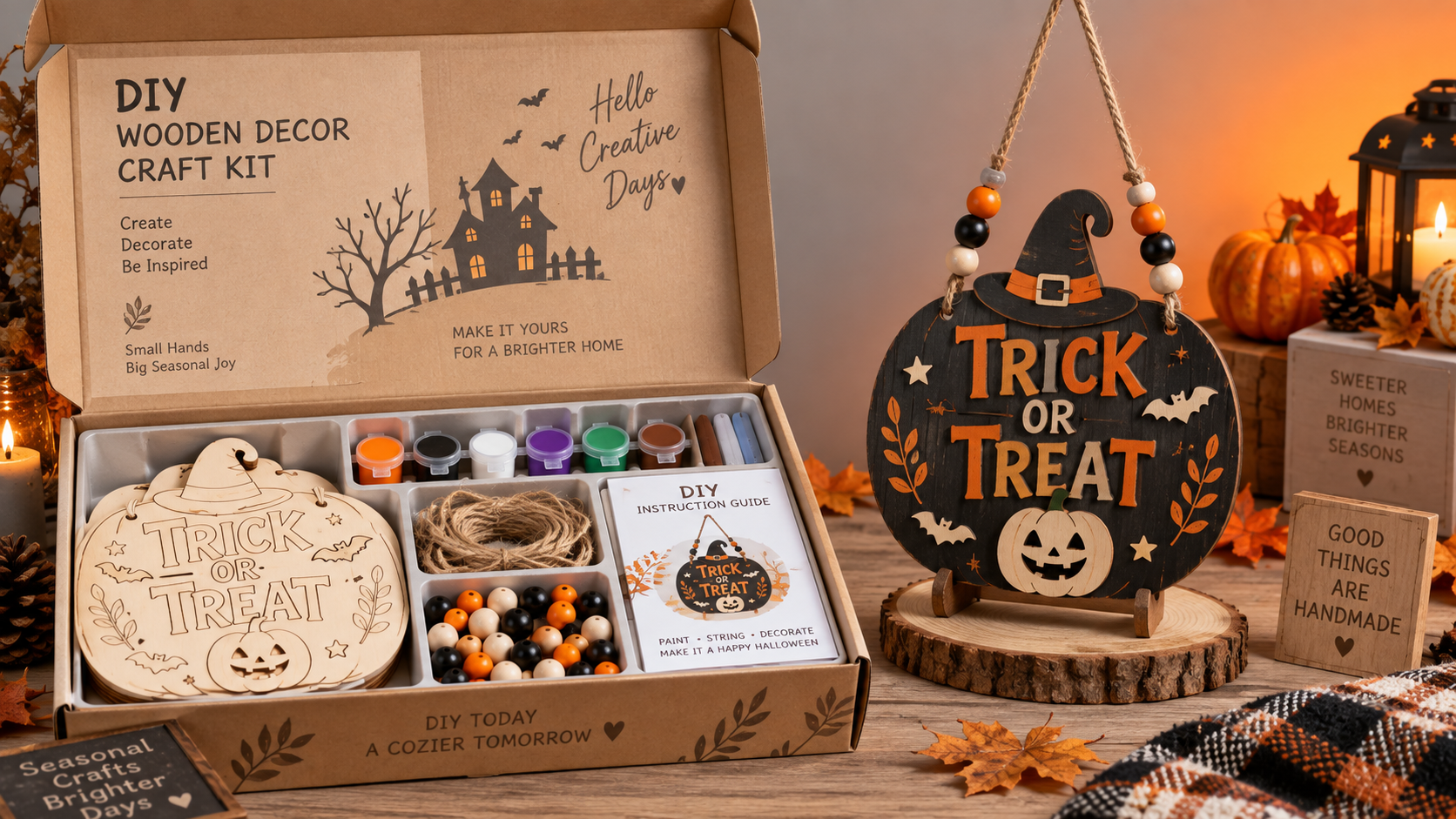
Custom packaging is worth requesting from a DIY craft kit supplier when it changes a commercial outcome: it protects fragile parts, makes the product easier to sell through a specific channel, reduces fulfilment mistakes, or supports a price position that a plain carton cannot justify. It is not automatically worthwhile simply because a branded box looks more polished.
For business buyers, the decision should begin with the kit’s route to market. A craft kit sold in a retail store, included in a seasonal promotion, or sent directly to consumers has different packaging needs from one supplied in bulk to workshops or subscription-box assemblers. The most cost-effective option is usually a level of customization that solves a defined operational or merchandising problem, rather than a fully bespoke package for every SKU.
Start with the cost of the problem, not the cost of the box
Custom printing, inserts, shaped trays, sleeves, labels, and upgraded materials all add cost. That increase may be sensible when the standard package creates a larger hidden expense elsewhere. Common examples include damaged components, missing parts, slow shelf replenishment, customer confusion, and product returns caused by unclear instructions.
A small kit containing threads, wood pieces, paint pots, beads, adhesive, and instruction sheets can look disorganized after transport if its contents are loose. In that situation, a simple printed inner card or compartmentalized insert may be more valuable than a premium rigid box. It helps keep components together, gives the customer an immediate parts check, and creates a cleaner unboxing experience.
Packaging becomes a weak investment when the product is still being tested, the assortment changes frequently, or order quantities are uncertain. A buyer may then be left with branded packaging that cannot be reused after an artwork revision, language change, or shift in the kit contents. For early-stage ranges, an unprinted standard carton combined with a custom label, belly band, or insert often provides a better balance between brand presentation and inventory flexibility.
When customization has a clear commercial case
Four situations usually justify asking a craft kit manufacturer for packaging development.
- The product will compete on a retail shelf. Shelf-facing packaging needs to state the activity, age positioning where relevant, contents, and visual theme quickly. A generic shipping carton does not perform this role.
- The kit is intended as a gift or seasonal item. Buyers are more likely to judge giftable craft products by presentation before they assess materials. Seasonal collections also benefit from packaging that makes the occasion immediately recognizable.
- Component protection affects profitability. Fragile ceramic items, wood shapes with delicate finishes, paint containers, and loose decorative pieces may require dividers, bags, or fitted supports. The goal is not elaborate presentation; it is fewer damaged or incomplete kits.
- Your brand needs a consistent range. When several projects are sold under one label, consistent colors, typography, layout, and instruction style help the range read as a collection. This matters more when repeat purchase is part of the plan.
There is also a less obvious case: packaging can reduce work for the buyer’s own operation. A clear outer label, scannable item identification, and a repeatable carton format can make warehouse receiving, pick-and-pack, and merchandising more reliable. These details often matter more than a decorative foil finish.
Choose the smallest customization that solves the requirement
“Custom packaging” covers very different levels of commitment. Treating them as one decision leads buyers to over-specify.
The right choice is often a combination: a standard-size carton for supply-chain efficiency, a branded printed sleeve for shelf identity, and a practical interior bag or divider for component control. That approach avoids paying for customized features that the customer will not notice or that do not improve handling.
Seasonal home decor kits need a different packaging calculation
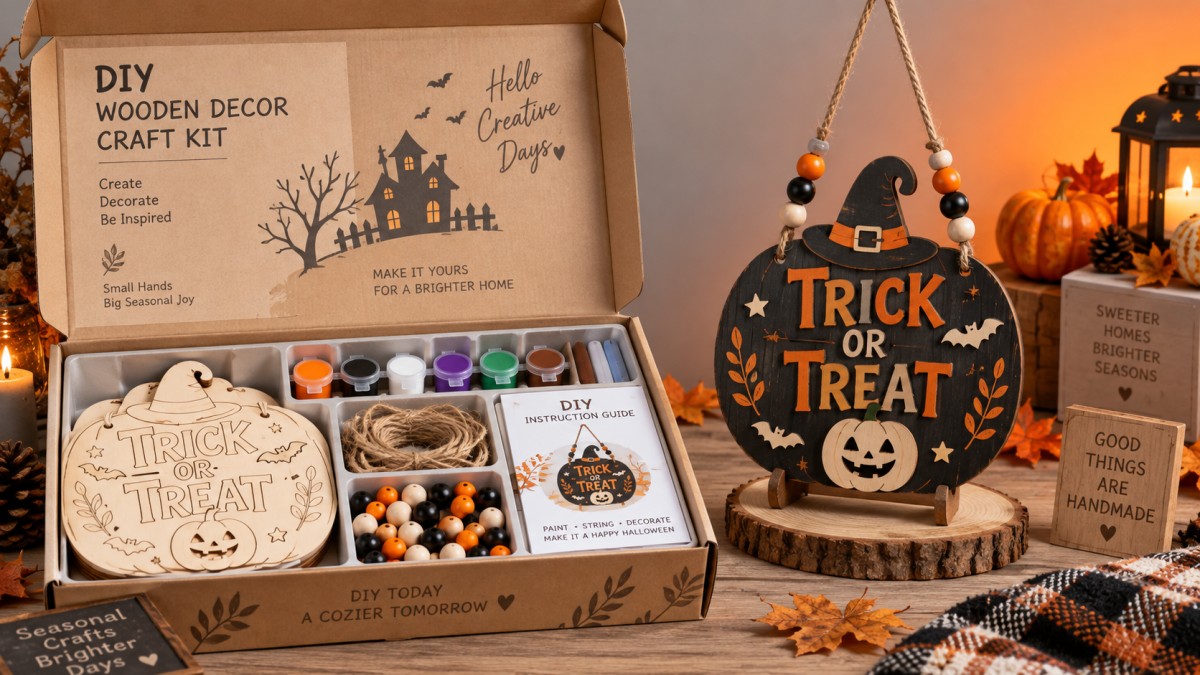
Seasonal projects have a narrow selling window, so custom packaging should help buyers sell the item quickly without creating excessive leftover material. The packaging should make the finished result visible and communicate where it will be used. A porch sign kit, for example, benefits from showing the completed hanging decoration rather than only a collection of unfinished wooden parts.
A finished seasonal decor item can also be useful as a reference point when defining a kit’s pack format. This Halloween Sign Halloween Spooky Porch Sign Vertical Wooden Porch Sign for Door Decorations, Farmhouse Hanging Wall Sign for Home Outdoor Garden Decor illustrates the kind of product details that packaging may need to communicate: a wooden construction, a ready-to-hang rope, a double-sided design, and use on doors, porches, walls, or in gardens. For a DIY version, the pack should make clear which of those features are included as materials, which are created by the customer, and whether tools or finishes must be supplied separately.
Seasonal packaging should also avoid overcommitting to a design that cannot carry into the next selling cycle. A removable seasonal sleeve around a neutral core carton can preserve flexibility. The same principle applies when using soft pink, dark, green, or white visual elements: they should support the product theme without making unsold packaging unusable for a revised design.
What to confirm with a DIY craft kit supplier before approving artwork
Artwork approval should come after the packaging structure and packing process are understood. A visually appealing box can still fail if the supplier must force components into it, if the instruction sheet does not fit once folded, or if a change in material thickness alters the pack dimensions.
- List every component, including protective bags, instruction sheets, hanging hardware, labels, and any tools supplied with the kit.
- Decide what the customer must understand before purchase: finished size, project difficulty, contents, material type, display use, or assembly requirements.
- Ask how components will be counted, bagged, and positioned inside the pack. This is especially important for mixed-media kits.
- Review a physical sample or a full packing mock-up before releasing bulk production. Check whether the package survives normal handling and whether the opening sequence is clear.
- Confirm which elements are reusable if an artwork, language, or barcode changes. Reusable core packaging lowers the cost of future revisions.
Do not treat the supplier’s packaging capability as separate from its product capability. A supplier working across wooden, fabric, ceramic, plastic, and handwoven home decor components needs to coordinate materials that behave differently in transit and during packing. A stable network can simplify that coordination, particularly for kits that combine a wood base with textiles, decorative accessories, or ceramic embellishments. Certified production resources and established partnerships can also make it easier to maintain consistent packaging execution as the assortment grows.
Avoid premium packaging that creates downstream friction
The common mistake is selecting packaging based on presentation alone. Oversized boxes increase storage and transport volume. Complex inserts may slow assembly. Excessive decorative layers can frustrate customers who expected a practical craft activity. For kits with low component value or a short retail life, those costs are hard to recover.
The opposite mistake is using packaging that is too generic for the channel. A plain bag may work for workshop replenishment, but it leaves a retailer to explain the project at the shelf. It also makes a well-designed craft kit look interchangeable with loose supplies.
Request customization when it improves the buying decision, protects the kit, or removes an operational problem. Keep standard packaging when demand is uncertain or the product changes often. Before comparing quotes, define the job the package must do. That gives the supplier a usable brief and gives the buyer a way to judge whether the added cost is producing real value.
Leave A Message
If you are interested in our products and want to know more details, please leave a message here, we will reply you as soon as we can.

We specialize in supplying home decor, handicrafts, and daily necessities.


