Gel window stickers usually fall off because dust, oily residue, moisture, or uneven contact prevents them from gripping the glass. Temperature changes can also contribute, particularly on windows that become hot in sunlight or collect condensation overnight. When spring flowers or seasonal decorations end up on the floor, start by cleaning both surfaces and choosing a dry, room-temperature pane—not by adding glue.
If you searched for “window stickers gel” after repeatedly pressing the same decoration back into place, check when and where it drops. Immediate peeling suggests contamination or poor contact; overnight slipping points toward moisture or changing conditions. A torn, stretched, or deteriorating sticker may need replacing, but a dirty one may still be reusable.
Start with the way the sticker fails
The pattern gives you a useful starting point before you wash every decoration or rearrange the display.
Plain glass is the most useful troubleshooting surface. Frosted, patterned, or heavily textured panes reduce the area touching the gel. Applied films and specialty coatings may also have care restrictions, so check their instructions before decorating or cleaning them.
Clean the glass and gel separately
Gel clings generally rely on close surface contact rather than a separate glue layer. A pane can look clean while still carrying cooking grease, fingerprints, or a film from household cleaners. The sticker itself can collect lint after landing on carpet or being handled repeatedly.
Prepare a residue-free patch of glass
Remove the decorations and wash the intended area with lukewarm water and a small amount of mild dish soap, provided the window’s care instructions allow it. Wipe again with clean water to remove the soap, then dry with a clean, lint-free cloth. Check from an angle for streaks or remaining moisture.
Avoid polish, wax, and products intended to leave a protective film. Keep cleaning liquids off the gel unless its care instructions specifically permit them. Coated glass and window films may require different cleaning methods from ordinary untreated glass.
Remove dirt without damaging the sticker
Check the packaging first: washable gel clings and printed adhesive decals are not necessarily cared for in the same way. For gel decorations whose instructions allow washing:
- Lift gently from an edge. Support the decoration as you peel, especially around narrow stems, antennae, and lettering.
- Rinse with cool or lukewarm water. Use clean fingertips to loosen surface dust. Avoid scrubbing pads and brushes.
- Use mild soap only if permitted. A small amount may help with grease, but rinse it away thoroughly.
- Let the cling dry as directed. For products intended for dry application, allow both sides to dry on a clean, compatible nonporous surface. Avoid paper towels or fabrics that shed fibers.
Do not boil, microwave, or heat the decoration with a hair dryer to “restore” stickiness. Heat can deform soft material. Oils and lotions are also poor fixes: they can leave a slippery layer and transfer marks to surrounding surfaces.
Reapply without stretching or trapping moisture
Choose a time when the window is dry and neither noticeably hot nor cold. Applying decorations just after a steamy shower, while cooking, or during visible condensation makes troubleshooting harder because the surface conditions are still changing.
Place one clean, intact sticker on a small test area first. Lay it down in its natural shape, then gently press from the center toward the edges. Do not pull narrow parts outward to make them fit the design. Stretching can leave sections thin or distorted and encourage lifting.
Keep every part directly against the glass. Overlapping one gel decoration onto another reduces contact with the pane. Leave clearance from window seals, moving sash edges, curtains, and blinds, which may brush against the display or catch an exposed edge.
Observe the test piece through the conditions that previously caused failure. A decoration that stays in place initially but drops after the window fogs up has not necessarily lost its grip permanently; the location may be unsuitable. Do not repeatedly reattach it to a visibly wet pane.
When a different window is the better fix
Bedroom and living-room windows can behave differently from kitchen or bathroom glass. Persistent condensation creates a wet interface, while strong sunlight can heat the glass and soft decoration. Cleaning will not remove those environmental causes.
- For condensation: move the display to a drier pane and address excess indoor moisture through suitable ventilation. Reapply only after the glass is dry.
- For strong afternoon sun: choose a shaded window or a position with less direct exposure. Follow any temperature limits supplied with the product.
- For textured or treated surfaces: use plain, compatible glass instead of pressing harder or adding adhesive.
Walls and refrigerator doors are not automatically equivalent to window glass. Paint, plastic finishes, and porous surfaces can stain or react to prolonged contact with soft gel materials. Use only surfaces approved by the product instructions, and test an inconspicuous area where appropriate.
Recognize when cleaning will not help
Replace a cling that is torn, permanently curled, badly stretched, or leaving oily residue. A surface that has become unusually gummy, brittle, or visibly deteriorated is another reason to stop using it. Washing removes contamination; it does not reliably reverse material damage.
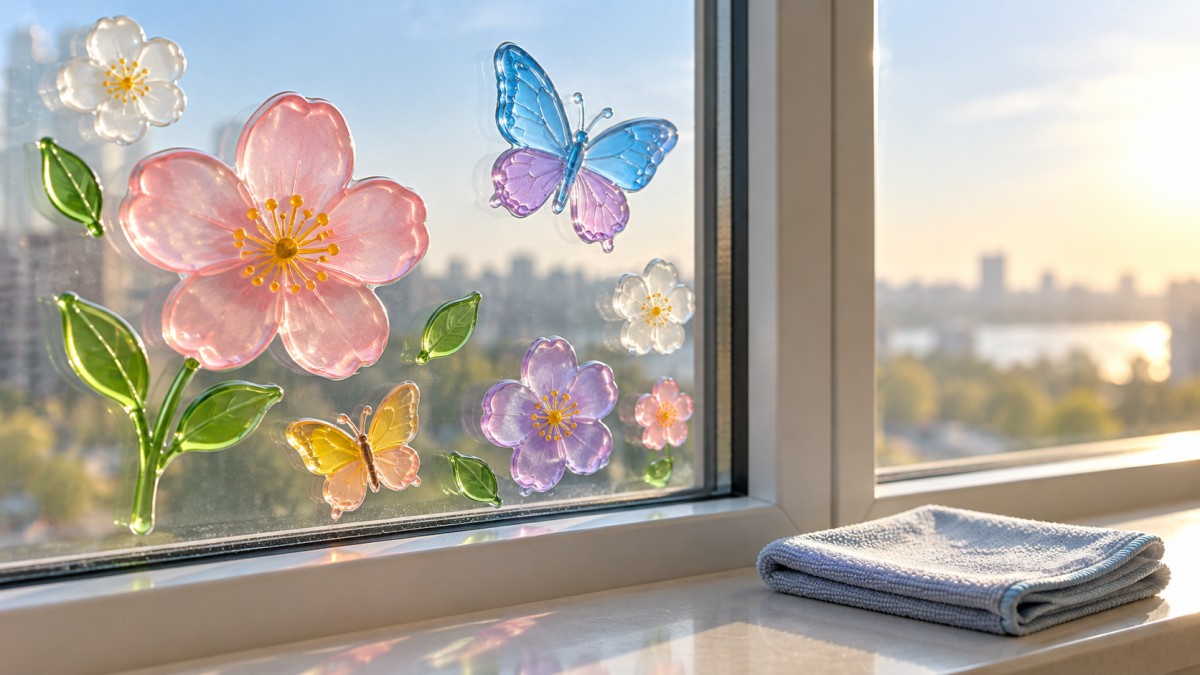
For a fresh seasonal display, the Spring Window Clings Gel, Jelly Window Stickers for Glass Refrigerators Home, Welcome Spring Window Decorations - Flowers Butterflies Bird, Kids‘ Love set offers soft TPR flower, butterfly, and bird decorations intended for reuse. Even reusable designs need clean, compatible surfaces and appropriate storage. Check the supplied application and care guidance rather than assuming every smooth finish is suitable.
Keep small or detachable pieces out of reach of young children and pets, especially where a fallen decoration could be picked up or swallowed. Decorative gel pieces are not chew toys.
Store them without collecting next season’s dust
Before packing decorations away, clean them according to their instructions and let them dry fully. Return them to their original backing or another manufacturer-approved storage surface, keeping individual shapes separate so delicate parts do not stretch or stick together.
Store the set flat, covered, and away from heat and direct sunlight. Retaining the packaging also preserves the care instructions. When decorating again, inspect the gel and prepare the glass before applying the full set; a single clean test piece can reveal a surface problem before the whole display falls.
Leave A Message
If you are interested in our products and want to know more details, please leave a message here, we will reply you as soon as we can.

We specialize in supplying home decor, handicrafts, and daily necessities.


