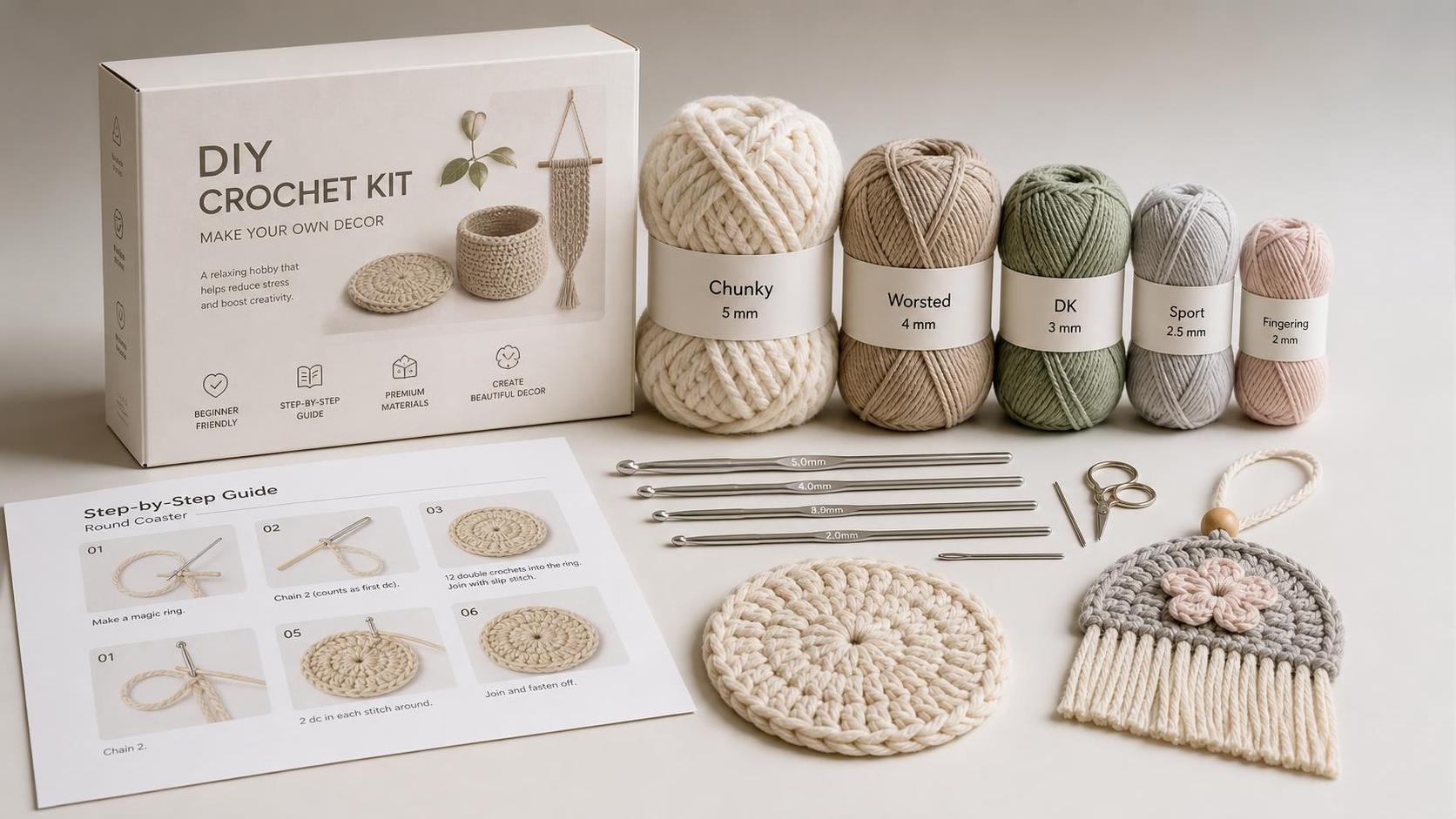
Start with the parts that drive the finished result
When a buyer reviews a diy crochet kit, the packaging usually gets attention first. That is rarely where the real quality decision sits. What matters is whether the yarn weight, the hook size, and the instructions actually work together. If those three are mismatched, the end user gets a distorted shape, uneven tension, yarn splitting, or a project that feels harder than it should. In home decor, that usually means poor reviews and weak repeat sales.
A practical evaluation is less about asking whether the kit looks attractive and more about checking whether a beginner or casual crafter can complete it without fighting the materials. That is the standard worth buying against.
Check yarn weight against the intended project size
The first thing to confirm is whether the yarn weight makes sense for the item shown on the box or insert. A small decorative figure, coaster, hanging ornament, or cushion accent does not behave the same way in every yarn. Thicker yarn builds up fast, gives a chunkier look, and hides stitch detail. Finer yarn gives better definition, but it also makes the project slower and less forgiving.
- If the sample image shows crisp details, look for yarn that can hold stitch shape without becoming fuzzy too early.
- If the design is meant for beginners, avoid yarn that splits easily into strands during stitching.
- If the product is positioned as a quick gift or seasonal craft, overly fine yarn can create frustration because the completion time climbs fast.
One common buying mistake is treating yarn weight as a cosmetic choice. It is not. It changes project scale, touch, stitch visibility, and completion difficulty. If the kit supplier cannot explain why that yarn weight was chosen for that pattern, the kit is probably assembled for appearance rather than for use.
Do not review hook size in isolation
A hook size printed on the label means very little by itself. The useful question is whether it produces the right fabric with that specific yarn and pattern style. A larger hook creates a looser fabric, more drape, and visible gaps. A smaller hook tightens the stitches, gives firmer structure, and can be better for stuffed shapes or compact decor pieces.
For procurement, this matters because many consumer complaints come from expectation mismatch. The customer saw a neatly shaped finished object, but the included hook makes the stitches too open. The item then looks homemade in the wrong way.
If the kit is meant for entry-level retail channels, smooth handling matters almost as much as the pattern. A technically correct hook that feels rough in use can still ruin the user experience.
Read the instructions as if you were the first-time user
Instructions are where many crochet kits quietly fail. Buyers often skim them for grammar and layout, but the deeper issue is execution logic. Can the user move from one step to the next without guessing? Are the stitch abbreviations introduced before they are used? Does the pattern show when to count stitches, when to change color, and what the finished section should look like?
A usable instruction sheet usually includes three things:
- A materials list that matches the actual kit contents.
- Step order that follows the making process without hidden assumptions.
- Visual or written checkpoints so the user can catch mistakes before the final assembly stage.
Short instructions are not automatically better. If key transitions are missing, the customer ends up searching online for help, and at that point the kit has already failed its job.
Look for consistency across the whole kit, not just individual parts
A strong diy crochet kit behaves like a matched system. The yarn should suit the hook. The hook should suit the project type. The instructions should reflect both. If one part is selected independently, problems show up fast. For example, a soft yarn may work well in a decorative project, but if the pattern relies on tight shaping and the included hook encourages loose tension, the final result loses form.
This is the same principle buyers use across craft categories. A seasonal decorative item only performs well when material, user handling, and display outcome stay aligned. The thinking is similar whether you are sourcing crochet sets or evaluating reusable window decor such as Spring Window Clings Gel, Jelly Window Stickers for Glass Refrigerators Home, Welcome Spring Window Decorations - Flowers Butterflies Bird, Kids‘ Love, where the real test is also product fit: material choice, ease of application, and clear user guidance all need to support the final experience.
Review beginner difficulty honestly
Many kits are marketed broadly, but not all of them are truly beginner-friendly. Buyers should check whether the pattern requires tight counting, invisible decreases, complex assembly, or frequent yarn color changes. None of those are wrong, but they change the retail fit.
If a kit is labeled for beginners, the materials should reduce friction. That usually means yarn with clear stitch visibility, a hook that glides well, and instructions that explain stitch count changes before the project goes off shape. If the project actually suits intermediate users better, the product description should reflect that. Otherwise, the complaint is predictable: “looked easy, wasn’t easy.”
Check content accuracy against what the customer will physically receive
This sounds basic, but it is where a lot of avoidable returns begin. The yarn quantity should be enough to complete the stated project with reasonable tension variation. The hook listed in the instructions should be the same hook packed in the kit. Any accessories mentioned in the pattern, such as stuffing, markers, needles, or embellishments, need to be clearly included or clearly excluded.
Procurement teams should watch especially for kits assembled from multiple supply sources. In home decor and craft programs, mixed sourcing can work well, but only if bill-of-material control is tight. A stable supply chain helps, yet the buyer still needs to verify the pack-out standard rather than assuming consistency.
A quick buyer-side checklist before approval
- Does the yarn weight match the visual density and size of the finished sample?
- Does the included hook create the right fabric, not just a workable stitch?
- Can a first-time user follow the instructions without outside tutorials?
- Are stitch abbreviations, counts, and assembly stages clearly explained?
- Do kit contents match the instruction sheet exactly?
- Is the stated difficulty level honest enough for the target retail channel?
If you need a clean buying sequence, start with yarn weight, then test the hook match, then read the instructions from the user’s point of view. That order catches most problems early. A crochet kit does not need to be complicated to sell well, but it does need internal consistency. For buyers, that is usually the difference between a product that moves once and a product that earns repeat orders.
Leave A Message
If you are interested in our products and want to know more details, please leave a message here, we will reply you as soon as we can.

We specialize in supplying home decor, handicrafts, and daily necessities.


