What makes a DIY crochet kit suitable for first-time customers?
For distributors, agents, and wholesalers in home decor, a beginner-focused diy crochet kit is not just a bundle of yarn and tools. It is a retail decision. If the first project feels confusing, missing, or harder than expected, the customer often gives up before finishing. If the kit feels approachable and complete, it is much easier to turn a trial purchase into repeat business.
A good starter kit should remove friction at every step: choosing materials, understanding instructions, starting the first stitches, and getting a result that looks good enough to keep. That balance matters even more when you are selling into gift shops, craft channels, seasonal home decor programs, or mixed lifestyle collections.
What should always be inside a beginner diy crochet kit?
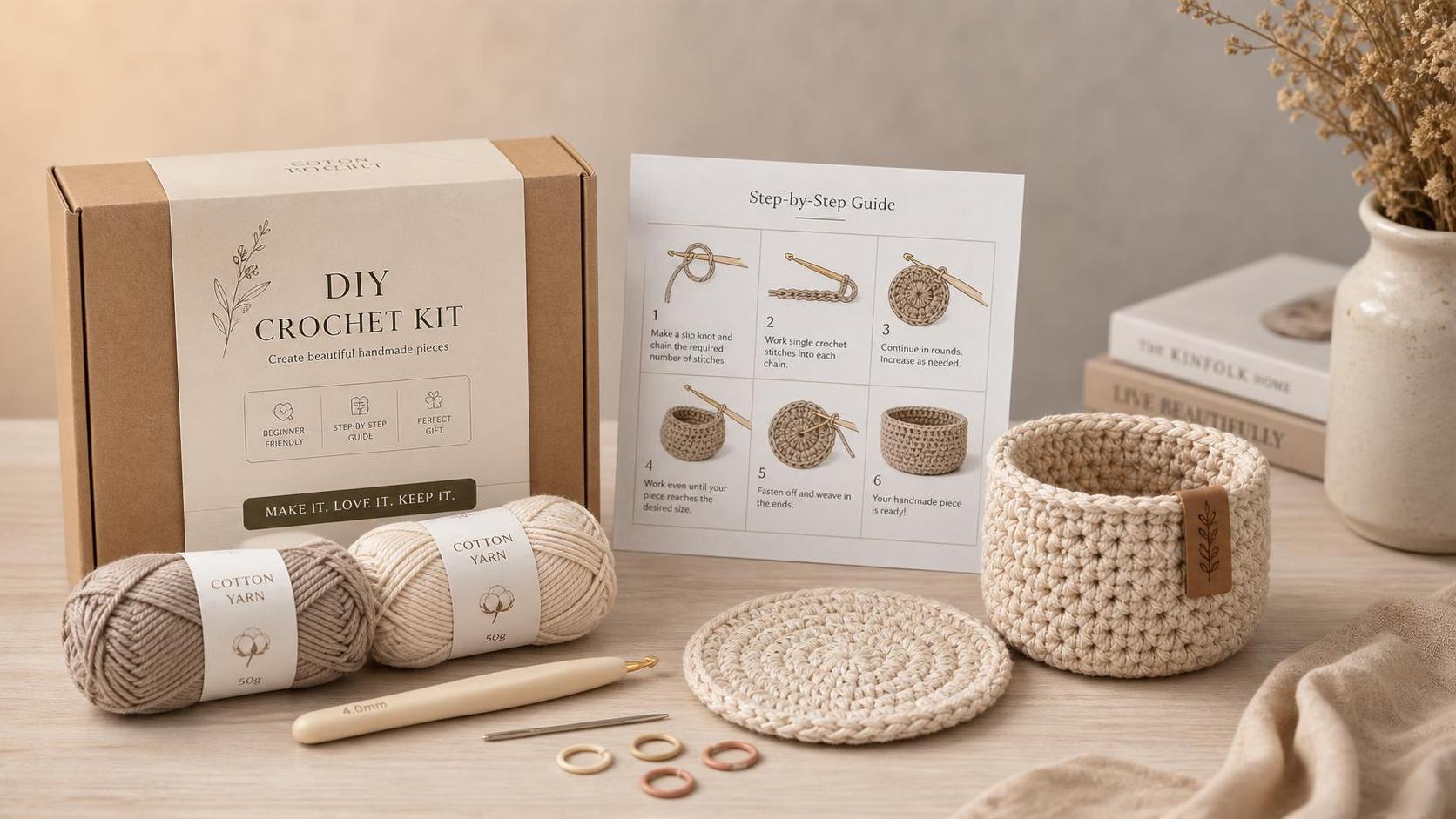
At minimum, the kit should include all core materials needed to complete one small project without forcing the customer to source anything else on day one. That usually means:
- Beginner-friendly yarn that is easy to see and handle
- The correct crochet hook size for that yarn
- A simple instruction guide with visuals
- A yarn needle for finishing
- Stitch markers if the pattern uses counting or shaping
- Enough material to complete the project with some margin for mistakes
That last point is where many kits fail. First-time users make errors, undo rows, and sometimes restart. If the yarn quantity is calculated too tightly, the kit creates frustration instead of confidence.
Which yarn works best for beginners?
Smooth yarn in a medium thickness is usually the safest choice. New crocheters need to see the stitch structure clearly. Very fuzzy, plush, slippery, or dark yarn may look attractive on the shelf, but it makes learning harder because the loops are difficult to identify.
For first-time kits, buyers often respond better to yarn that feels soft but still holds its shape. In home decor channels, color also matters. Soft neutrals, warm seasonal shades, and calm natural tones tend to fit more easily into broader decorative assortments than overly technical craft-store color stories.
Do the instructions matter as much as the materials?
Yes. In many starter kits, the instructions are the real product.
A first-time customer is not judging the kit the way an experienced crocheter would. They are asking simpler questions: Can I begin without watching ten videos? Do I understand the first row? If I make a mistake, can I find my place again?
Clear instructions should include written steps, stitch names, close-up diagrams or photos, and a visible sequence from start to finish. If abbreviations are used, they need to be explained on the same sheet or insert. A pretty package cannot make up for a confusing pattern.
How simple should the first project be?
Simple enough to finish in a realistic amount of time, but still attractive enough to feel worth displaying, gifting, or using.
That usually means avoiding patterns that require complex shaping, frequent color changes, or advanced counting. Small decorative pieces, mini ornaments, basic coasters, simple baskets, or soft accessories often work better than highly detailed character items for a true entry-level diy crochet kit.
The best beginner projects give a quick win. In home decor retail, that quick win matters because it increases the chance that the buyer comes back for a second kit or a more advanced version.
What packaging details help sell-through for distributors?
Packaging should answer three things fast: what the customer will make, whether it is beginner-friendly, and whether everything is included. If those points are buried, the product slows down at retail.
The front should show the finished result clearly. The back or side panel should list included contents in plain language. It also helps to show the estimated skill level and whether the kit is aimed at gifting, hobby use, or decorative making. In home decor environments, presentation has to feel cohesive with surrounding products. A craft kit can sit more naturally in that mix when it is styled as a lifestyle item, not just a technical supply pack.
That is similar to how decorative products are merchandised. For example, a piece such as Wooden Large Vertical Love Grows Here Porch Decor, Garden Welcome Standding Sign Garden Decor Sign, Welcome Wall Sign for Yard Porch Farmhouse Door Decoration works because the use scene is obvious at a glance. A crochet kit benefits from the same clarity: the customer should immediately understand the finished look and where it fits in the home.
What are the most common mistakes when sourcing a starter kit?
A few problems show up again and again:
Should a starter kit be positioned as a craft item or a home decor item?
That depends on where it will be sold, but for many distributors in the home décor market, the strongest position is often both. The making experience brings the customer in, while the finished object connects it to home use.
This matters when you are building a wider assortment around handcrafted living products. A crochet kit that produces a decorative piece, seasonal accent, or small household item usually integrates better with gift and decor channels than a purely technique-driven kit. The same customer who buys wall signs, tabletop accents, or porch decorations may also respond to beginner kits that create a handmade home touch. A farmhouse-style decorative item like the Wooden Large Vertical Love Grows Here Porch Decor, Garden Welcome Standding Sign Garden Decor Sign, Welcome Wall Sign for Yard Porch Farmhouse Door Decoration fits that broader taste profile, even though it belongs to a different category.
What should distributors check before adding a diy crochet kit to their line?
Look at the kit the way a first-time buyer will experience it, not just as a costed SKU. The most useful checks are practical:
- Open the pack and confirm that every required item is inside.
- Review whether the project can be completed with the included quantity.
- Read the instructions from the point of view of someone who has never crocheted before.
- Check if the finished item is visually appealing enough for gifting or display.
- Make sure the packaging clearly communicates beginner level and included contents.
If one of these points is weak, the product may still sell on appearance, but it will struggle on satisfaction and reorder potential.
A practical rule for building the right starter assortment
Choose kits that let a true beginner finish something recognizable without extra shopping, guesswork, or advanced skills. For wholesalers and agents, that is usually the cleanest screening rule. When the materials are complete, the instructions are usable, and the finished result fits naturally into the home decor space, a diy crochet kit becomes easier to place, easier to explain, and much easier to reorder.
Leave A Message
If you are interested in our products and want to know more details, please leave a message here, we will reply you as soon as we can.

We specialize in supplying home decor, handicrafts, and daily necessities.


