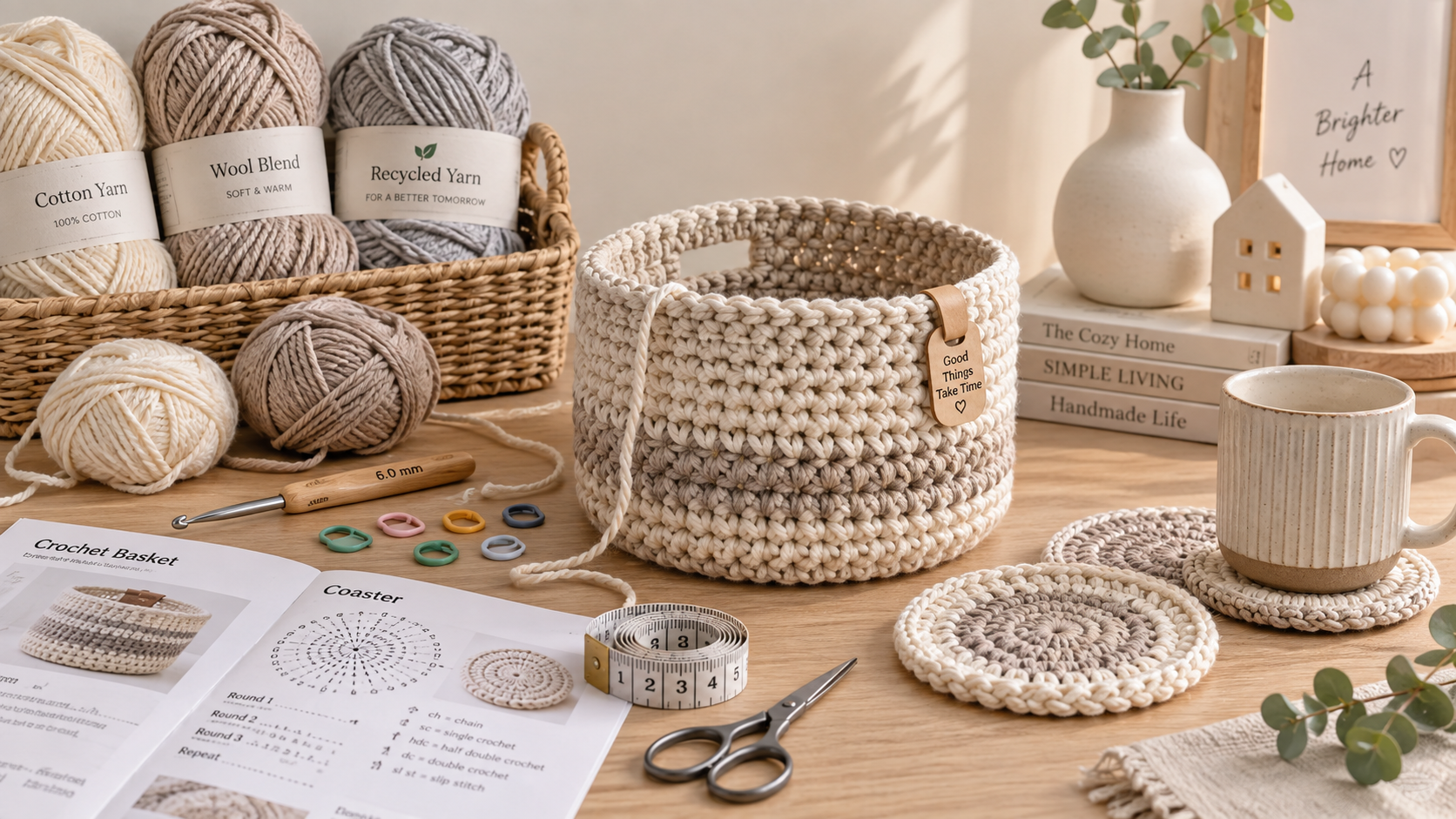
A well-designed diy crochet kit makes every home decor project easier, more enjoyable, and more consistent. Before starting, confirm that yarn weight, hook size, and instructions work together.
For users, the most important question is simple: can this kit produce the pictured result without unnecessary guesswork, missing materials, or frustrating adjustments during the project?
A reliable kit should help beginners understand each step while giving experienced makers predictable materials for cushions, baskets, garlands, coasters, seasonal ornaments, and other handmade decor.
Start With the Yarn Weight
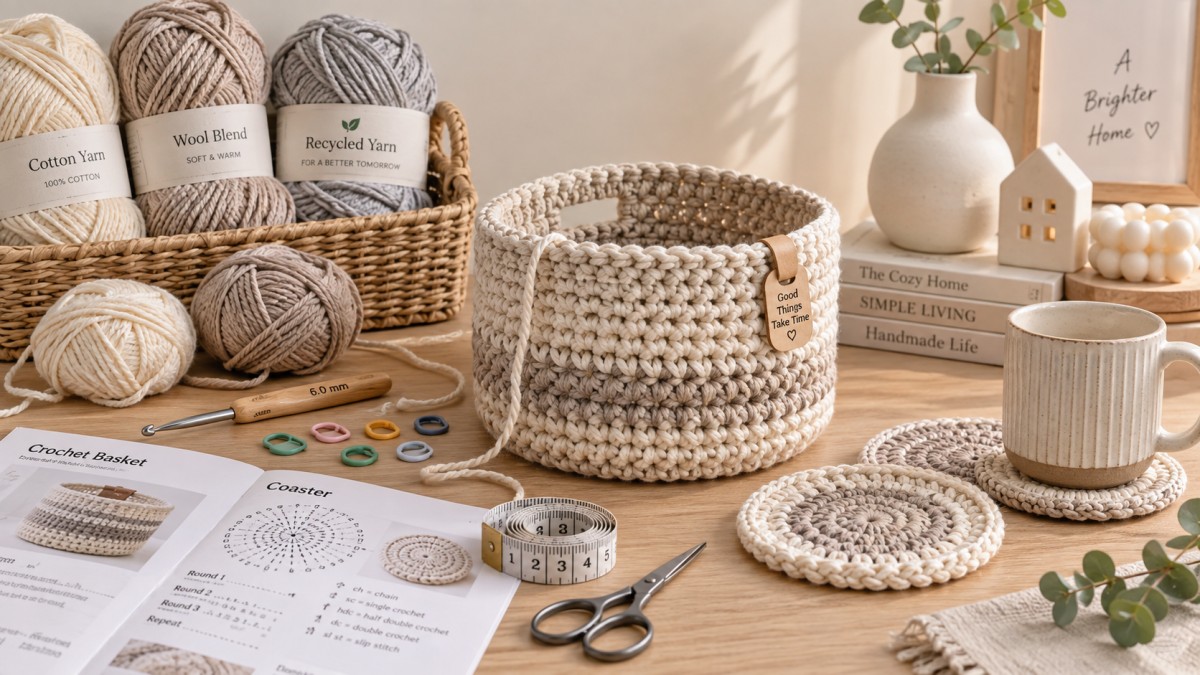
Yarn weight is the foundation of every crochet project. It affects stitch size, fabric thickness, drape, durability, and the final dimensions of a handmade home decoration.
Most diy crochet kit labels use standard weight categories such as lace, fingering, sport, DK, worsted, bulky, and super bulky. Check the label before choosing a hook.
For small decorative items, DK and worsted yarn are often practical choices. They create visible stitches without making projects overly slow or difficult to handle.
Bulky yarn works well for chunky baskets, soft floor cushions, and textured wall hangings. However, it can make tight stitches harder for beginners to form consistently.
Fine yarn is useful for delicate flowers, lace details, and small ornaments. It requires more precision, so a kit should include clear stitch diagrams and realistic completion expectations.
Check whether the yarn is cotton, acrylic, wool, polyester, or a blend. Fiber content changes softness, washing requirements, color retention, and suitability for different household spaces.
Cotton yarn is often preferred for coasters, kitchen accessories, and structured baskets because it absorbs moisture and holds shape. Acrylic is affordable, versatile, and easy to maintain.
A complete kit should state the yarn length or gram weight clearly. This helps users determine whether the included supply is sufficient for practice swatches and finishing work.
Match Hook Size to the Material
Hook size should match both the yarn label and the desired finished texture. A correct pairing helps stitches stay even and prevents the project from becoming too loose or stiff.
Yarn labels usually recommend a hook range in millimeters. Treat that range as a starting point, since hand tension differs between users and can change the final appearance.
A smaller hook creates denser fabric with less visible space between stitches. This is useful for amigurumi, storage containers, and decorative pieces that need a firm structure.
A larger hook creates a softer, more open fabric. It is often suitable for throws, airy plant hangers, and relaxed decorative accents where drape matters more than rigidity.
New users should choose ergonomic hooks with smooth shafts and comfortable handles. These reduce hand fatigue during repeated motions and make it easier to maintain consistent stitch tension.
Look for a kit that identifies the hook size in both millimeters and a recognizable regional label. Clear marking prevents confusion when replacing or purchasing additional hooks.
If the instructions ask for tight stitches but provide only an oversized hook, the kit may not deliver the intended result. Material specifications should always agree with project guidance.
Check Whether the Instructions Are Truly Usable
Clear instructions are often more valuable than extra accessories. A beginner-friendly diy crochet kit should explain how to begin, continue, count, shape, finish, and correct common mistakes.
Look for step-by-step directions that use consistent terminology. Terms such as chain, slip stitch, single crochet, double crochet, increase, decrease, and round should be defined properly.
Good instructions show where to insert the hook, how many stitches each row contains, and when to turn the work. Missing counts often cause avoidable errors.
Photos, diagrams, or close-up illustrations are especially useful for visual learners. They can show the difference between front loops, back loops, magic rings, and finishing techniques.
Pattern abbreviations should include a reference key. Users should not need to search separately for basic instructions when the kit is intended as a complete project experience.
Check whether the pattern indicates skill level and estimated completion time. Honest guidance helps users select projects that suit their experience, available time, and patience.
Strong instructions also include troubleshooting notes. Advice for uneven edges, skipped stitches, loose tension, twisted chains, and yarn splitting can prevent users from abandoning the project.
For home decor projects, measurements should be included before and after completion. This allows users to confirm that a cushion cover, basket, or hanging accent will fit its intended space.
Review the Essential Tools and Accessories
A useful kit contains more than yarn and one hook. Basic accessories support accurate work, cleaner finishing, and a more satisfying result for users at every skill level.
Stitch markers are important for projects worked in rounds or with repeated stitch patterns. They help users identify row beginnings, increase points, and sections requiring special attention.
A yarn needle is needed for weaving in ends, joining pieces, and attaching decorations. A blunt-tipped needle is generally easier and safer for everyday crafting tasks.
Small scissors should cut yarn cleanly without fraying fibers. Some users prefer compact scissors, while others may already have dedicated crafting tools available at home.
A measuring tape is helpful when making functional decor, including table runners, cushion covers, storage baskets, and wall pieces designed for a specific display area.
For projects with multiple colors, verify that the kit provides enough yarn for borders, joining seams, and decorative details. Small accent colors are often underestimated during planning.
Seasonal decorating can combine crochet items with reusable surface decorations. For example, Halloween Window Gel Clings Ghost Pumpkin Bat Witch Cat Boo Blood Decal Stickers for Halloween Home Party Window Decorations can complement crocheted pumpkins, bats, or garlands.
Because these soft TPR decorations adhere to smooth surfaces and store easily, they offer a practical reusable accent beside handmade pieces for Halloween homes, classrooms, and party displays.
Use a Swatch Before Committing to the Project
A small test swatch is one of the fastest ways to evaluate a diy crochet kit. It reveals whether the yarn, hook, stitch pattern, and instructions work well together.
Follow the recommended stitch pattern for several rows, then measure the result. Compare the stitch count and row count with the gauge stated in the instructions.
If your swatch is wider than the pattern gauge, your stitches may be too loose. Try a smaller hook before beginning a project with size-sensitive components.
If your swatch is narrower than expected, your stitches may be too tight. Moving up one hook size can create the correct dimensions without changing the yarn.
Swatching also shows whether the yarn splits, sheds, feels scratchy, or creates uneven tension. These issues are easier to address before substantial time has been invested.
For decorative projects, examine the swatch under normal room lighting. Colors can look different beside wood, fabric, ceramics, painted walls, and other existing home furnishings.
Choose Kits That Support a Finished Home Decor Result
The best kits are designed around a realistic finished object rather than simply collecting supplies. Every included material should contribute directly to the intended decoration or practical household item.
Consider where the completed item will be used. High-contact pieces need durable, washable yarn, while display-only items may prioritize texture, color, and visual detail instead.
For kitchens and dining areas, choose yarns that are easy to clean. For bedrooms and living rooms, softness and coordinated color palettes may be more important.
For retailers and sourcing teams, stable materials and consistent packaging matter as much as the pattern itself. Repeated kit quality supports predictable user experiences across seasonal collections.
Suppliers with established craft, wooden, fabric, ceramic, plastic, and handwoven production networks can help buyers coordinate crochet kits with wider home decor assortments.
Before using a kit, confirm that the package includes all stated materials, uses legible instructions, and provides a clear contact path for replacement or technical questions.
Final Checklist Before You Begin
Before making the first chain, verify the yarn weight, fiber type, hook size, pattern level, gauge, included tools, and estimated yarn quantity for the selected project.
Read the complete pattern once before starting. This identifies color changes, shaping sections, assembly steps, and supplies that may be needed after the main crochet work.
Keep the yarn label and instructions nearby throughout the project. They provide useful reference information when adjusting tension, washing the finished item, or purchasing matching yarn later.
A quality diy crochet kit should remove uncertainty instead of creating it. When yarn, hook, tools, and instructions align, users can focus on making attractive, durable home decor with confidence.
Leave A Message
If you are interested in our products and want to know more details, please leave a message here, we will reply you as soon as we can.

We specialize in supplying home decor, handicrafts, and daily necessities.


