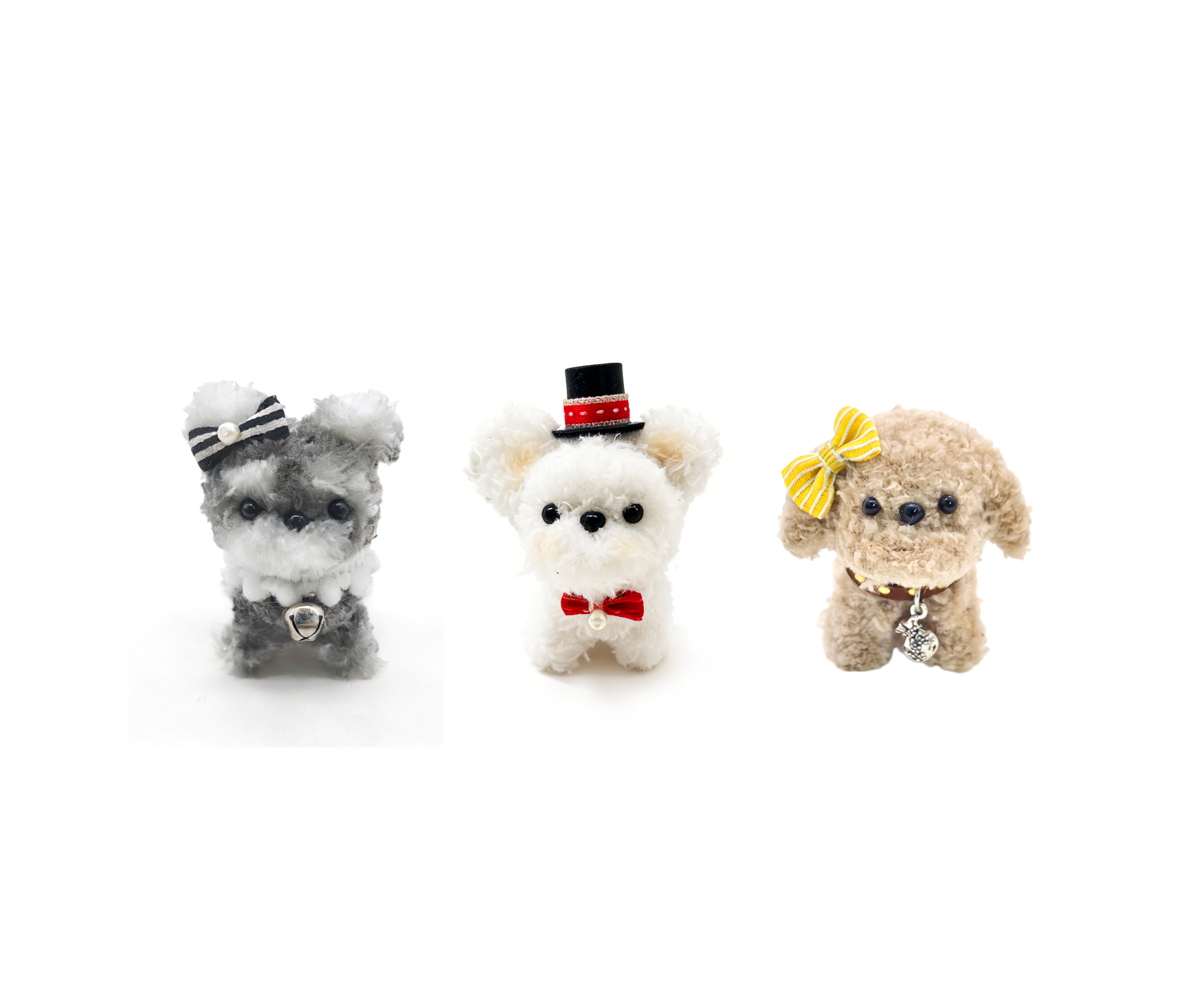
Before placing a bulk order for a Wool felt keychain kit, quality control and safety teams need to look beyond appearance and check material consistency, stitching strength, accessory safety, colorfastness, and compliance risks. For importers and retailers, identifying these common issues early is essential to reducing claims, protecting end users, and ensuring a stable, reliable supply chain for home decor and craft products.
Why a checklist works better than visual approval alone
For QC and safety managers in the home decor sector, a Wool felt keychain kit often looks simple, but the risk points are spread across 5 main areas: raw felt quality, sewing or bonding performance, hardware durability, decorative consistency, and regulatory suitability. A visual pass at the sample stage may miss issues that only appear after transport, repeated handling, or retail display.
A checklist-based review is especially useful when order volumes rise from a pilot run of 200 to 500 sets into production lots of 3,000 to 10,000 kits. At that scale, even a 2% defect rate can create repacking costs, customer complaints, and return pressure. For seasonal and gift-oriented home decor items, consistency matters as much as style.
This is also where supply chain coordination becomes important. Located in Ningbo, our company works through two certified factories focused on handicrafts, wooden crafts, and fabric crafts, supported by stable partner networks in ceramics, plastics, and handwoven products. That structure helps buyers compare material options, factory controls, and product categories under one sourcing process instead of reviewing each item in isolation.
Priority questions before order confirmation
- Is the felt thickness stable within a practical production tolerance, such as around ±0.3 mm to ±0.5 mm?
- Do rings, chains, clasps, beads, or ornaments have burrs, sharp points, or loose assembly risks?
- Has the supplier defined acceptable color variation between pre-production sample and bulk lot?
- Are odor, dye migration, and packaging cleanliness checked before shipment?
If these points are not aligned before purchase order release, inspection becomes reactive rather than preventive. For a Wool felt keychain kit used in gift sets, craft assortments, or decorative retail programs, prevention is usually the more cost-effective approach.
Core inspection checklist for a Wool felt keychain kit
The first control step is to define what should be checked at incoming material stage, inline stage, and final random inspection. For most home decor craft projects, a 3-stage check reduces hidden defects better than one final inspection alone. The table below gives a practical review framework for QC teams.
The most frequent problem in a Wool felt keychain kit is not usually a dramatic failure. It is often a cumulative quality gap: slightly soft felt, slightly loose ring closure, slightly inconsistent stitching, and slightly uneven color. Each issue alone may seem minor, but together they reduce retail acceptance and long-term user satisfaction.
Execution points that should not be skipped
- Review pre-production sample against bulk raw materials, not just against artwork.
- Perform basic attachment strength checks on every production batch, especially at loop and ring joints.
- Open at least 1 master carton per selected batch to confirm packing cleanliness and odor condition.
- Record defect types by frequency so recurring faults can be traced back within 24 to 48 hours.
These controls are practical for gift craft items, souvenir accessories, and decorative kits sold with other home-use products. In mixed seasonal sourcing, buyers often review different materials together. For example, a project may include felt ornaments as well as window decorations such as Halloween Window Gel Clings Ghost Pumpkin Bat Witch Cat Boo Blood Decal Stickers for Halloween Home Party Window Decorations, where reusable soft TPR, surface adhesion, and removal cleanliness become separate but equally important check points.
Safety and compliance risk points for import programs
Safety managers should assess the intended market before approving a Wool felt keychain kit, because accessory size, detachable parts, surface coatings, and chemical inputs may trigger different compliance expectations. A decorative craft kit for general gifting is not reviewed the same way as an item likely to be handled by children under 3 years old.
In practical terms, 4 risk areas deserve early review: small part detachment, sharp functional metal, restricted substance exposure, and labeling accuracy. When product structure includes beads, bells, clips, or glued embellishments, the review should move beyond appearance and into foreseeable-use risk. Even when the item is positioned as a home decor accessory rather than a toy, careless component selection can still create claim exposure.
Because we source across fabric, wood, handicraft, and partner industries, our process typically starts with usage clarification, component mapping, and packaging review before production planning. This is helpful when customers combine multiple seasonal SKUs, including products like Halloween Window Gel Clings Ghost Pumpkin Bat Witch Cat Boo Blood Decal Stickers for Halloween Home Party Window Decorations, where non-toxic material expectations and reusable performance are also part of buyer review.
Quick risk-screening table
Use the following table as a first-pass screen before final order approval, especially when the shipment window is within 30 to 45 days and corrective time is limited.
This type of screening does not replace formal testing where needed, but it helps teams identify obvious risk before committing to packaging, shipment booking, and retail launch plans.
Commonly overlooked issues in bulk production
Many buyers focus on felt color and final shape, but bulk failures often come from less visible points. One example is ring closure tension. If the jump ring gap is too open by even a small amount, parts may separate during transport vibration over 15 to 30 days. Another is odor retention when felt, glue, and polybag packing are sealed too quickly after production.
Another overlooked issue in a Wool felt keychain kit is dimension inconsistency across hand-assembled parts. For retail assortments, a length variation of more than about 5 mm to 8 mm can make the set look irregular on shelf cards or hanging displays. In decorative product lines, presentation quality strongly affects buyer acceptance.
Teams should also watch for packaging-related damage. Felt can compress under high carton pressure, metal can mark adjacent pieces, and transparent bags can trap lint. These defects may not appear during in-factory review if cartons are not drop-handled or left packed for at least 24 hours before inspection.
- Check whether the felt recovers shape after packing pressure.
- Confirm that decorative stitching remains aligned after normal handling.
- Review whether mixed-material contact creates scratches, lint transfer, or color transfer.
- Ask for batch photos from raw material, inline sewing, and final packing stages.
How to prepare a better order review with your supplier
A strong review process starts before inspection day. Buyers should provide artwork, target market, component list, packaging format, and intended age or usage positioning at least 7 to 10 days before sample confirmation. This reduces later changes that affect material sourcing and production flow.
For a Wool felt keychain kit, it is useful to align on 6 practical items: felt composition, thickness range, color standard, attachment method, hardware finish, and packaging specification. If one of these points remains open, the final sample may not represent bulk reality. That is a common reason for sample-good but shipment-average outcomes.
Our sourcing model is designed for importers and retailers that manage multiple home decor and craft categories at once. With two certified factories and stable partner resources, we support clearer communication on product selection, production feasibility, and quality checkpoints across textile, wood, and related decorative lines.
What to confirm when contacting us
If you are reviewing a new program, we can help you confirm sample requirements, material options, packaging details, inspection priorities, and lead time expectations. Typical discussion topics include MOQ range, sample turnaround in about 7 to 14 days, bulk delivery planning, and whether your project needs extra review on small parts or labeling.
Why choose us: we combine home decor craft sourcing experience with a stable supply network in Ningbo, practical coordination between certified factories and partner industries, and a process that helps QC and safety teams identify problems before they become shipment claims. Contact us to discuss parameter confirmation, product selection, custom solutions, certification-related expectations, sample support, delivery timing, and quotation planning for your next order.
Leave A Message
If you are interested in our products and want to know more details, please leave a message here, we will reply you as soon as we can.

We specialize in supplying home decor, handicrafts, and daily necessities.


