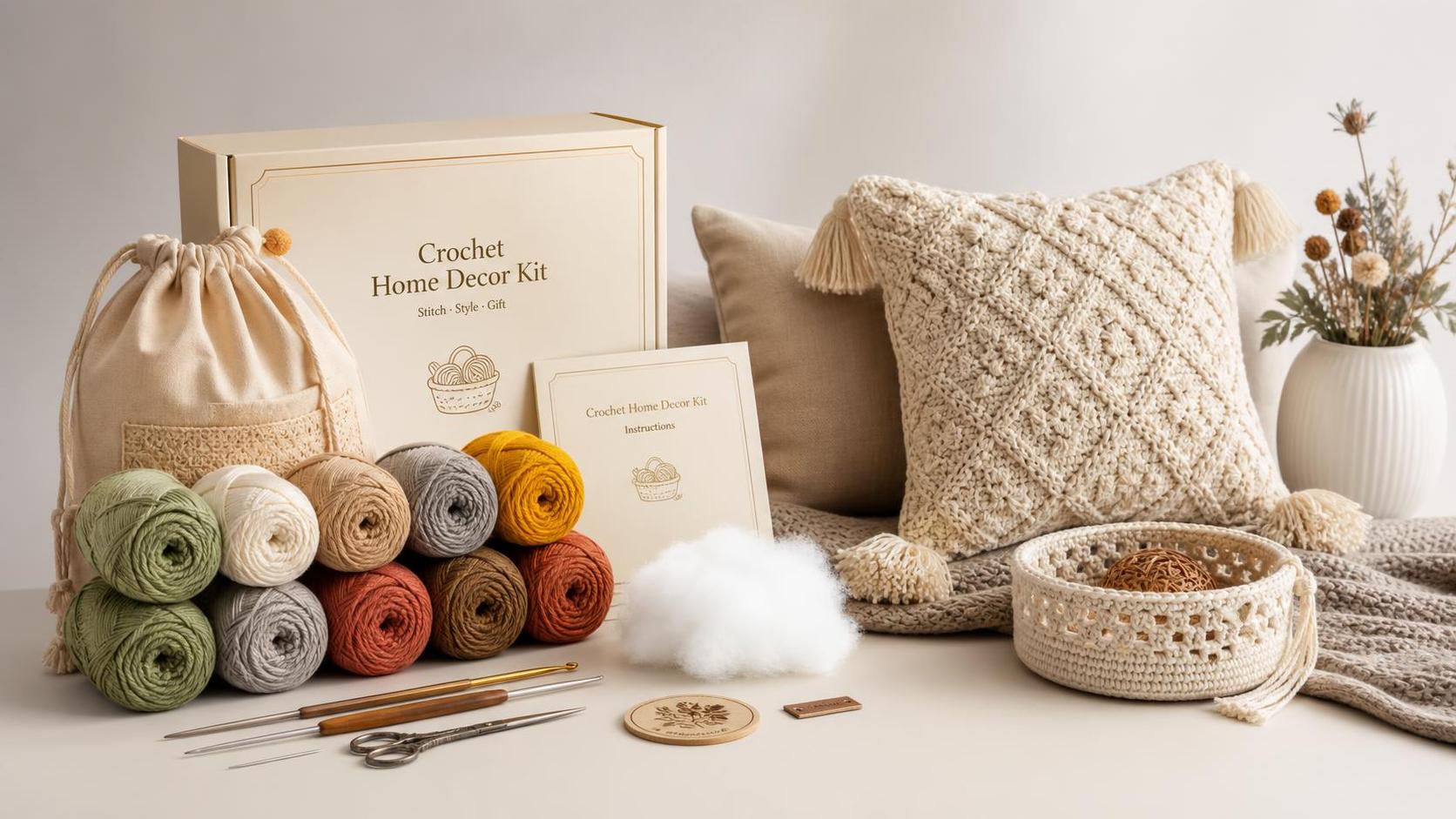
If you are searching for a Crochet Kit Supplier, the real question is usually not just who can make the product. It is who can keep quality consistent, understand retail expectations, and support repeat orders without turning every shipment into a follow-up problem. In the home decor and craft category, that matters even more because buyers are not only selling yarn and tools. They are selling an experience: giftability, presentation, ease of use, and a finished look customers will actually enjoy at home.
That is where many sourcing decisions go wrong. A supplier may offer a low initial quote, but if the kit arrives with uneven yarn shades, unclear instructions, weak accessories, or unstable packaging, the real cost shows up later in claims, poor reviews, and missed reorders. A dependable supplier should help you avoid those issues before production starts.
For buyers who need stable supply support in craft and home decoration categories, Ningbo remains a practical sourcing base. Located in one of China’s best-known foreign trade cities, our company works through two certified factories: one focused on handicraft production, the other on wooden and fabric crafts. We also maintain long-term partnerships across ceramics, plastics, and handwoven categories, with partner facilities certified by major European and American retail chains. That broader network matters because craft kits often rely on mixed materials, mixed packaging needs, and seasonal production coordination.
What buyers actually need from a Crochet Kit Supplier
A good crochet kit is simple on the surface, but not simple in sourcing. Buyers often assume the yarn is the main issue. In practice, the bigger challenge is coordination. A kit may include yarn, hooks, stuffing, fabric details, labels, printed instructions, gift packaging, and sometimes wood or decorative accessories. If these parts come from disconnected sources without good control, the final product feels inconsistent even when each component looks acceptable on its own.
The best suppliers understand that a crochet kit must work as a complete retail item. The yarn weight needs to match the hook size. The color set should reflect the intended design. Instructions must be clear enough for the target user, whether beginner or hobbyist. Packaging should protect the contents but also present well on shelf or online. This is especially important for home decor craft products, where visual appeal often drives the first purchase.
A short answer for most buyers: choose a supplier that can manage materials, packaging, and production together, not one that only offers one part of the kit.
How to judge a Crochet Kit Supplier beyond the sample
Samples can be misleading. A supplier can spend extra time making one beautiful approval sample, then struggle to repeat the same standard at scale. That is why experienced buyers ask a different set of questions after they like the first prototype.
Start with these points:
- Can the supplier keep yarn color consistency across batches?
- Can they source safe and suitable accessory materials for your market?
- Do they understand beginner-friendly assembly and instruction design?
- Can they support seasonal or mixed-SKU orders without disruption?
- Do they have a clear process for packing, labeling, and carton control?
In the home decor segment, these details affect sell-through more than many buyers expect. A crochet kit that looks attractive online but frustrates the end customer during use often fails on the second order. On the other hand, a kit with balanced materials, readable instructions, and reliable packing tends to build repeat demand even without aggressive promotion.
This is one reason buyers working in decorative crafts often prefer suppliers with broader category experience. A company that already handles handicrafts, fabric items, wooden accessories, and daily-use decorative products usually has a better sense of how craft items are displayed, gifted, and used in real homes.
Why factory structure matters more than a big catalog
Some suppliers impress buyers with hundreds of product photos. That can be useful, but catalog size is not the same as manufacturing control. In this category, structure matters more. If a supplier owns or closely manages the key production steps, communication is clearer and corrections happen faster.
Our setup is built around that logic. One certified factory focuses on handicrafts, while the other specializes in wooden and fabric crafts. This is useful for crochet kit development because many retail-ready kits are not pure textile items. They may include decorative wooden tags, fabric storage bags, printed inserts, or display-ready outer packaging. When these elements are handled within a stable production network, buyers usually get better consistency and fewer last-minute substitutions.
The partner network also adds practical value. Ceramics, plastics, and handwoven craft resources may sound unrelated at first, but in real product development they often support merchandising programs, gift sets, or coordinated seasonal collections. A buyer sourcing crochet kits for a home decor line may also want matching ornaments, storage pieces, or festive accessories from the same supply base. Working with a supplier that already understands this ecosystem reduces friction.
Common mistakes buyers make when sourcing crochet kits
One common mistake is treating all crochet kits as the same kind of product. They are not. A beginner kit for casual gifting is very different from a hobby-focused kit aimed at experienced crafters. The first needs accessibility, neat presentation, and forgiving materials. The second may need more pattern depth, stronger design identity, and higher expectations around yarn feel and color accuracy.
Another mistake is over-focusing on price per set without checking packing efficiency. A poorly designed inner box, loose accessories, or oversized carton can raise freight and damage risk. In cross-border business, those hidden costs accumulate quickly.
A third issue is ignoring compliance and material suitability. If a kit is intended for children, family gifting, or mass retail, buyers should confirm which safety and labeling requirements apply in their destination market. That part should always be verified against the relevant official standards and retailer requirements, especially for materials, inks, adhesives, and packaging claims.
And then there is the seasonal trap. Buyers often place holiday or promotion-driven orders too late, assuming craft products are flexible. In reality, anything involving mixed materials and printed packaging needs enough lead time for coordination. A supplier with an established network can usually manage this better, but timing still needs to be realistic.
Where crochet kits fit in a home decor business
Not every buyer looking for a Crochet Kit Supplier is building a pure craft brand. Many are actually home decor importers, gift companies, chain stores, or online sellers expanding into creative lifestyle products. That makes sense. Crochet kits sit comfortably beside decorative textiles, seasonal ornaments, tabletop accessories, and soft home-use items because they share the same buying logic: visual appeal, gift potential, and emotional use at home.
In that sense, crochet kits are often more successful when they are merchandised as part of a broader decorating or seasonal story rather than as isolated hobby items. A winter-themed craft kit, for example, may perform better when paired with small festive accents, reusable decorative items, or classroom-friendly seasonal products.
A simple example is holiday window decoration. In some retail programs, buyers combine hands-on craft lines with low-commitment decorative products for families or classroom use. Items such as Christmas Gel Window Clings - Xmas Santa Claus Snowman Snowflake Penguin Christmas Tree Gift Window Stickers for Kids fit that role well because they are made from soft TPR material, apply easily to windows, glass, walls, and other smooth surfaces, and can be removed and stored for future use. They are also safe, non-toxic, reusable, and visually cheerful, which makes them a useful companion item for holiday home, classroom, or party assortments without forcing customers into a more complex DIY project.
This kind of category thinking is often overlooked, but it matters. A supplier that understands how craft products relate to broader home decor programs can usually give more useful development suggestions than one that only follows a specification sheet.
What a reliable supplier should help you clarify early
Before moving into production, a capable supplier should ask questions that protect the project, not just questions needed to issue a quotation. If they do not ask these things, buyers should bring them up first.
- Your target user: beginner, intermediate, gifting, seasonal, or mass retail.
- Your preferred material feel and visual standard.
- Required packaging format: mail-friendly, retail display, gift-ready, or club-store style.
- Destination market requirements for labeling and safety.
- Whether you need matching items in home decor, handicrafts, or daily-use accessories.
These conversations save time because they reduce avoidable revisions. They also reveal whether the supplier is thinking like a long-term manufacturing partner or simply trying to close one order.
Who is not a good fit for this kind of supplier relationship
Not every buyer needs a structured supplier network. If you only want very small hobby quantities, frequent design changes, or highly experimental artisan-level kits with no repeat plan, a factory-oriented supplier may not be the best fit. In that case, a studio maker or very small specialist workshop may offer more flexibility, though usually at a higher unit cost and with less scale stability.
But if your goal is repeatable quality, retail-friendly packaging, and the ability to expand into related home decor categories, working with an established sourcing and manufacturing base is usually the more practical route.
Final thoughts on choosing a Crochet Kit Supplier
The best Crochet Kit Supplier is rarely the one with the lowest opening price or the biggest photo gallery. It is the one that can keep the product coherent from materials to packaging, respond clearly when specifications change, and support your business as it grows across seasons or related categories.
For buyers in home decor, handicrafts, and daily necessities, supply stability is not a background detail. It shapes product quality, delivery confidence, and customer trust. With two certified factories in Ningbo and a strong partner network across ceramics, plastics, and handwoven production, we are set up to support buyers who need more than a one-off offer sheet. The goal is simple: practical sourcing, dependable execution, and products that make sense in the real market.
FAQ
How do I know if a Crochet Kit Supplier is suitable for retail orders?
Look beyond the sample. Ask about batch consistency, packaging control, accessory sourcing, labeling support, and how they handle repeat production.
Should I choose a specialist crochet factory or a broader home decor supplier?
If your line includes seasonal, gift, or decorative products, a broader home decor supplier is often more useful because they can coordinate related materials and categories more efficiently.
What is the biggest sourcing risk with crochet kits?
Usually it is not one major defect. It is inconsistency across yarn, accessories, instructions, and packaging that makes the finished kit feel unreliable.
Are crochet kits suitable for all customer groups?
No. Some are designed for beginners and gifting, while others suit hobby users with more patience and skill. The product needs to match the customer expectation from the start.
Can a supplier also help with related seasonal decor products?
Yes, if they already work across handicrafts, fabric, wooden items, plastics, or handwoven categories. That makes coordinated seasonal sourcing much easier.
- Anchor text: crochet kit packaging solutions - category page for packaging or private label services
- Anchor text: seasonal home decor sourcing - collection page for holiday and seasonal products
- Anchor text: handmade craft supplier in China - company or capability page
- Anchor text: wooden and fabric craft manufacturing - factory introduction page
- Anchor text: reusable holiday decoration ideas - blog or inspiration article
- External source direction: official government or customs guidance on product labeling and import compliance
- External source direction: major retailer supplier compliance manuals
- External source direction: material safety guidance from recognized testing or certification bodies
Related Posts
Online Message
Leave A Message
If you are interested in our products and want to know more details, please leave a message here, we will reply you as soon as we can.

We specialize in supplying home decor, handicrafts, and daily necessities.


