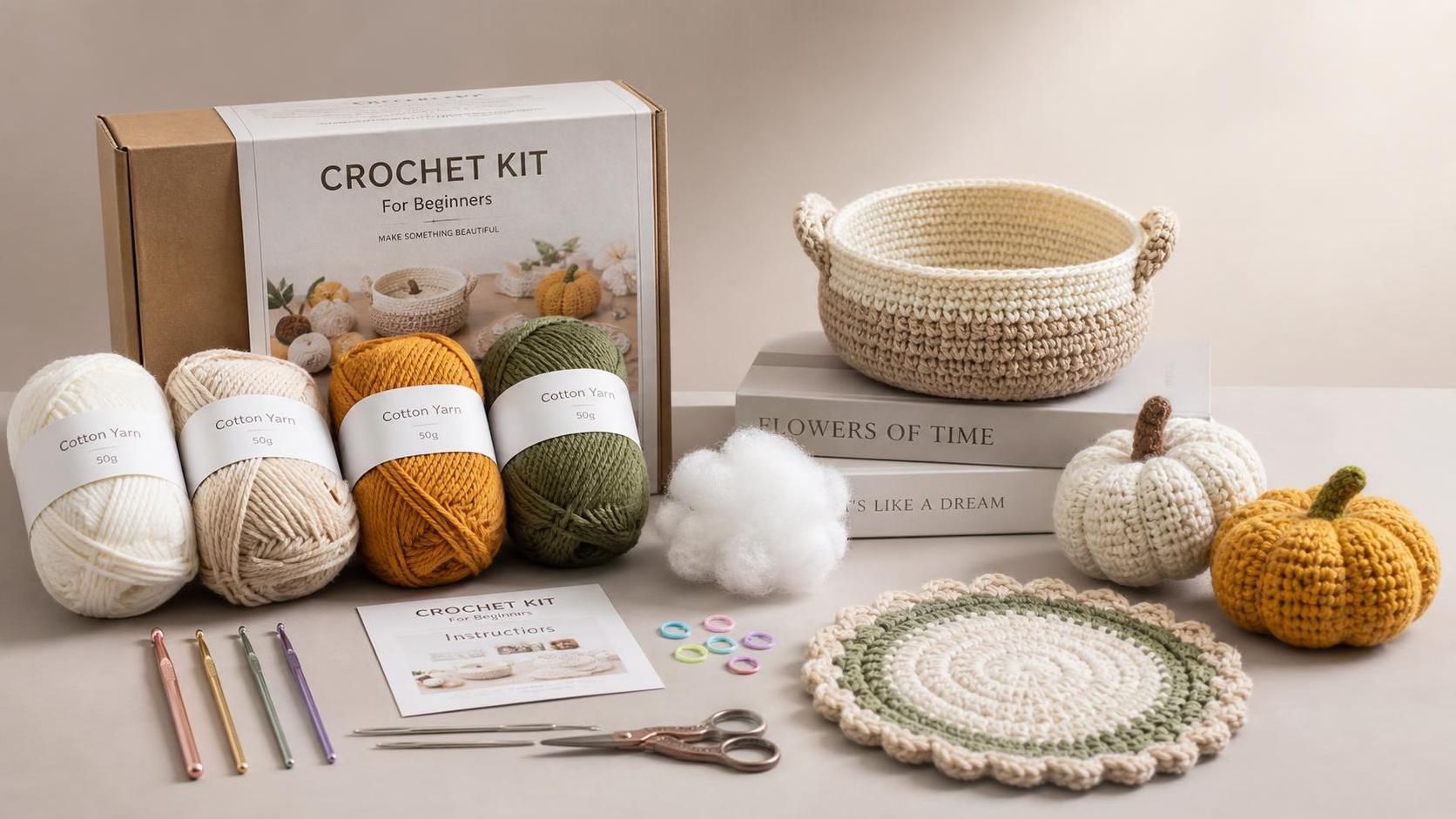
A crochet kit usually includes the practical pieces needed to start and finish a small project: yarn, at least one crochet hook, a pattern or instruction sheet, a yarn needle for weaving in ends, stitch markers, and often stuffing if the project is an amigurumi toy or cushion accent. Some kits also add scissors, safety eyes, measuring tape, or a storage pouch, but those extras are not always standard. The exact contents depend on whether the kit is meant for decorative garlands, coasters, baskets, ornaments, pillow covers, or soft sculptural pieces used in home decor.
The yarn is often the first thing people notice, but it is also where many kits differ in quality. A beginner-friendly crochet kit commonly uses acrylic, cotton, polyester blends, or soft chenille-style yarn. Cotton tends to hold shape well, which makes it suitable for placemats, plant pot covers, simple table decor, and wall hangings with a cleaner stitch definition. Acrylic is usually lighter and easier to source in broad color ranges, though the texture can vary from smooth to slightly fuzzy. Chenille creates a plush surface, but it can hide stitch definition and may be harder to correct if the user needs to pull back rows. When a kit is aimed at home decoration rather than wearable items, yarn choice often prioritizes shape retention, visual texture, and color consistency over skin feel alone.
A useful kit should state the yarn quantity clearly, whether by weight, length, or number of skeins. This matters because the same finished look cannot be assumed from a generic phrase like “includes yarn.” A small hanging ornament may only need a modest amount, while a basket, cushion-front motif, or larger seasonal decor piece requires more yardage and sometimes multiple colors. Dye lot consistency can also affect the final appearance. If colors come from mixed batches, slight shade variation may appear across motifs, which is especially visible in neutral interiors or geometric decor pieces.
Hooks are not interchangeable details
Most crochet kits include one hook, sometimes two if the yarn style or project tension varies. The hook material may be aluminum, plastic, bamboo, or wood. Aluminum hooks are common because they are durable, smooth, and consistent in shape. Bamboo and wooden hooks can feel warmer in hand and may give slightly more grip, which some people like when working with slippery yarn. Plastic hooks are lightweight, but lower-density plastic can flex too much on tighter stitches.
Hook size should match both yarn weight and the target structure of the finished item. A loosely worked decorative scarf uses a different balance than a firm crochet basket or stuffed figure. If the kit includes bulky yarn but the hook is undersized, the work may become stiff and tiring to complete. If the hook is too large, a shaped decor item may lose structure. For home decor crafts, structure matters more than many beginners expect. A crochet plant sleeve, tabletop pumpkin, or hanging star has to hold its intended outline, so tension guidance in the instructions should be reasonably specific.
Some better-prepared kits label the hook size in both metric and local naming systems, because “4.0 mm” is clearer than relying only on a letter code. That reduces confusion during replenishment or replacement. If a hook is missing from the original package, matching it later becomes much easier when the sizing is explicit.
Patterns and instructions often determine whether the kit is truly usable
Many people assume that including yarn and a hook is enough, but a crochet kit is only complete if the instructions suit the project and skill level. A pattern may be printed as a booklet, folded insert, or digital access card. What matters is not the format by itself, but whether the pattern explains stitch abbreviations, row counts, assembly steps, finishing order, and any shaping techniques involved.
For example, a simple coaster kit can work with a compact pattern card. A three-dimensional decorative pumpkin, hanging moon ornament, or textured pillow-front motif usually needs more visual guidance. Charts, progress photos, and stitch diagrams reduce error rates, especially where stitch placement changes at corners or shaping points. If the pattern uses abbreviations such as sc, dc, inc, dec, BLO, or magic ring without explanation, a beginner may struggle even when the physical materials are adequate.
Instructions should also indicate finished size under a stated tension or approximate gauge. Crochet is flexible by nature, so exact size cannot always be guaranteed, but a reference size helps users judge whether they are working too tightly or too loosely. In home decor, scale affects function. A storage basket that finishes smaller than intended may not fit a jar, LED candle, or planter sleeve. A wall motif that grows too large may distort on mounting.
Small accessories make a noticeable difference
The accessory pack in a crochet kit is often small in volume but important in use. A yarn needle or tapestry needle is one of the most basic items because woven-in ends finish the work neatly. Plastic needles are light and safe, though metal needles usually pass through dense stitches more easily. Stitch markers help track rounds, increases, or repeated pattern sections; they are especially useful for circular projects such as baskets, ornaments, and amigurumi decor. A row counter is less common, but some kits include one for more repetitive pieces.
Other accessories may include:
- Stuffing, usually polyester fiberfill, when the project is padded or sculpted.
- Safety eyes, felt shapes, or decorative trims for character-style ornaments, though these should be age-appropriate for the intended use setting.
- A small pair of scissors or thread snips, mainly in gift-oriented kits.
- Measuring tape, which becomes useful when finished dimensions matter more than row count alone.
Stuffing quality deserves more attention than it usually gets. If the fill is too coarse or clumped, the finished shape can look uneven, particularly in pale yarns or tight surfaces where lumps show through. Even decorative objects benefit from even fill density. A softly shaped pumpkin, star, ghost, or cushion charm looks cleaner when the stuffing distributes smoothly and does not shift after handling.
Packaging also affects the condition of these small accessories. Bent needles, crushed hook cards, or stuffing packed too tightly can make a kit feel incomplete even when all listed parts are technically present. Moisture exposure during storage or shipment can also affect paper instructions and some natural-fiber yarns, so sealed internal bags are useful where transit conditions vary.
Project type changes the content
Not every crochet kit is built the same way because different home decor outcomes need different materials. A coaster or placemat kit may include cotton yarn, a medium hook, and simple edging instructions. A wall hanging kit may add a wooden dowel or ring for suspension. A basket kit could use thicker cord-like yarn and a larger hook to create body. A floral garland kit may contain several small color bundles and wire or stems if mixed-media assembly is involved, though wire is not universal and should be clearly listed if included.
Seasonal decor kits often include brighter color contrasts and easier display-oriented patterns. A Halloween-themed handmade assortment, for instance, may use black, orange, white, purple, and red tones across motifs such as pumpkins, ghosts, bats, and lettering. In the same seasonal category, decorative materials sometimes sit alongside other craft formats. A display setup could combine crochet ornaments with window decals like Halloween Window Gel Clings Ghost Pumpkin Bat Witch Cat Boo Blood Decal Stickers for Halloween Home Party Window Decorations, which use soft TPR material, come in 6 sheets, and are designed to stick to smooth surfaces, remove easily, and store for future seasonal use. That kind of pairing is common in home styling because textile crafts and surface decorations often work together rather than separately.
When people ask what is included in a crochet kit, they sometimes expect every finishing component to be inside. That is not always true. Hanging hardware, inserts, hoops, backing boards, or mounting tools may be excluded even when the crocheted piece is clearly decorative. A kit for a pillow-front panel, for example, may provide the yarn and pattern for the panel only, not the cushion insert or zipper backing. Reading the component list closely prevents false assumptions about what “finished project” really means.
Material details that are easy to overlook
Fiber behavior affects both production and long-term appearance. Cotton can shrink slightly or stiffen depending on washing method. Acrylic generally resists wrinkles, but low-twist acrylic may pill with friction. Chenille may shed during early handling. Jute or raffia-style yarn can add attractive texture to rustic home decor, though it is harder on the hands and less forgiving for beginners. If the intended use is near heat, steam, or kitchen moisture, fiber selection becomes more important because some yarns absorb humidity, stretch, or lose crisp shape more quickly than others.
Colorfastness can matter if the crochet item will sit near sunlight or be occasionally spot-cleaned. Deep reds, saturated blacks, and bright neons may perform differently across fiber types and finishing methods. For decorative kits with multiple small accents, trim pieces and embellishments should also be checked for edge quality. Poorly cut felt, rough wooden beads, or inconsistent pom-poms can make a carefully crocheted item look unfinished.
For kits that include wooden rings, dowels, or fabric backings, smoothness and dimensional consistency matter. Splinters on wood can snag yarn, and loosely woven backing fabric may distort under stitched attachment. These are small production details, but they affect assembly time and visible neatness in the final home decor piece.
Common misunderstandings around “complete” kits
One common misunderstanding is that a complete crochet kit always includes enough material for repeated attempts. In many cases, it includes enough for one finished item with a limited margin for error. If the user restarts several times, there may not be enough yarn left, especially for tightly calculated color sections. Another misunderstanding is that all kits suit beginners. Some are labeled casually as starter-friendly even when they require shaping, counting in continuous rounds, or joining parts with precise alignment.
There is also confusion between a crochet kit and a general craft set. A crochet kit should be centered on crocheting, not just decorative assembly. If most of the visual effect comes from pre-cut ornaments, adhesive pieces, or non-crocheted bases, the product may be better described as a mixed craft kit. That distinction matters because expectations for tools, instructions, and time commitment are different.
People sometimes assume that larger packaging means more substantial content. In practice, packaging may be oversized for presentation, while the internal contents remain small. A more reliable indicator is the specification list: yarn count, hook size, accessory count, project dimensions if stated, and whether assembly components are included or excluded.
Storage, transport, and after-use condition
A crochet kit should arrive with the yarn protected from dirt, odor transfer, and excessive compression. Vacuum-packed yarn can recover, but novelty yarns and plush textures may need time to regain loft. Instruction sheets should remain readable after folding, and accessory pouches should prevent small items from migrating inside the carton. For kits intended as gifts or seasonal decor projects, resealable inner packaging is useful because unfinished work is often stored and resumed later.
After the project is made, the maintenance needs depend on the materials in the kit. Cotton pieces may tolerate gentle hand washing or careful reshaping. Stuffed decorative items usually do better with spot cleaning. Pieces containing glued embellishments, wired inserts, or untreated wooden details may need dry storage only. A well-specified kit should make these limits clear, even briefly, because decorative items often spend long periods in storage between seasons.
That matters in homes where crafted decor is rotated through the year. Reusable seasonal accessories in other materials, such as Halloween Window Gel Clings Ghost Pumpkin Bat Witch Cat Boo Blood Decal Stickers for Halloween Home Party Window Decorations, are valued partly because they remove cleanly and store compactly. Crochet decor follows a similar logic: if the materials crush easily, shed excessively, or snag in storage, the project may look worn by the next season even if it was only displayed briefly.
So, what is included in a crochet kit? In the most useful sense, it includes the materials for crocheting, the tools needed to handle those materials, and instructions that match the actual complexity of the project. Yarn and hooks are only the start. The real completeness of a kit shows up in whether the stitch guidance is readable, the quantities are realistic, the accessories support clean finishing, and the materials suit the shape, texture, and display conditions expected from home decor.
Related Posts
Online Message
Leave A Message
If you are interested in our products and want to know more details, please leave a message here, we will reply you as soon as we can.

We specialize in supplying home decor, handicrafts, and daily necessities.


