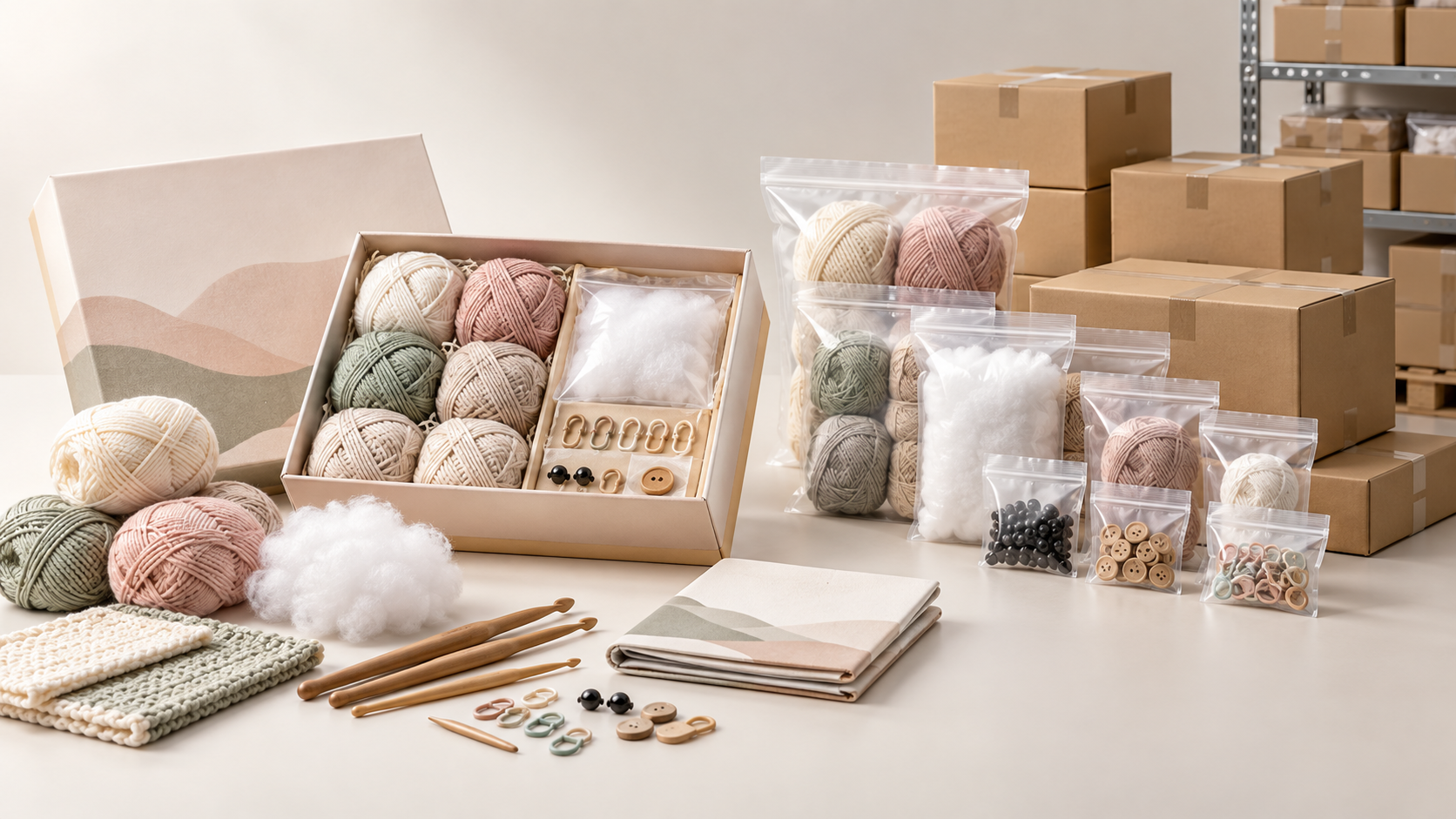
Start with the order structure, not the quoted unit price. Two crochet kits with the same retail appearance can require very different production planning: a basic yarn-and-hook set may be assembled from stocked components, while a themed kit with dyed yarn, printed instructions, custom tools, and gift-ready packing needs several materials to arrive and pass inspection together. A wholesale quotation is useful only when its minimum order quantity, production calendar, and packaging assumptions match the intended launch.
Ask MOQ Questions That Reveal the Real Commitment
“What is your MOQ?” is too broad to settle an order. Ask whether the quantity applies to the total order, each design, each colorway, or each packaging version. A supplier may accept a modest combined quantity across several kits but require a much larger run for a custom printed box. That distinction changes the risk of carrying slow-moving designs.
Separate the kit itself from the elements that make it retail-ready. Yarn shades, crochet hooks, stuffing, stitch markers, instruction booklets, labels, inner bags, and outer cartons may all carry different order minimums. A standard hook color or unprinted polybag may be available in a small run; a branded hook, custom insert, or unusual yarn blend may trigger a separate material commitment. Request an itemized MOQ matrix instead of relying on one number at the top of a quotation.
Also clarify whether any surplus custom material remains after the order. Printed inserts and color-matched packaging often leave an overrun. Establish whether those pieces are included in the delivered quantity, held for a repeat order, or discarded. A repeat-order price is difficult to assess if unused materials are not tracked by SKU and revision.
Lead Time Must Be Defined by Milestones
A stated lead time has little value without a starting point and a finish point. Confirm whether the clock begins after deposit, final artwork approval, sample approval, material confirmation, or all of these. Likewise, confirm whether completion means goods are packed, goods have passed inspection, or cartons are available for collection. These are different dates.
For crochet kits, the longest path is often not assembly. Custom yarn dyeing, translated instructions, printed color charts, and packaging production can hold an otherwise simple kit. Instructions require particular attention: a final text change can alter pagination, booklet size, barcode placement, and box dimensions. Ask for the artwork lock date and the latest date at which each component can change without moving shipment.
Ask for a production schedule that identifies the critical path. It should show sample confirmation, yarn or component sourcing, printing, assembly, internal quality review, and packing. This does not need to be overly detailed, but it should show which stage controls the final date. A supplier that gives the same lead time for a stocked kit and a new custom kit has not provided enough planning detail.
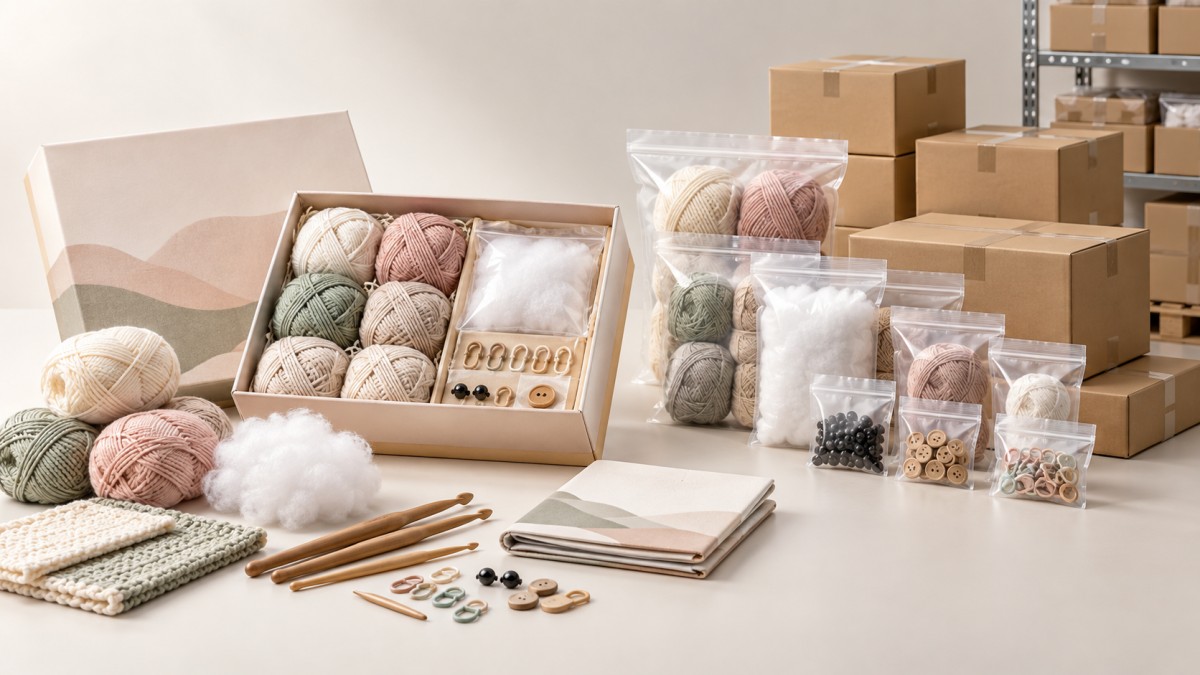
Clarify the treatment of split shipments. Shipping available quantities early may seem useful, but it can create mixed instruction revisions, incomplete store allocations, and duplicated freight handling. If a partial delivery is acceptable, specify the minimum complete SKU quantity, carton markings, and whether the remaining balance will use the same approved materials and packaging batch.
Packaging Questions That Protect Retail Readiness
Packaging should be reviewed as part of the product specification. Ask for the assembled kit dimensions, gross weight, units per inner pack, units per master carton, and carton dimensions after final packing. Estimates based on an empty box are not sufficient. Soft yarn compresses, but tools, stuffing, and printed booklets create fixed thickness; forcing these items into a shallow carton can bend instructions or damage the presentation box.
Determine what the customer sees when opening the package. Loose yarn can tangle with metal hooks, small notions can shift during transport, and a transparent window can expose a poorly arranged kit. Request a packed sample or clear packing photographs that show the front panel, internal component arrangement, closure method, barcode location, warning text where required, and outer carton markings.
Retail channels often require a choice between a shelf-facing box, a hanging bag, a paper wrap, or a mailer-friendly format. These options are not interchangeable. A window box supports visual selection but needs protection against crushing. A bag can reduce volume but may make premium sets look disorganized. For online fulfillment, examine whether the primary package survives handling without a separate protective carton. The right format follows the channel and transport route, rather than a generic preference for the lowest packaging cost.
Seasonal assortments can complicate packaging control. A mixed display that includes crochet kits alongside items such as Christmas Gel Window Clings - Xmas Santa Claus Snowman Snowflake Penguin Christmas Tree Gift Window Stickers for Kids needs unambiguous carton labels, SKU separation, and packing lists. Bright seasonal graphics are easy to confuse at the warehouse when design names, barcodes, or revision codes are not visible on the outer carton.
Define Quality Before the First Production Run
Do not accept “same as sample” as the full quality requirement. The sample may have been hand-selected, while production consistency depends on yarn lot control, counted components, printing accuracy, and assembly discipline. Record the approved yarn fiber content, color reference, skein length or weight, hook size and material, accessory count, and the exact instruction revision. A kit can be technically complete yet still fail its intended experience when the hook size does not match the yarn, the color chart is printed too dark, or the instructions refer to an accessory missing from the bag.
Ask how component counts are controlled during assembly. A fixed packing list is necessary, but the method matters: weigh-counting works for uniform small parts but may not detect mixed accessories; visual verification helps with differentiated pieces but needs a clear reference image. For kits with multiple yarn colors, the label should identify each shade rather than relying only on the appearance of the bundle.
Request clarity on substitutions. Supply interruptions sometimes lead to a replacement hook, needle, yarn shade, or bag material. A substitution that seems minor at factory level may change the finished project, retail photos, or package dimensions. Require approval before any change to functional components, visible colors, printed content, or packaging material. This also prevents a later repeat order from quietly drifting away from the original assortment.
Sample Approval Should Test the Whole Kit
An unpacked component sample does not validate the finished wholesale unit. Approve a pre-production sample assembled in the final package with final artwork wherever possible. Review it from three angles: whether the contents match the declared project, whether the package presents cleanly at retail, and whether the unit remains intact after ordinary carton handling.
Use the sample review to resolve small operational details that often cause rework: whether instruction sheets are folded consistently, whether yarn ends are secured, whether tools scratch transparent packaging, and whether labels cover useful artwork or opening tabs. Keep written approval records with dated files and revision names. Verbal approval is too easy to misinterpret once printing and assembly begin.
Before placing the purchase order, combine the MOQ breakdown, milestone schedule, carton specification, approved sample, and substitution rule into one order document. That creates a practical basis for comparing crochet kit wholesalers: not a comparison of headline prices, but a comparison of whether each quoted order can arrive complete, consistent, and ready for its intended sales channel.
Leave A Message
If you are interested in our products and want to know more details, please leave a message here, we will reply you as soon as we can.

We specialize in supplying home decor, handicrafts, and daily necessities.


