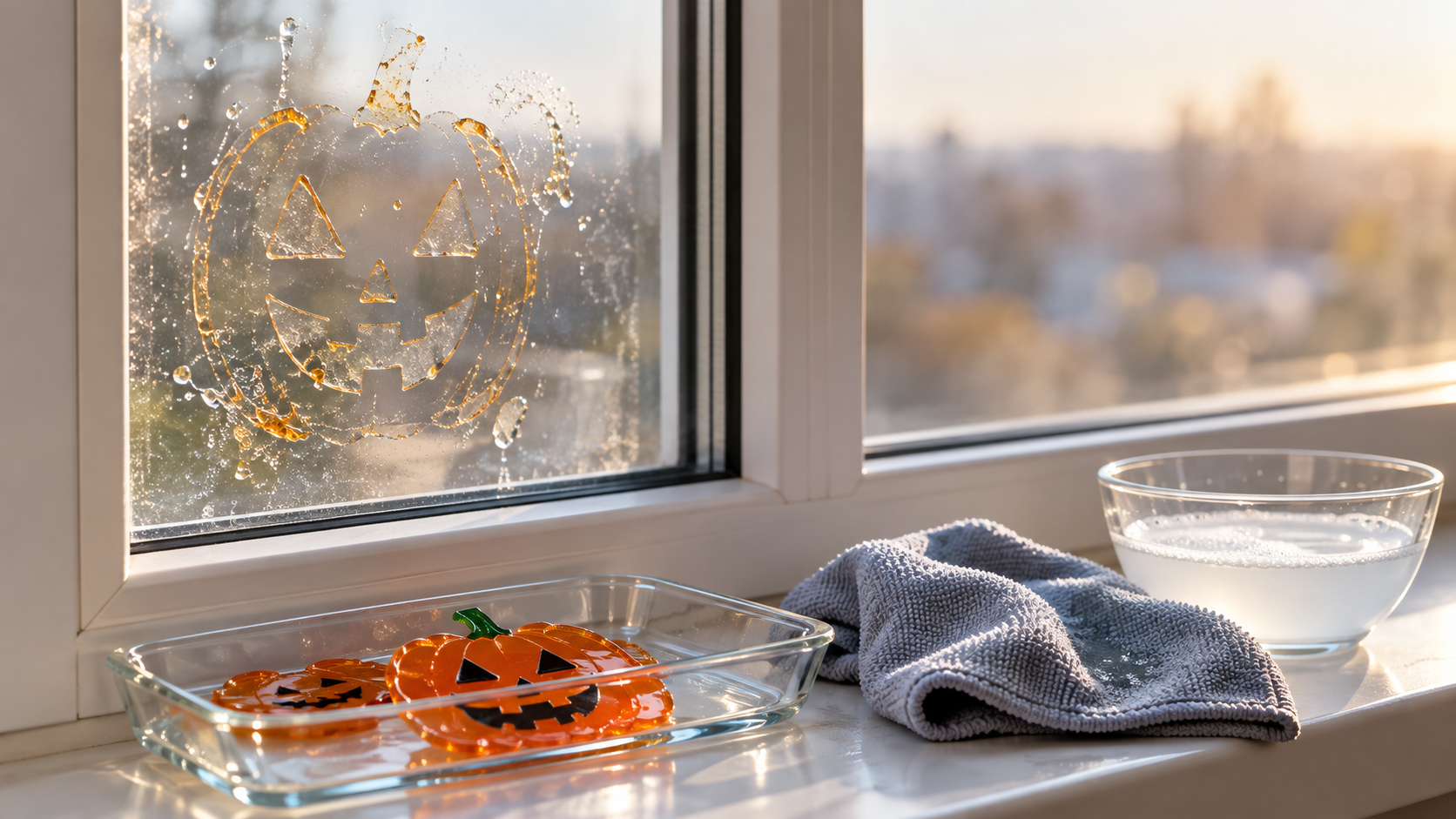
Once the Halloween display comes down, ghost-shaped outlines or orange smudges can be more noticeable than the decorations were. When halloween window gel clings leave marks, start with lukewarm water, a little mild dish soap, and a soft microfiber cloth. This is usually the best first step for lifting surface residue without scratching the glass.
Before trying anything stronger, check whether you are cleaning bare glass, applied window film, or an exposed specialty coating. A cleaner that works on ordinary glass may damage tint film or a decorative finish. Oily smears, leftover gel, and transferred color also need slightly different treatment, so inspect the mark rather than repeatedly scrubbing the whole window.
Identify the surface and the mark first
Check the window’s care instructions if available. Aftermarket tint, privacy film, and decorative film put a separate layer between your cloth and the glass. Factory-tinted glass is not necessarily the same as applied film. Low-emissivity coatings are often inside insulated glazing, but some specialty windows have exposed coatings; do not assume every accessible surface is untreated.
When the surface is uncertain, stay with a mild soap solution until you can confirm the approved cleaning method. Avoid picking at an edge to find out whether film is present.
Gel decorations can transfer material during contact, especially when left on warm, sun-exposed windows. The exact behavior depends on the cling formulation and the receiving surface. A visible outline does not automatically mean the glass is permanently stained.
Remove the cling without spreading the residue
Work when the pane is cool and out of direct sunlight. Hot glass dries cleaning solution quickly, while a large temperature difference between the pane and cleaning water can stress glass. Use lukewarm—not hot—water.
- Lift a corner gently. Use your fingertips and peel slowly, close to the surface. Do not yank a brittle decoration away from the pane.
- Soften stubborn areas. Hold a cloth dampened with lukewarm water against the cling for a few minutes. Keep runoff away from wooden trim, film edges, and window hardware.
- Lift softened fragments. Roll or pick them up with a damp microfiber cloth rather than smearing them across clean areas. On film or coated surfaces, do not use a scraper.
- Set the decorations aside. Keep removed clings off painted sills, furniture, and fabrics, where transferred color or oil may be harder to remove.
A fingernail can still catch a film edge, so use extra care around seams. Metal blades are unnecessary for this first stage and can scratch glass or damage surface treatments.
Wash away the oily outline
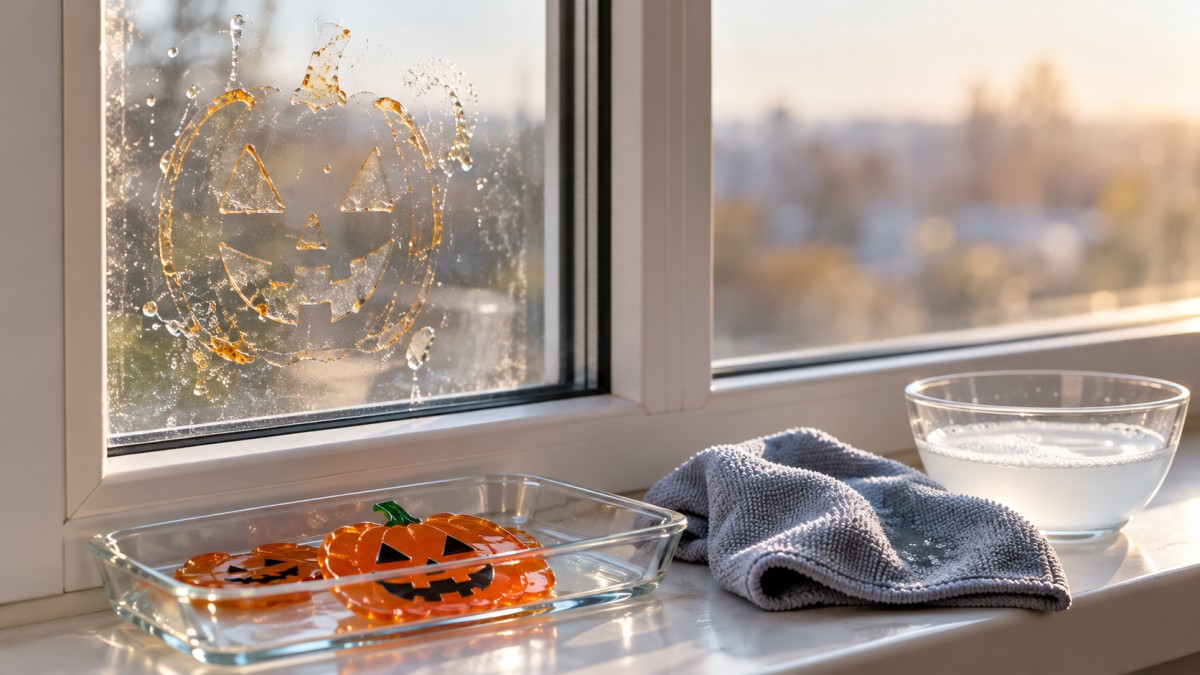
Mix a few drops of mild dishwashing liquid into a bowl of lukewarm water. Choose a simple, nonabrasive formula without added moisturizers. Wet a clean microfiber cloth, wring it out, and wipe a small section of the mark with light pressure.
Allow the solution to sit briefly without drying. Then wipe again using a fresh section of cloth. Dish soap helps loosen oily deposits, but a dirty cloth can spread them into a larger haze. Change the water if it becomes visibly colored or greasy.
Follow with a second cloth dampened with clean water, then dry with a clean, soft cloth. Rinsing matters: leftover detergent can look like cling residue, especially when sunlight hits the window at an angle. Check the fully dry surface before deciding that the treatment failed.
For marks on confirmed bare glass
If soap removes the tackiness but leaves an oily trace, a small amount of plain rubbing alcohol may help on ordinary, uncoated glass. Check both the window care guidance and the alcohol label first. Test an inconspicuous spot, let it dry, and inspect it before treating a larger area.
Apply alcohol to a cloth rather than spraying the pane. Gently wipe the affected spot, keeping it away from seals, painted frames, film edges, and nearby finishes. Ventilate the room, keep alcohol away from flames and ignition sources, and never mix it with other cleaners. Finish with mild soapy water, rinse, and dry.
Do not use this method on applied film, acrylic, polycarbonate, or an unidentified coating unless its manufacturer specifically permits it. A transparent panel is not always glass.
When the color stays but the stickiness is gone
A flat colored outline needs a more cautious approach than a removable gel fragment. Repeat the mild wash once with fresh supplies to rule out residue on the cloth. On confirmed bare glass, the spot-tested alcohol method above may be appropriate. Stop if the cloth picks up the window’s finish, the surface becomes hazy, or the appearance worsens.
Persistent color on film or a coated surface may have migrated into that layer rather than remaining on top. Stronger solvent cannot reliably reverse that and may cause additional damage. Ask the film or window supplier about an approved treatment, providing the decoration type and cleaners already used.
Inspect both sides of the pane in angled light. Marks outside, condensation between panes, and old cleaning streaks can become noticeable during cleanup but are not necessarily caused by the clings. A smooth, unchanged outline that survives gentle cleaning is a reason to reassess—not to scrub harder.
Skip the shortcuts that can make cleanup worse
- Abrasive pads, scouring powders, and melamine foam: these can scratch or dull films and finishes.
- Razor blades and metal scrapers: these can damage coatings and may scratch glass, particularly where debris is present.
- Acetone, paint thinner, and general adhesive removers: compatibility varies, and drips can damage frames, seals, or surrounding finishes.
- Hair dryers and boiling water: uneven or excessive heat can damage film and stress the pane.
Vinegar is not the best first choice for an oily deposit; mild dish soap is more directly suited to that job. Adding more household chemicals usually creates more rinsing work rather than a better result.
Reduce next season’s cleanup
Use gel clings only on surfaces approved by their instructions, apply them to clean glass, and inspect them periodically. Remove them if they become unusually soft, tacky, or begin leaving color. Follow any recommended display duration rather than leaving them up indefinitely, especially on windows receiving strong sun.
Where film compatibility is uncertain, moving the seasonal display off the glass avoids the contact issue. A hanging decoration such as the Halloween Sign Halloween Spooky Porch Sign Vertical Wooden Porch Sign for Door Decorations, Farmhouse Hanging Wall Sign for Home Outdoor Garden Decor offers a door, wall, or porch alternative with a double-sided design and pre-attached rope. Keep wood or MDF decor sheltered from prolonged moisture unless its care instructions permit exposure, and hang it from suitable hardware rather than against the window.
Leave A Message
If you are interested in our products and want to know more details, please leave a message here, we will reply you as soon as we can.

We specialize in supplying home decor, handicrafts, and daily necessities.


