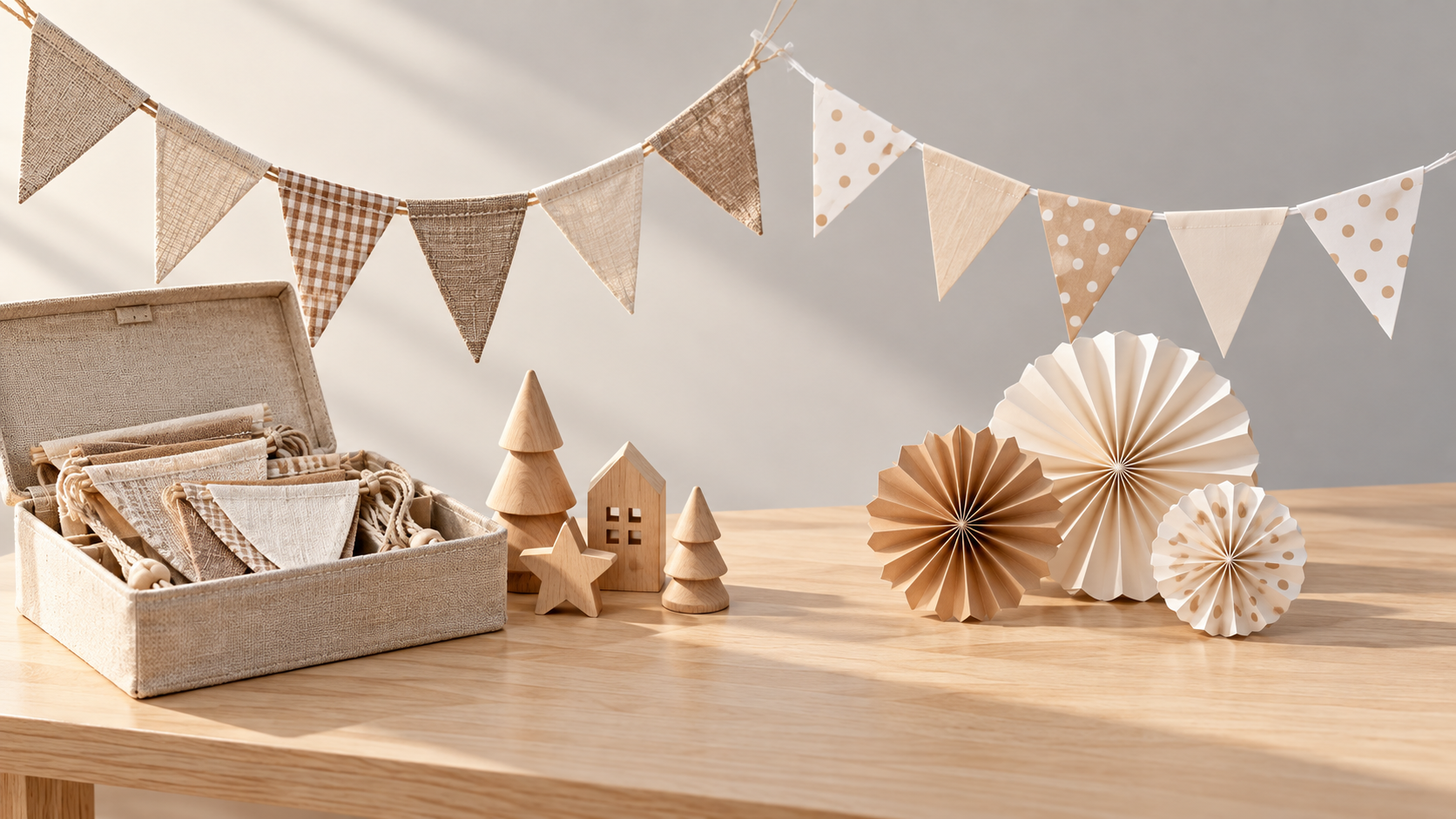
Reusable party decorations cost less per event only when they are used enough times to recover their higher purchase price and handling costs. Disposable options can remain cheaper for one-off themes, low-frequency celebrations, or venues without practical storage. The decisive figure is not the price per piece, but the total cost of delivering an equivalent decorated space.
A useful comparison includes landed purchase cost, setup and removal, cleaning, storage, losses, and replacement. It also needs a realistic reuse forecast: a banner that can physically survive twenty installations has little financial advantage if its design is retired after two.
Compare the same decorated result
Comparing a disposable paper banner with a fabric banner by unit price misses differences in size, coverage, installation, and presentation. Establish a common requirement first: the same backdrop area, number of decorated tables, window coverage, and acceptable appearance after installation.
Separate the display into components rather than treating it as one purchase. A reusable backdrop frame may support replaceable printed graphics; neutral wooden table accents may work with disposable name cards. This prevents the cost of a short-lived theme from being assigned to equipment that can serve many unrelated events.
For imported goods, use landed cost rather than the factory quotation alone. Include freight, duties where applicable, inbound handling, and protective packaging. Bulky reusable pieces can have a low factory price but occupy substantially more transport and storage space than flat-packed paper alternatives.
A cost-per-event calculation that exposes the trade-off
For a defined purchasing period, calculate:
Cost per event = (initial landed purchase cost + total operating costs + replacement purchases − recoverable residual value) ÷ completed events.
Operating costs should include installation, removal, cleaning, repacking, storage, and disposal where relevant. Avoid double counting: if replacement purchases are recorded separately, do not also include them in a general maintenance allowance.
The following example uses illustrative planning assumptions, not supplier quotations or market averages. Both options provide equivalent decorative coverage. The reusable kit costs $300 landed, with $24 per event allocated to handling, cleaning, replacement, and storage. The disposable set costs $90 per event, plus $18 for installation, removal, and waste handling. No residual value is assumed.
Under these assumptions, the reusable option becomes cheaper at the fourth completed event. Its break-even calculation is $300 ÷ ($108 − $24) = 3.57 events, rounded up to four.
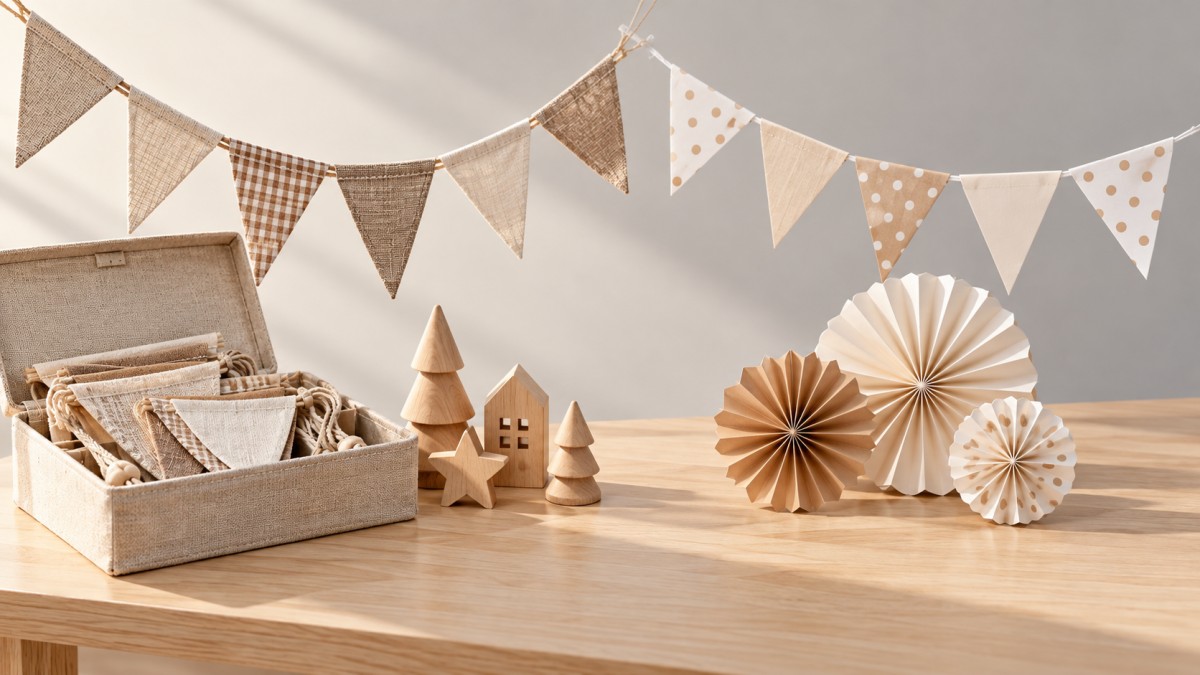
This shortcut works only when recurring costs are reasonably stable. Annual storage charges, minimum laundry fees, or an additional kit needed for overlapping bookings should be entered separately in the full calculation. If reusable operating costs equal or exceed the disposable total per event, additional reuse will not recover the initial purchase through operating savings.
Count usable cycles, not claimed durability
The most important assumption is the number of events the same inventory will actually serve. That number is constrained by physical condition, theme relevance, booking frequency, and availability between events.
Fabric banners may remain structurally sound but become unsuitable because of staining, wrinkles, fading, or a dated printed message. Wooden accents can lose their presentation value through chipped edges or damaged finishes before they become unusable as objects. A general “reusable” description does not establish an economical service life.
Request construction details that explain likely failure points: reinforced hanging holes, edge finishing, attachment methods, coating care, and replacement-part availability. A small sample order can establish whether cleaning and repacking are practical before a larger commitment. Any claimed reuse count should identify the cleaning, handling, and storage conditions behind it.
Calendar life matters too. Eight uses across two months create a different storage burden from eight annual celebrations. Likewise, two simultaneous events require two kits; they cannot share the same inventory simply because the annual event count supports the investment.
Handling and storage can reverse the saving
Reusable decorations add work after removal. Pieces must be checked, cleaned if needed, dried, sorted, and packed so that the next installation does not begin with missing fittings or tangled fabric. Disposable sets still require installation and waste handling, so compare the difference in labor rather than charging labor to only one option.
In the example, an additional $30 of reusable handling per event raises recurring cost from $24 to $54. Break-even then moves to the sixth event: $300 ÷ ($108 − $54) = 5.56. If only three celebrations take place, the original reusable estimate already rises to $124 per event, above the disposable alternative.
Storage should reflect both space and packaging requirements. Fabric needs suitable protection from moisture and staining; rigid ornaments need protection from impact; small components need containers that prevent loss. For warehouse planning, compare packed volume and handling units, not just product dimensions. Dedicated paid storage belongs in the budget even during months with no events.
Reusable window decorations illustrate how small handling details affect the calculation. The soft-TPR Spring Window Clings Gel, Jelly Window Stickers for Glass Refrigerators Home, Welcome Spring Window Decorations - Flowers Butterflies Bird, Kids‘ Love is described as removable and reusable on smooth surfaces. For a seasonal classroom or venue display, the relevant cost question is whether the pieces can be recovered, kept clean, and stored for the next installation—not simply whether they adhere on first use. Surface compatibility and storage instructions should be confirmed before assigning future reuse value.
Price replacement risk at the component level
A single average loss allowance can hide expensive weak points. Missing clips may be inexpensive to replace, while one damaged section of a matched backdrop could require replacing a complete set. Ask whether individual pieces, fasteners, and matching colors remain available, and whether replacement orders carry minimum quantities.
Keep functional durability separate from appearance standards. A decoration acceptable for an informal gathering may fail a tightly coordinated display because of visible wear or color variation. The replacement budget should reflect the presentation requirement, not merely whether an item still hangs securely.
Documentation also affects usable value. Where venue rules or destination-market requirements apply, obtain evidence relevant to the exact material, finish, and intended use. A general factory certificate does not establish that a particular decoration meets every applicable requirement. Goods rejected for installation deliver no useful reuse cycles.
Buy durable structure without locking in a short-lived theme
A mixed purchase can be more economical than choosing one category exclusively. Reusable neutral banners, frames, and table accents can provide the core display, while low-cost replaceable elements carry dates, names, or event-specific graphics. The financial benefit comes from preserving the expensive components without forcing every event to look identical.
Before committing, request comparable quotations covering packed dimensions, care instructions, spare components, packaging, and landed delivery terms. Test the budget against the confirmed event schedule, then against fewer bookings, additional handling, and earlier replacement. Do not count speculative future events merely to make the reusable option appear cheaper.
The stronger purchase is the one that remains economical under a credible operating plan. Reusable inventory earns its advantage through completed, satisfactory installations. Disposable decorations can still be the lower-cost choice when theme changes, limited storage, or recovery labor prevent that reuse from happening.
Leave A Message
If you are interested in our products and want to know more details, please leave a message here, we will reply you as soon as we can.

We specialize in supplying home decor, handicrafts, and daily necessities.


