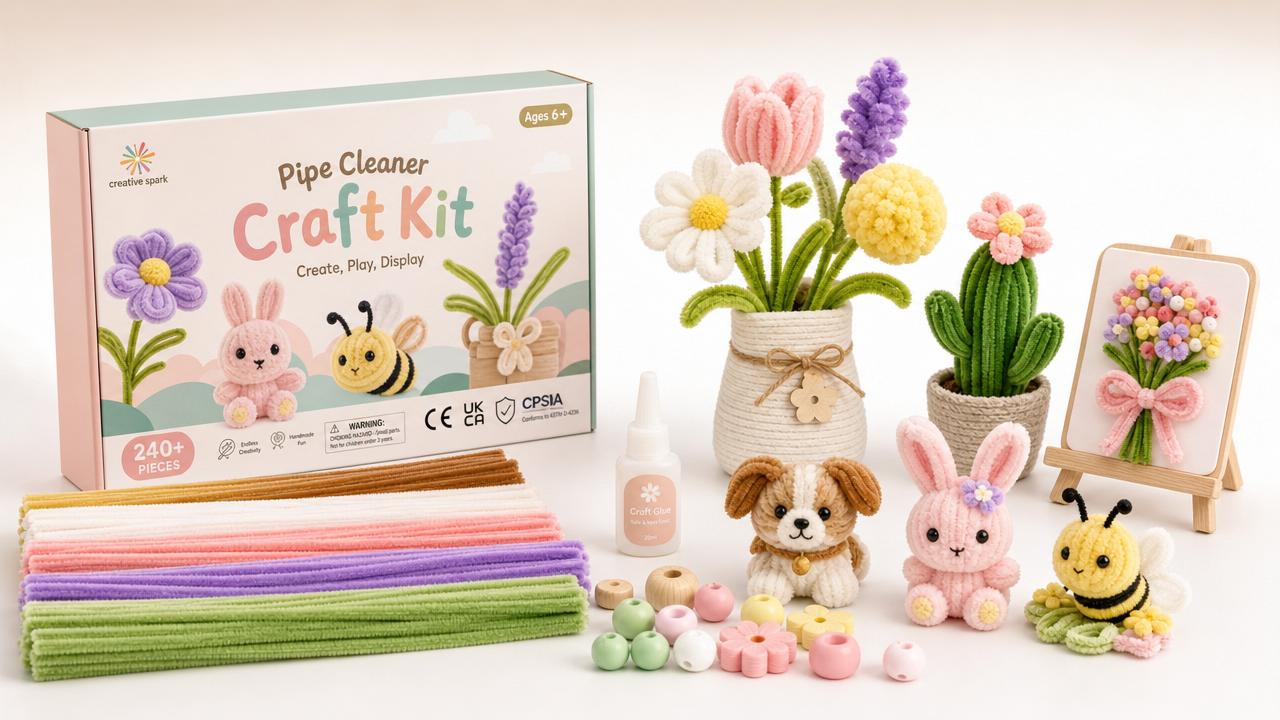
How safe is a pipe cleaner craft kit for young children, really?
A pipe cleaner craft kit can be fun, creative, and useful for home decor projects.
Still, safety depends on details that are easy to miss during a quick online search.
The main checks are material covering, wire flexibility, glue quality, loose accessories, and clear age labeling.
For young children, colorful appearance should never be the only reason to choose a pipe cleaner craft kit.
In practical use, parents usually want two things at once: safe handling and enough creative value to keep children engaged.
That is why certification, packaging clarity, and production consistency matter as much as the craft idea itself.
Which parts of a pipe cleaner craft kit deserve the closest inspection?
The first point is the fuzzy outer material.
If fibers shed easily, children may rub them into eyes or place them in the mouth.
The second point is the internal wire.
A wire that is too stiff may scratch skin.
A wire that breaks after repeated bending may expose sharp ends.
Then comes the accessory mix.
Many kits include beads, plastic eyes, sequins, pom-poms, clips, or decorative buttons.
These may improve the final look, but they also raise choking risk.
Needless fragrance is another warning sign.
A strong chemical smell may suggest lower-quality dyes, coatings, or adhesives.
If the kit is promoted for decorating children’s rooms, shelves, or seasonal corners at home, stable quality becomes even more important.
A quick check before buying helps
What safety certifications or standards should appear on the package?
This is often the most searched question, and for good reason.
A pipe cleaner craft kit aimed at children should show more than vague claims like “eco-friendly” or “safe material.”
More useful signs include testing or compliance linked to toy and material safety rules.
Depending on the market, buyers often look for references related to CPSIA, ASTM F963, EN71, or REACH-related material control.
Not every package lists standards in the same way.
However, serious suppliers usually provide traceable product details, testing documents, or retail-chain compliance language.
That matters in home decor crafts, where one product may sit between toy use, display use, and gift use.
A stable supply chain also improves confidence.
Companies with certified factories and long-term links to certified ceramic, plastic, handwoven, wooden, and fabric craft partners usually manage consistency better.
That kind of background is especially relevant in Ningbo-based export craft networks serving European and American retail standards.
Are all pipe cleaner craft kits suitable for preschool children?
No, and this is where confusion happens.
Some kits are designed for supervised family crafting, not independent use by very young children.
A pipe cleaner craft kit with tiny embellishments may suit older children better.
For preschool ages, simpler sets are usually the safer option.
- Choose thicker, easy-grip pieces instead of extra-thin stems.
- Avoid kits with many detachable plastic decorations.
- Check whether adult supervision is clearly recommended.
- Prefer projects with fewer steps and less glue.
If the goal is gentle crafting time rather than wire-based shaping, soft textile craft options may be more suitable.
For example, a yarn-based beginner set for cozy decor can feel easier to manage at home.
It fits slow, guided crafting and decorative use, especially in kitchen decor or gift settings.
What mistakes do buyers make when comparing one kit with another?
The most common mistake is judging only by quantity.
More pieces do not automatically mean better value.
In reality, very large sets often mix safe components with low-priority fillers.
Another mistake is overlooking the intended result.
If the kit is meant to create small display crafts for a shelf, tray, or seasonal home corner, finish quality matters.
If it is meant for repeated handling, durability matters more.
People also forget to compare instruction quality.
Clear, step-by-step guidance lowers misuse and keeps projects within the child’s ability range.
That same logic explains why some households prefer guided yarn crafts over wire-centered kits.
A beginner-friendly dessert-themed crochet project, using soft premium yarn in brown, cream, pink, red, and green, may create a realistic decor piece with fewer sharp-element concerns.
Simple comparison guide
How can you make a safer final choice without overcomplicating it?
Keep the decision practical.
Start with age fit, then move to materials, then check compliance, and only after that compare colors or project themes.
For a pipe cleaner craft kit, the safest choice is rarely the flashiest one.
Look for a kit that matches the way it will actually be used at home.
Will it be a supervised rainy-day activity, a holiday decor project, or a giftable craft session?
That context helps you judge the right balance between creativity and risk.
A well-made pipe cleaner craft kit should feel thoughtfully assembled, clearly labeled, and honest about limitations.
If important information is missing, that is already useful information.
Before buying, compare age guidance, certification language, accessory size, and material feel.
That short checklist usually leads to a better choice than reviews focused only on color variety or price.
Leave A Message
If you are interested in our products and want to know more details, please leave a message here, we will reply you as soon as we can.

We specialize in supplying home decor, handicrafts, and daily necessities.


