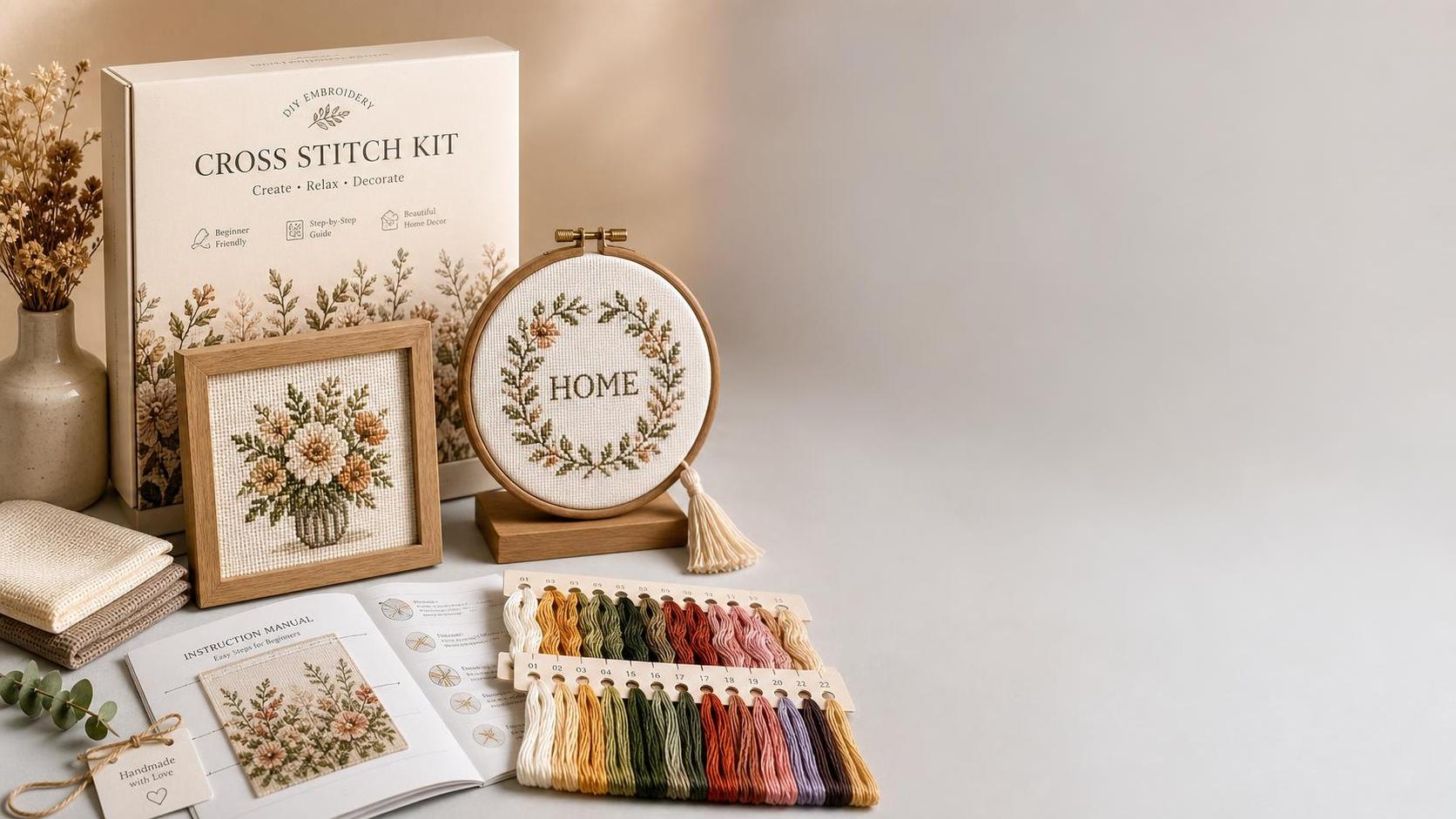
How to Choose a Cross Stitch DIY Kit That Matches Your Store's Buyer Profiles
A Cross Stitch DIY Kit is not a single product category in the way many buyers first assume. In retail practice, it sits somewhere between craft supply, giftable home decor, and seasonal impulse purchase. That matters, because the right kit for one customer base can be the wrong one for another even when the stitch count, packaging size, and landed cost look acceptable on paper. What sells through is usually the kit that matches how end buyers actually shop: some buy for relaxation, some for decorative results, some for gifting, and some for beginner-friendly family activities.
If your store serves the home decor market, the selection process should start with buyer profiles rather than with factory quotations alone. Design appeal, price sensitivity, perceived difficulty, and display value all shape demand. Distributors and wholesalers often get into trouble when they treat all cross stitch kits as interchangeable. They are not. The difference between a fast-moving line and slow inventory is often in details that seem minor at sourcing stage: artwork style, fabric feel, thread color clarity, instruction readability, and whether the finished piece looks decorative enough to earn shelf space in the customer's home.
What buyers are really choosing
At store level, customers are rarely comparing technical specifications the way professional buyers do. They are judging confidence and outcome. Can they finish it? Will it look good framed or displayed? Is it worth the time? A Cross Stitch DIY Kit that is technically complete but visually uninviting often underperforms against a simpler kit with stronger styling and clearer presentation.
That is why buyer profiling matters. A value-led discount chain may need compact kits with approachable motifs, fewer color changes, and price points that support basket-building. A specialty gift shop may do better with refined botanical, holiday, or cottage-style themes where the finished piece feels decorative, not merely crafty. Online sellers often need packaging and imagery that communicate the finished effect quickly, because conversion depends on immediate visual understanding.
In the home decor segment, end users often expect the finished project to work as part of interior styling. That shifts the decision away from stitching complexity alone. Neutral florals, vintage-inspired samplers, nursery motifs, festive wall accents, and seasonal window-area decor can all perform well, but only when they align with the store's existing aesthetic direction.
Three practical filters for kit selection
The first filter is design language. Ask whether your customers prefer cute, decorative, traditional, minimalist, or holiday-driven styles. This is basic merchandising discipline, yet it is often skipped in craft categories. A store that sells soft-texture home accessories and warm seasonal decor should not automatically buy loud, novelty-heavy stitch patterns just because they are inexpensive.
The second filter is difficulty positioning. A beginner kit should feel achievable from the moment the package is opened. That usually means readable charts, sensible thread organization, and motifs that do not punish inexperience. More advanced buyers may accept finer fabric counts or layered color work, but that is a narrower audience. If your retail channel is broad rather than niche, a heavy mix of advanced patterns can create a false sense of assortment while reducing actual sales velocity.
The third is supply reliability. In craft and decor categories, replenishment matters more than many new buyers expect. A kit that sells once and disappears is hard to build into a repeat program. Companies with stable factory resources and coordinated sourcing across handicrafts, wooden crafts, fabric crafts, and related decorative categories are often better positioned to support assortment continuity, packaging consistency, and seasonal extensions.
Where wholesalers often misread demand
One common mistake is overvaluing unit cost and undervaluing completion appeal. In cross stitch, customers are buying both the activity and the finished object. If the stitched result looks dated, crowded, or difficult to display, low cost alone will not rescue the item. Another mistake is assuming that more contents automatically mean better value. Extra threads, oversized packaging, or overly complex accessory sets can actually confuse entry-level buyers.
There is also a seasonal misunderstanding worth noting. Seasonal craft demand is not limited to stitch products labeled for one holiday. Buyers often respond to broader decorative themes around a season. For example, a retailer building a Halloween assortment might combine beginner-friendly stitch kits with complementary window or party decor so the merchandising story feels complete. In that context, a product such as Halloween Window Gel Clings Ghost Pumpkin Bat Witch Cat Boo Blood Decal Stickers for Halloween Home Party Window Decorations fits because it shares the same visual mood: easy application, reusable seasonal use, and immediate decorative effect on smooth surfaces such as glass or doors. It is not a substitute for a stitch kit, but it shows how end buyers often shop by theme rather than by strict product type.
How to align kits with different store profiles
If your channel is mass retail or general home goods, the safer assortment usually centers on accessible patterns, moderate package sizes, and giftable presentation. Customers in these channels often need low-friction purchasing decisions. They respond to familiar motifs and clean visual outcomes.
For boutique decor stores, the buyer profile is usually narrower but more style-conscious. Here, the kit has to justify its place among candles, textile accents, ceramics, and tabletop decor. The artwork should feel curated. Packaging should not look like commodity craft stock. Even when the technical contents are similar, the perceived quality of color palette and presentation can decide whether the product feels premium enough.
For distributors serving multiple downstream accounts, the better approach is often a tiered assortment rather than one broad, unfocused SKU pool. Keep an entry level line for volume accounts, a seasonal line for promotional periods, and a more decorative line for specialty retailers. That gives agents and wholesalers flexibility without forcing every account into the same product logic.
What to check before committing to a supplier
A capable supplier should be able to explain not only what is inside the kit, but also which retail setting it suits. That sounds simple, but it reveals whether the supplier understands end-market positioning or is only moving stock. Buyers in home decor benefit from partners who already work across crafts and daily-use decorative products, because that usually supports stronger category coordination and more stable development cycles.
It is also worth checking whether the supplier's production structure can support consistency over time. A network that includes dedicated handicraft manufacturing, wooden and fabric craft capability, and established cooperation with certified partners in ceramics, plastics, and handwoven products can be useful for buyers building wider home decor programs. The advantage is less about making every item in-house and more about maintaining predictable quality and dependable fulfillment across related categories.
When you evaluate a Cross Stitch DIY Kit, the most useful question is not whether the kit is good in isolation. It is whether it makes sense for the customer who will actually buy it from your shelf or catalog. Once you frame the decision that way, design style, difficulty level, seasonal fit, and supply stability become much easier to judge. That is usually where better assortment decisions start.
Leave A Message
If you are interested in our products and want to know more details, please leave a message here, we will reply you as soon as we can.

We specialize in supplying home decor, handicrafts, and daily necessities.


