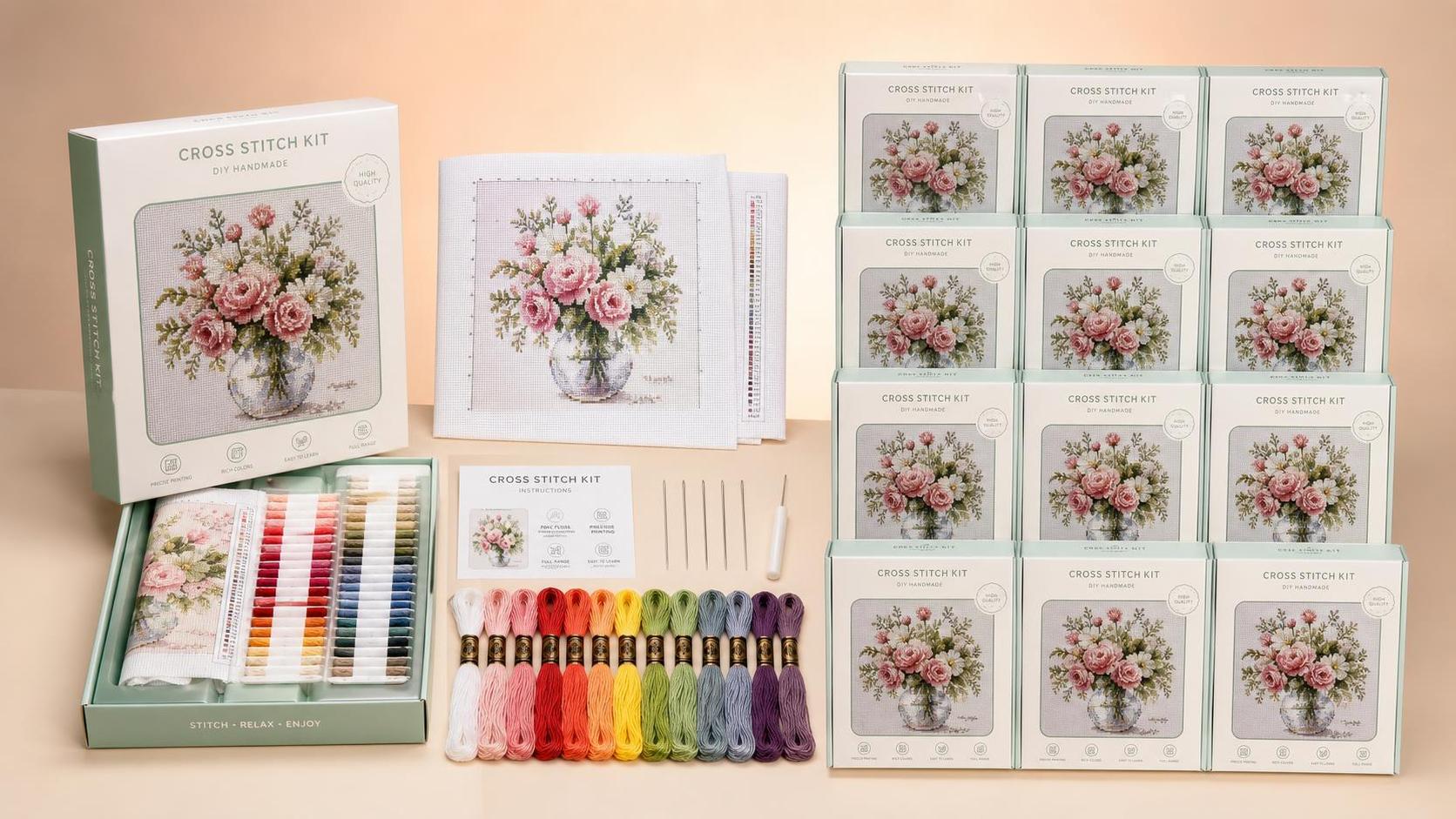
Start with what actually drives returns and complaints
When buying a Cross Stitch DIY Kit in bulk, price is only one part of the decision. The bigger cost usually shows up later: missing components, uneven thread quality, damaged packaging, or a supplier that ships one good order and one weak order after that. For importers, wholesalers, and home decor buyers, the practical comparison is simple: which supplier can deliver consistent kits, clear specifications, flexible packaging, and fewer surprises across repeated orders.
That means checking the kit as a finished retail item, not just as a list of materials. A Cross Stitch DIY Kit may look acceptable in a quotation sheet, but bulk buying decisions should be based on how the item arrives, how complete it is, how easy it is for end customers to use, and how reliably the supplier can reproduce the same standard next time.
Compare the kit bill of materials line by line
Ask for a full component breakdown before you compare unit prices. Not every kit includes the same things, and this is where many “cheap” offers stop being cheap.
- Fabric type and count
- Thread quantity and color count
- Needle inclusion and quantity
- Pattern format: printed chart, symbol chart, or both
- Hoop, frame, backing board, or accessories if included
- Instruction sheet language and layout
- Inner bagging and outer retail packaging
If one supplier is quoting on thinner fabric, shorter thread cuts, or simplified instructions, the price gap is not really a price gap. It is a different product.
Check thread and fabric consistency, not just appearance
This is one of the first places where repeat orders go wrong. A showroom sample may look clean, but bulk production can drift if the supplier is not controlling color matching, thread length, fabric cutting, and packing accuracy.
Ask for production samples from the same supply setup that will be used for your order. Then check a few practical points: are thread colors clearly separated, are symbols readable, does the fabric edge fray too easily, and does the thread amount leave reasonable working margin for beginners? A kit that is technically complete but frustrating to use will come back as a customer service problem.
Look at packaging as a cost control tool
Bulk buyers often focus on product cost and forget that packaging affects freight, shelf appeal, damage rate, and repacking labor. Compare whether the supplier can offer flat packing, barcode placement, private label inserts, and export-friendly carton structure.
If you sell into home decor channels, presentation matters. Even in craft categories, the buyer is often choosing a giftable retail item. That is similar to how decorative products are evaluated across broader seasonal ranges. For example, a supplier handling items like Wooden Large Vertical Love Grows Here Porch Decor, Garden Welcome Standding Sign Garden Decor Sign, Welcome Wall Sign for Yard Porch Farmhouse Door Decoration usually understands that appearance, display readiness, and protective packing all influence sell-through, not just factory cost.
Material safety and labeling should be checked early
Do not leave compliance questions until booking stage. A Cross Stitch DIY Kit can involve dyed threads, fabric, printed paper, plastic accessories, metal needles, and outer packaging materials. The exact requirements depend on the destination market, product positioning, and whether the item is sold as a general craft product or targeted toward children.
The useful check is not “are you compliant?” but “which documents support each material in this kit?” Review test reports or declarations against the actual components being supplied, and make sure the document matches the factory, item category, and material composition in your order file. Many sourcing mistakes happen because buyers accept a generic file that does not correspond to the final kit configuration.
Compare sampling and proofing discipline
A capable supplier should be able to control revisions without creating confusion. If you are developing private label kits, watch how they manage artwork versions, thread color changes, packaging copy, and sample approvals. The warning signs are familiar: unclear file naming, no signed sample reference, and verbal confirmation replacing written approval.
For this category, one misplaced chart revision can affect the entire batch. Keep one approved reference sample, one approved packing layout, and one final component list tied to the purchase order.
Ask how the supplier handles mixed-material sourcing
Many home decor and craft buyers are not purchasing one SKU once. They are building a program: textile kits, wooden decor, seasonal items, giftable craft packs, and everyday decorative accessories. In that context, supply chain depth matters.
A supplier with dedicated craft production plus established manufacturing partnerships across related materials can be more stable than a trader assembling each order from scratch. That matters when your Cross Stitch DIY Kit includes mixed components or when you want to consolidate shipments with adjacent product lines. The value is not the broad catalog by itself. The value is fewer handoff errors and better control over timing and quality.
Lead time means capacity plus process
Do not compare lead time promises without asking what is inside them. Is the timeline based on raw material readiness? Does it include packaging approval? Is there buffer for rework if one component fails inspection? The most useful suppliers break timing into stages instead of giving one optimistic shipment date.
Review carton packing and damage risk before placing the PO
This sounds basic, but it saves real money. Ask for carton dimensions, pack quantity, and inner protection details before final confirmation. Lightweight kits can still arrive in poor condition if inserts shift, corners crush, or printed covers bend in transit.
If you also buy larger decor items with hanging ropes, wooden structures, or display-ready finishes, such as soft green and white farmhouse-style signage for porches and entryways, you already know that packaging quality is part of product quality. The same logic applies to craft kits, even if the freight profile is different.
Compare communication quality, not just quotation speed
Fast replies are helpful. Accurate replies are more valuable. A strong sourcing partner answers with component detail, revision control, packing logic, and clear ownership of next steps. A weak one keeps saying yes while leaving gaps in the file.
Before committing to volume, test how the supplier handles three things: a packaging change, a specification correction, and a request for supporting documents. That small trial tells you a lot about how the actual order will run.
Use a short buying sequence
A practical buying sequence for bulk Cross Stitch DIY Kit sourcing looks like this: compare component lists, review sample quality, confirm packaging format, match supporting documents to actual materials, lock the approved sample, then issue the purchase order against the final specification file. In procurement, that order matters. It prevents the usual problem of negotiating price first and discovering product gaps later.
The supplier worth keeping is not always the one with the lowest opening quote. It is the one that can reproduce the same complete kit, in the same quality level, with the same documentation and packing standard, order after order.
Leave A Message
If you are interested in our products and want to know more details, please leave a message here, we will reply you as soon as we can.

We specialize in supplying home decor, handicrafts, and daily necessities.


