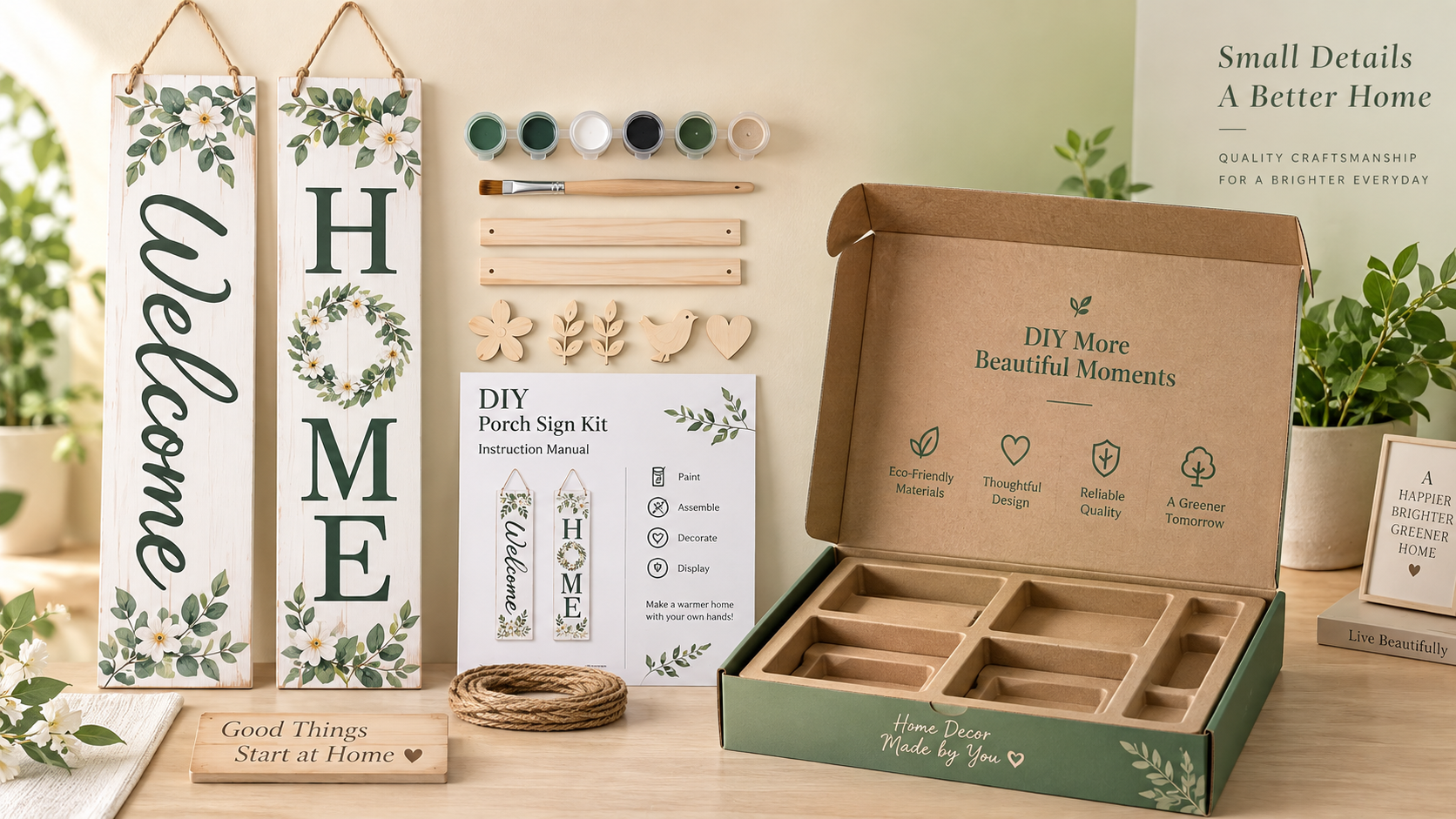
How to Evaluate Sample Quality from a DIY Craft Kit Supplier
Choosing the right DIY craft kit supplier starts with evaluating sample quality beyond appearance. For procurement teams, samples should demonstrate consistent materials, safe components, accurate instructions, reliable packaging, and workmanship that matches approved specifications. A thorough review helps buyers identify potential production risks early, compare supplier capabilities, and build a stable sourcing foundation for home décor craft products.
A beautiful sample can still be a weak sourcing decision. It may use better wood than planned for production, receive extra hand-finishing, or arrive in packaging that has not been tested for normal handling. The practical question is not simply, “Does this sample look good?” It is, “Can this supplier reproduce this result at the agreed quality level, in the required volume, and with the same materials over time?”
Start with a Sample Brief That Can Be Checked
Before reviewing a sample from a diy craft kit supplier, convert the concept into a written approval brief. This does not need to be overly complicated, but it should make subjective expectations measurable. Include product dimensions, material descriptions, approved colors, surface finish, artwork placement, component quantities, age-grade requirements where relevant, packaging format, and labeling needs for the destination market.
For a home décor craft kit, material wording deserves particular attention. “Wood” alone is rarely enough. Buyers may need to distinguish solid wood, plywood, MDF, veneer, or wood-based shapes, because each behaves differently during cutting, painting, storage, and use. The same principle applies to fabrics, ceramic pieces, plastic accessories, adhesives, paint, ribbons, and hanging hardware. A supplier cannot consistently meet an unclear requirement.
Ask the supplier to confirm which aspects of the sample are production-standard and which are temporary. If a sample uses hand-cut parts, a different box, or locally sourced decoration that will not be available for bulk production, that should be visible before approval rather than discovered after a purchase order is placed.
Inspect Materials and Workmanship as Separate Issues
Procurement reviews often focus on visible finish because it is easy to judge. Yet workmanship and material suitability are separate checks. A neat painted surface cannot compensate for warped wooden pieces, uneven thickness, loose fibers, brittle plastic parts, or components that do not fit together properly.
For wood-based projects, examine the edges and reverse side as carefully as the front. Look for splintering, rough sanding, visible glue marks, cracks, inconsistent grain appearance, and weak attachment points. If the item is designed to hang, pull gently on the rope, hook, or bracket and inspect how it is secured. If it is intended for seasonal porch or garden display, ask whether the sample’s finish and materials are intended for sheltered outdoor use; this should not be assumed from appearance alone.
A useful reference point is Wooden Large Vertical Love Grows Here Porch Decor, Garden Welcome Standding Sign Garden Decor Sign, Welcome Wall Sign for Yard Porch Farmhouse Door Decoration. A double-sided wooden porch sign may appear straightforward, but a meaningful sample review should check the white wood-grain finish on both sides, consistency of the soft green background, alignment of the rustic artwork, durability of the wood, and whether the pre-attached hanging rope is securely fitted. These details affect both customer perception and the likelihood of avoidable returns.
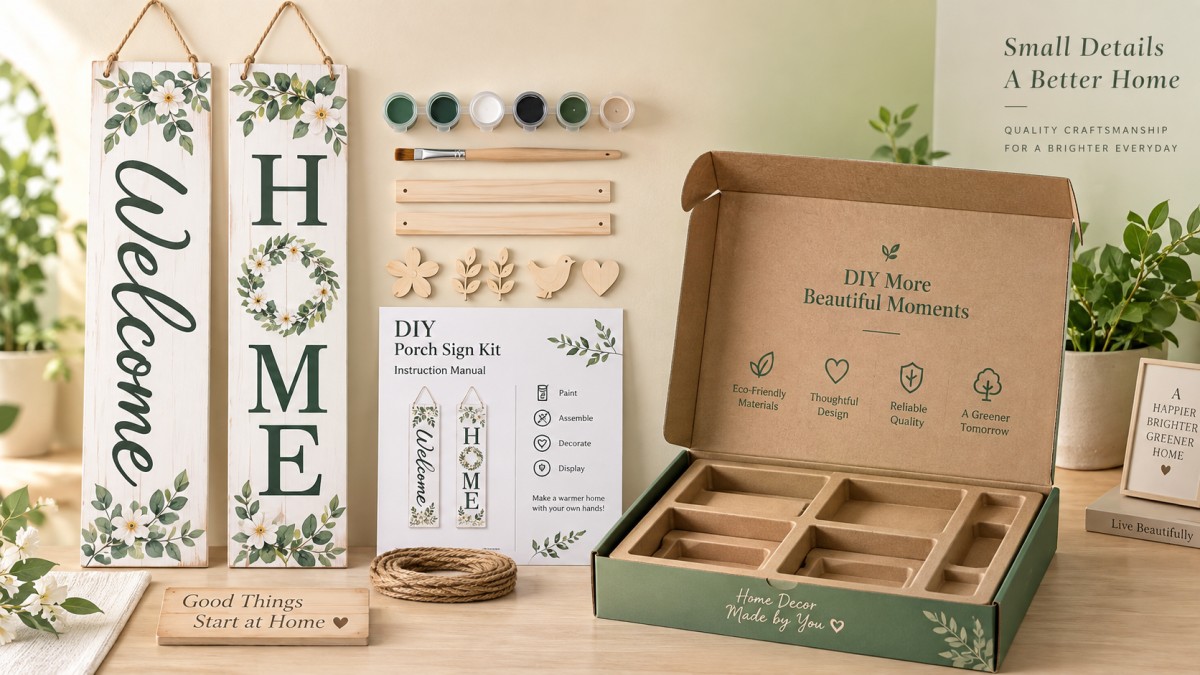
Where a kit includes multiple materials, inspect how they work together. Paint should adhere to the supplied surface. Decorative elements should fit the intended spaces. Fabric pieces should be cut cleanly and should not fray excessively in ordinary handling. Small components should be counted, but they should also be tested in use. A component that is present but difficult to assemble is still a quality issue.
Build and Use the Kit, Not Just the Display Sample
A DIY product has two quality layers: the quality of the finished décor piece and the quality of the making experience. The second layer is easily missed when buyers review only a completed display unit. Request an unassembled kit in retail-ready form, then have someone follow the instructions without guidance from the supplier.
This test quickly exposes unclear diagrams, missing steps, incorrect part labels, unsuitable adhesives, and unrealistic assembly times. It also reveals whether tools are needed but not stated. Instructions should match the exact components in the box, including color references, quantities, and orientation of parts. A proofread instruction sheet is not enough if it describes an earlier version of the product.
For home décor kits, the completed item should look reasonably close to the intended presentation when assembled by an ordinary user. If the result depends on unusually precise alignment, specialist tools, or advanced craft skills, the product positioning and instructions may need adjustment. That is a commercial decision, not merely a production detail.
Check Packaging for Protection, Completeness, and Shelf Reality
Packaging is part of sample quality because it determines what the end customer receives. Review the inner packing arrangement, not only the printed outer box. Fragile ceramic, painted wood, and handwoven components may need separation from hardware or heavier parts. Loose items can scratch finished surfaces during transit even when the product itself was well made.
Open and repack the sample several times. Check whether accessories remain organized, whether the package can be closed cleanly, and whether a customer can identify all parts without confusion. Retail-facing packaging should also be reviewed for print sharpness, barcode placement, language accuracy, warning statements, and country-specific labeling needs. Requirements vary by market and product category, so these points should be confirmed against the buyer’s own compliance process rather than inferred from a generic sample.
Look for Evidence of Repeatability
The strongest sample is supported by a credible production path. Ask how key components will be sourced, how color and finish will be controlled, and whether the factory can retain an approved reference sample. A supplier should be able to explain the difference between a development sample and a production sample, as well as how changes will be documented.
This matters especially for assortments that combine wood, textiles, ceramics, plastics, or woven accents. A supplier with only one manufacturing strength may rely heavily on external coordination, which can introduce variation in color, packing, lead time, or component fit. That does not automatically disqualify the supplier, but it makes supply-chain visibility more important.
Located in Ningbo, a major foreign-trade city in China, this supply model can benefit from coordinated access to different craft categories. Two certified factories focus respectively on handicrafts and wooden and fabric crafts, while established partnerships cover ceramics, plastics, and handwoven products. The partner companies are certified by major European and American retail chains. For buyers sourcing mixed-material home décor ranges, the relevant advantage is not the location alone; it is whether the supplier can coordinate specifications and quality expectations across those different production sources.
Use Defects as Questions, Not Just Rejection Reasons
Minor issues in a first sample are normal. What matters is how the diy craft kit supplier responds. A vague promise to “improve quality” provides little confidence. A better response identifies the root cause, proposes a corrective action, confirms whether the bill of materials or process will change, and supplies a revised sample or clear photo evidence for approval.
Keep a consolidated sample feedback sheet with photographs, marked dimensions, and a clear status for each point: approved, revise, confirm, or not applicable. This document becomes more useful than an email trail when the project moves from development to bulk production. It also prevents a common problem: one team approves visual details while another assumes packaging, instructions, or component counts have already been cleared.
A final approved sample should represent the agreed product, materials, assembly method, instructions, and packaging as closely as practical. Before moving forward, buyers should confirm the approved specification, inspection criteria, production lead time, required testing or compliance documentation, and process for approving substitutions. That disciplined review takes more time at the sample stage, but it is usually far less costly than resolving quality differences after goods are packed and ready to ship.
Leave A Message
If you are interested in our products and want to know more details, please leave a message here, we will reply you as soon as we can.

We specialize in supplying home decor, handicrafts, and daily necessities.


