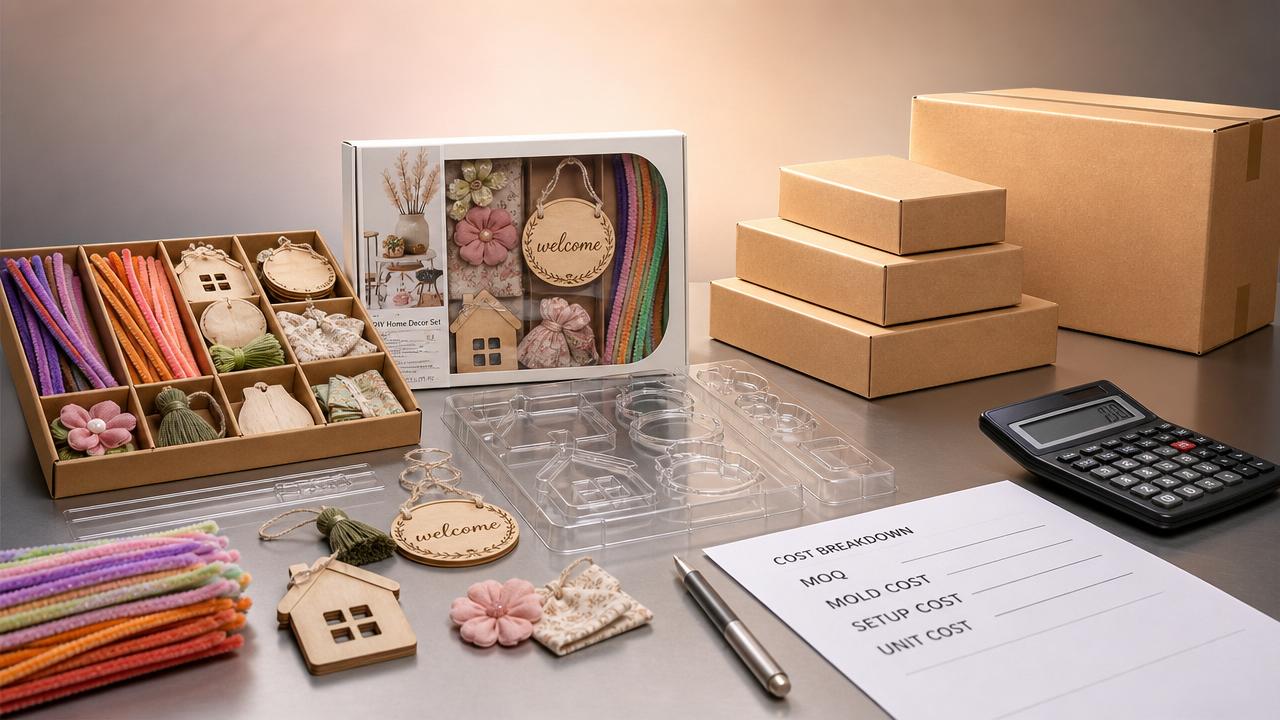
Pipe Cleaner Craft Kit Factory MOQ, Tooling, and Setup Costs Explained
For finance approvers, cost visibility matters before any order is signed.
When reviewing a pipe cleaner craft kit factory, MOQ, tooling, and setup charges shape total landed cost.
They also affect cash flow, inventory exposure, and margin protection.
This is why supplier comparison should go beyond unit price alone.
Located in Ningbo, our supply base includes two certified factories.
One focuses on handicrafts, while the other specializes in wooden and fabric crafts.
We also work with certified partners in ceramics, plastics, and handwoven products.
That network helps stabilize sourcing for home decor crafts, daily necessities, and custom kit programs.
Why MOQ Matters in a Pipe Cleaner Craft Kit Factory
MOQ is the minimum order quantity a pipe cleaner craft kit factory requires per design or SKU.
At first glance, MOQ looks like a production rule.
In practice, it is a financial risk control tool for both buyer and supplier.
A low MOQ improves flexibility but often raises per-unit cost.
A high MOQ can lower pricing, yet increase stock pressure and slower cash turnover.
Most pipe cleaner craft kit factory quotations link MOQ to three areas:
- Material batching for pipe cleaners, accessories, and packaging parts.
- Labor efficiency during sorting, counting, and kit assembly.
- Packaging setup, especially for private label retail formats.
If a supplier cannot explain MOQ clearly, cost surprises usually appear later.
What Drives Tooling Costs
Tooling costs in a pipe cleaner craft kit factory are often misunderstood.
For many craft kits, tooling is lighter than in hard plastic products.
Still, custom components can trigger one-time charges.
These may include cutting dies, blister molds, printed insert plates, or special display packaging forms.
If your kit includes wood decor elements, tooling may also involve shape cutting templates.
That matters for seasonal craft combinations and mixed-material gift sets.
A useful example is themed decor pairing.
A wooden seasonal accent, such as Halloween Sign Halloween Spooky Porch Sign Vertical Wooden Porch Sign for Door Decorations, Farmhouse Hanging Wall Sign for Home Outdoor Garden Decor, may require different finishing or packing standards than a basic craft kit.
When multiple materials meet in one program, tooling review becomes more important, not less.
Setup Costs Often Hidden in the Quote
Setup costs are where many sourcing budgets drift off target.
A pipe cleaner craft kit factory may list them separately, or spread them into unit pricing.
Either way, they should be identified line by line.
Common setup charges include:
- Artwork review and packaging layout adjustment.
- Sample making and revised pre-production samples.
- Barcode labeling, compliance labeling, and carton marking setup.
- Assembly line balancing for custom component counts.
- Third-party testing coordination, if requested by retailers.
From a budgeting angle, setup costs are not always bad news.
When disclosed early, they improve forecast accuracy and reduce post-approval changes.
How to Compare Suppliers Beyond Unit Price
A strong pipe cleaner craft kit factory should support cost comparison with transparent assumptions.
Without that, the cheapest quote may be the most expensive decision.
This framework makes supplier reviews more objective and easier to defend internally.
Questions to Ask a Pipe Cleaner Craft Kit Factory
The right questions often reveal more than the first quotation.
- Is the MOQ based on one design, one colorway, or total project volume?
- Which tooling charges are refundable after repeat orders?
- Which setup fees are fixed, and which change with artwork revisions?
- Can materials be substituted if one component cost spikes?
- What testing or compliance costs are excluded from the quote?
Suppliers with certified facilities and broader material partnerships usually answer faster and more clearly.
That clarity is valuable when approval cycles are tight.
A Practical Way to Reduce Cost Risk
The best pipe cleaner craft kit factory is not always the one with the lowest opening quote.
It is the one that makes total cost easier to predict and control.
In actual sourcing work, a stable multi-material supply chain can reduce costly interruptions.
That is especially true when kits connect with seasonal home decor programs.
For example, wooden add-ons, hanging signs, or themed accessories may expand retail value.
Products like the Halloween porch sign program mentioned earlier show how mixed-material sourcing can support broader collections.
Before approval, request a full landed-cost sheet from the pipe cleaner craft kit factory.
Break it into unit cost, MOQ impact, tooling, setup, testing, and freight assumptions.
Then compare scenarios for small trial orders and repeat volumes.
That approach gives a clearer budget picture and supports more confident sourcing decisions.
Leave A Message
If you are interested in our products and want to know more details, please leave a message here, we will reply you as soon as we can.

We specialize in supplying home decor, handicrafts, and daily necessities.


