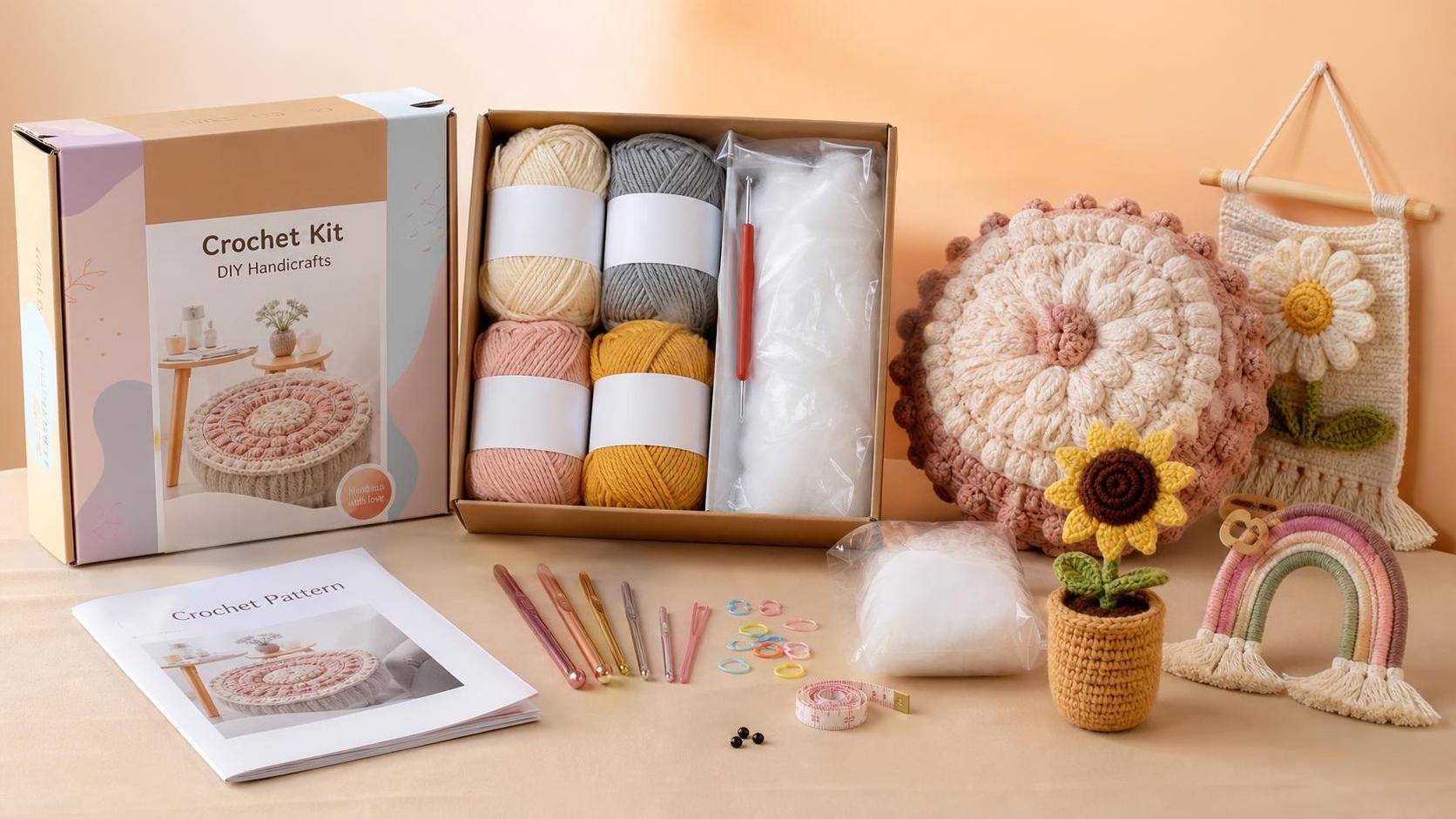
What should a buyer check first when sourcing a diy crochet kit?
Start with the parts list, not the quoted price. A diy crochet kit can look competitive on paper while hiding cost and quality problems in the details: yarn grade, hook material, stuffing weight, printed instructions, packaging style, and whether small accessories are packed by hand or by machine. Those choices change both unit cost and complaint rate.
For procurement teams, the useful first check is simple: ask the supplier for a full component breakdown and a packed sample from the exact production version. If the sample and the quotation do not match line by line, the quote is not ready for decision-making.
Which kit components usually drive cost the most?
In most crochet kits, yarn and labor are the biggest levers. Yarn cost moves quickly depending on fiber type, color count, weight consistency, and whether the kit uses pre-cut bundles or standard skeins. Labor rises when the kit includes many small parts, extra trimming, hand-counted accessories, or custom inserts.
Packaging is the other quiet cost driver. A simple printed box is very different from a gift-ready set with inserts, windows, and multiple inner bags. Buyers sometimes focus on product cost and forget that pack-out complexity can reduce output speed and increase packing errors.
- Higher color variety usually means more handling and more waste.
- Metal hooks, stitch markers, eyes, needles, and stuffing all add up when packed individually.
- Instruction booklets with custom photography cost more than basic printed guides.
How do you judge yarn quality without overbuying?
The right question is not “What is your best yarn?” but “What yarn gives the intended user the lowest failure rate at the target retail price?” For beginner kits, yarn that splits easily or sheds too much can hurt sell-through because first-time users get frustrated and abandon the project.
Ask for sample swatches and a finished sample made from the actual lot standard. Then check three things: whether the strand separates during stitching, whether the color looks consistent across pieces, and whether the finished item still holds shape after handling. Premium material is wasted if the end customer is a beginner who needs ease of use more than a luxury hand feel.
What packaging choices affect sell-through, not just cost?
Packaging does two jobs at once: it protects the kit in transit and helps the customer understand what they are buying. If the box is attractive but the contents feel confusing, returns go up. If the pack is too plain, the product may struggle in gift-driven seasons.
For home decor craft buyers, the most effective packaging usually makes the project outcome easy to see, the skill level easy to identify, and the contents easy to verify. This matters for online listings as much as store shelves.
The same principle shows up in adjacent seasonal craft items. A product like Christmas Gel Window Clings - Xmas Santa Claus Snowman Snowflake Penguin Christmas Tree Gift Window Stickers for Kids sells partly because the use case is obvious at a glance: soft TPR material, reusable decoration, and a clear holiday scene for home, classroom, or party use. Crochet kits also benefit when the buyer can understand the finished result immediately, without needing to decode the package.
How can buyers tell if a supplier is ready for stable repeat orders?
Look past the sales sheet and examine process control. A reliable supplier should be able to explain how materials are sourced, how accessories are counted, how color lots are managed, and how finished kits are checked before carton sealing. If the answer is vague, repeatability is weak.
A good supplier network also matters in this category. Crochet kits sit inside a wider craft and home decor supply chain, so factory coordination across fabric, handwork, print, and packaging affects lead time stability. Buyers should ask who is producing each major component and whether the same sources will be used on repeat orders.
What documents should procurement request before placing an order?
Keep it practical. You need the documents that help you verify product definition, production consistency, and market readiness.
If the kit includes small parts or is intended for children, review the bill of materials and labeling carefully before artwork is locked. That is where expensive corrections usually begin.
Is a lower MOQ always better for a first diy crochet kit order?
Not always. A low MOQ reduces initial exposure, but it can raise the unit price sharply if the kit uses custom printing, custom color matching, or hand-packed assortments. Sometimes the smarter move is to standardize part of the design for the first run and save customization for the second order.
This is especially true when you are testing sell-through. If you need market feedback fast, fewer variants with cleaner packaging usually produce better data than many small customized versions.
Where do quality complaints usually come from?
Most complaints are not dramatic defects. They come from missing pieces, unclear instructions, color mismatch, tangled yarn, or a finished result that looks different from the package image. In other words, expectation gaps.
That is why pre-shipment checks should include assembly completeness, accessory count, print legibility, and a comparison between packed goods and approved sample. A crochet kit can be technically acceptable and still disappoint the customer if the project feels harder than the package suggests.
How should buyers compare suppliers without getting lost in small price differences?
Use a shortlist scorecard built around commercial reality: component clarity, sample accuracy, packaging control, repeat-order stability, and responsiveness on revisions. A quote that is a few cents lower means little if the supplier cannot hold color consistency or keeps revising what is included.
A useful buying rule is this: if a supplier cannot define the product clearly before order, they will not control it well during production. For a diy crochet kit, the winning source is rarely the cheapest line on the spreadsheet. It is the one that keeps landed cost, customer experience, and reorder confidence in balance.
Leave A Message
If you are interested in our products and want to know more details, please leave a message here, we will reply you as soon as we can.

We specialize in supplying home decor, handicrafts, and daily necessities.


