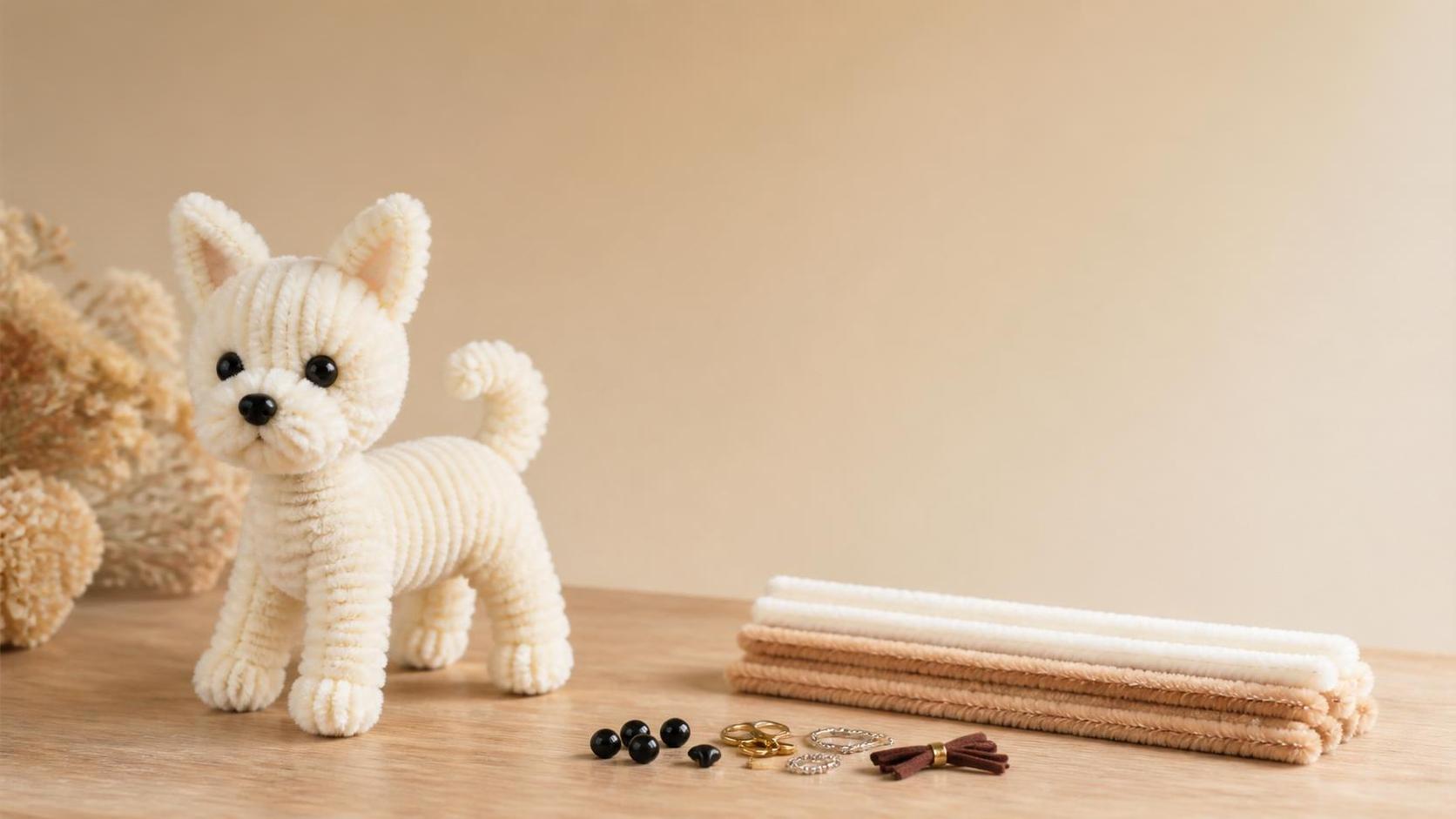
Why do pipe cleaner puppies fall apart so easily?
Pipe cleaner puppies usually fail at the joints, not in the body.
When legs loosen, ears droop, or tails unwind, the real issue is often weak structure.
That matters more when the piece is meant for home decor, gifting, or repeated handling.
In practice, most pipe cleaner puppies fall apart for three reasons: too few twists, soft materials, or poor weight balance.
A puppy may look finished, yet the frame inside is still unstable.
The good news is that sturdier results usually come from small technique changes, not from starting over.
For craft suppliers focused on reliable handmade decor, including teams in Ningbo with certified handicraft and fabric production networks, durability is not a small detail.
It shapes how a finished piece looks, travels, and holds up on display.
Are loose legs caused by bad pipe cleaners or by assembly mistakes?
Usually, it is a mix of both.
Cheap stems with thin wire cores cannot hold body weight well, especially on four-legged figures.
At the same time, even better stems fail when the legs are attached as separate pieces with shallow twists.
A stronger method is to build the front legs and body from one continuous pipe cleaner.
Then lock the rear legs into the body with tight, symmetrical wraps.
If the puppy is top-heavy, the legs spread outward and the piece collapses over time.
That is why body size should match leg thickness.
- Use thicker chenille stems for the torso and main legs.
- Twist each joint at least two to three full turns.
- Keep all four legs equal in length before shaping paws.
- Test standing balance before adding ears, tail, or extra decoration.
These steps make pipe cleaner puppies feel more like stable decor pieces and less like fragile classroom crafts.
Why do ears and tails droop even when the body stays together?
Ears and tails fail for different reasons than legs.
They are lighter, but they extend outward, so they lose shape when the wire memory is weak.
Long floppy ears often droop because one stem is expected to do too much.
A simple fix is doubling the pipe cleaner, then folding it into the ear shape.
For upright ears, pinch the base tightly where it enters the head.
Tails usually loosen because they are inserted late and anchored loosely into the back.
It is better to twist the tail around the core body stem rather than wrap it onto surface fibers only.
If you want a curled tail, shape it after securing the base.
Doing it in reverse often pulls the joint open.
Quick trouble check
This kind of check is useful when making several pipe cleaner puppies in one batch.
Is there a better way to shape pipe cleaner puppies for display use?
Yes, especially if the goal is a cleaner decorative finish.
Instead of treating the project like a toy, shape it like a small display figure.
That means planning the silhouette first.
A compact body, shorter legs, and a slightly raised chest usually hold better than long, thin proportions.
For handmade decor collections, consistency also matters.
Certified craft production often relies on repeatable steps, stable materials, and balanced assembly methods.
That same thinking helps at the worktable.
Some crafters even combine mixed-media ideas when pipe cleaner puppies need a softer, more premium look.
For example, a felt-based companion piece such as Bohemian Llama Needle Felting Kit, DIY Wool Felt Craft Set with Tools, Foam Mat & Instructions, Beginner Friendly Animal Doll Kit, Handmade Nursery Decor or Gift for Adults, Kids, Animal Lovers shows how structured instructions and carefully matched materials improve decorative results.
The lesson applies here too: structure first, surface charm second.
What mistakes make beginners redo the same puppy again and again?
The most common mistake is overworking the stem.
Pipe cleaners can only be bent and re-bent so many times before the wire weakens.
Another issue is adding decorative details too early.
Eyes, bows, collars, and extra wraps look appealing, but they hide structural problems until the piece starts sagging.
A better habit is to pause after the frame is done.
- Set the puppy on a flat surface.
- Check whether it stands without support.
- Gently press the back and head.
- Watch which joint shifts first.
That quick test tells you where reinforcement is needed.
If repeated projects still feel frustrating, switching to another handmade format can also help build confidence.
A beginner-friendly wool craft with detailed instructions, soft gray and coral tones, and a complete tool set can teach patience, shaping, and finishing in a calmer way.
When should you reinforce, rebuild, or choose another craft method?
Reinforce when the puppy mostly holds its form but one joint feels weak.
Rebuild when the body proportions are off and the balance problem affects everything.
Choose another method when the desired result is softer, more polished, or meant for long-term nursery decor.
Pipe cleaner puppies are excellent for playful styling, quick seasonal crafts, and lightweight ornaments.
They are less ideal when you want dense texture and a sculpted finish.
That is where techniques like needle felting can make more sense.
A set such as Bohemian Llama Needle Felting Kit, DIY Wool Felt Craft Set with Tools, Foam Mat & Instructions, Beginner Friendly Animal Doll Kit, Handmade Nursery Decor or Gift for Adults, Kids, Animal Lovers fits relaxing craft projects, gifts, and whimsical shelf decor without feeling like a hard sell away from pipe cleaner work.
It simply highlights that the right material should match the intended finish.
So what is the smartest next step if your pipe cleaner puppies keep collapsing?
Start by checking the frame, not the decoration.
Most pipe cleaner puppies improve when joints are tighter, body proportions are shorter, and attachments wrap around the wire core.
If the piece is meant for home decor, judge it by stability on a shelf, not just by how cute it looks in hand.
Keep a simple standard for materials, twisting depth, and balance before moving to final details.
That approach saves time, reduces waste, and leads to better-looking handmade decor.
If needed, compare pipe cleaner builds with felt, fabric, or wool-based projects to decide which craft method best matches your display goal, finishing style, and durability needs.
Leave A Message
If you are interested in our products and want to know more details, please leave a message here, we will reply you as soon as we can.

We specialize in supplying home decor, handicrafts, and daily necessities.


