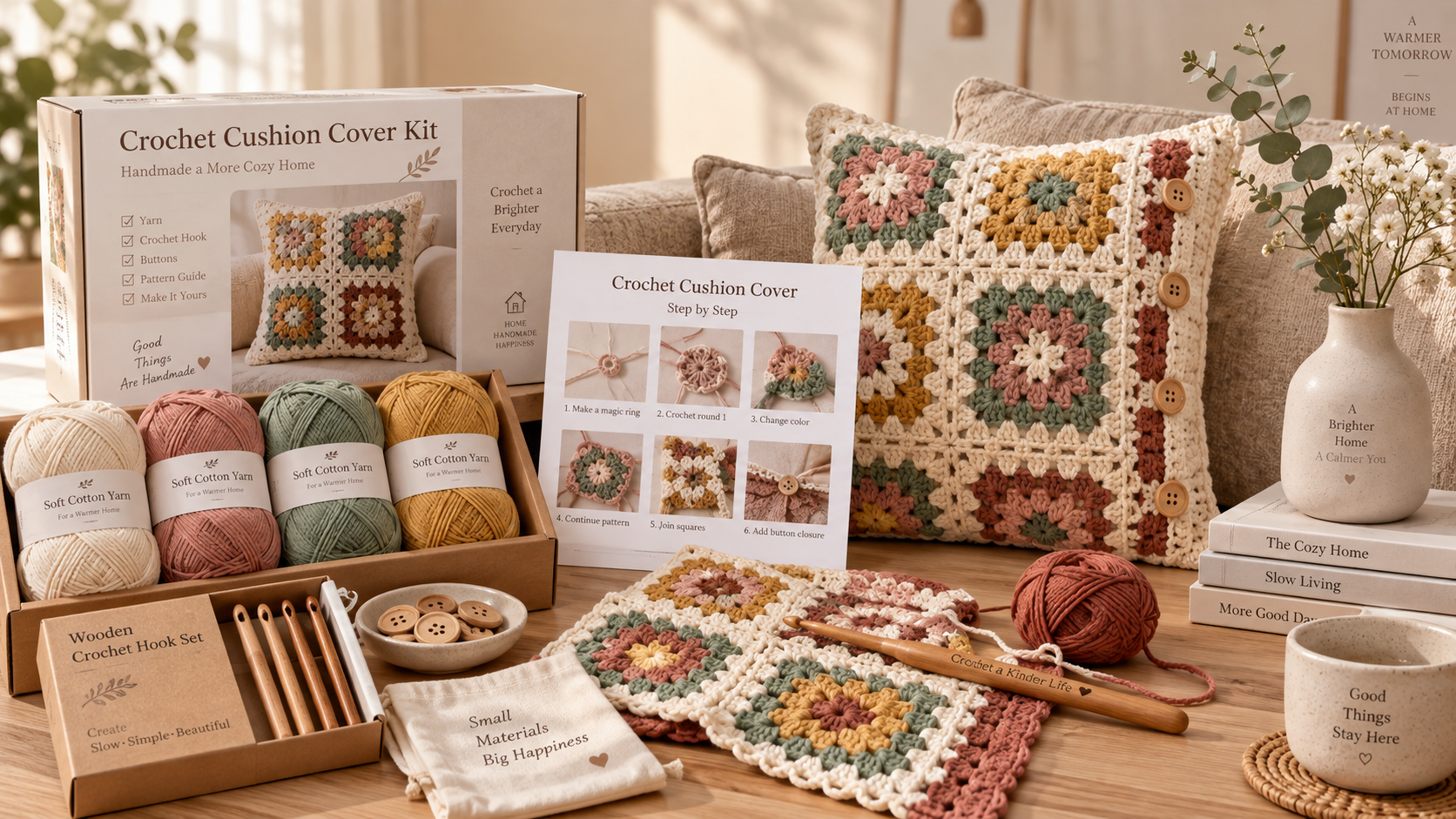
For home decor buyers and retail decision-makers, clear pattern design is one of the most practical ways to reduce customer support requests for crochet project kits. A kit can contain attractive yarn, good hooks, and well-chosen accessories, yet still create unnecessary service work if the customer cannot understand where to begin, how to read a chart, or whether a finished section looks correct. In this category, the pattern is not merely an insert. It is part of the product experience.
Most post-purchase questions are not caused by a difficult stitch alone. They arise when several small uncertainties pile up: the yarn colors are not clearly labeled, the abbreviation key is incomplete, the pattern jumps between rows, or the photos show a finished item without explaining the construction. For retailers selling crochet project kits through marketplaces, gift shops, craft chains, or seasonal home decor collections, those gaps can quickly translate into customer emails, low ratings, returns, and manual support costs.
Why Pattern Confusion Becomes a Support Problem
Crochet instructions are often written by experienced makers for other experienced makers. That is understandable, but it is a poor fit for many retail kit buyers. A customer may know basic stitches but still be unfamiliar with magic rings, invisible decreases, color changes, or reading rows worked in the round. When the kit packaging promises an approachable decorative project, the instruction sheet needs to bridge that knowledge gap rather than assume it away.
The issue is especially visible in home decor projects. A small coaster or ornament may be forgiving, while a cushion cover, wall hanging, plant basket, or seasonal figure has proportions that must remain consistent. If a user misses a repeat in Row 6, the consequence may not appear until much later. By then, the customer may believe that the yarn quantity is wrong or that the kit is defective. Support teams then spend time diagnosing what is really an instruction-design issue.
A useful internal test is simple: if a customer sends a photo of their work halfway through the project, can the support representative identify the likely mistake without asking several rounds of questions? If the answer is no, the pattern probably lacks checkpoints.
What Clear Crochet Instructions Actually Look Like
Clear pattern design is not the same as making every page longer. In fact, dense instructions often make a kit feel more difficult. The aim is to present the right information at the point where the maker needs it. A strong pattern usually separates preparation, stitch reference, construction steps, assembly, and finishing rather than blending them into one continuous block of text.
For crochet project kits, the following details tend to prevent the most avoidable questions:
- Each yarn color is named or numbered exactly as it appears on the physical yarn label.
- Abbreviations are defined before the first instruction, including regional terminology where relevant.
- Every row or round includes a visible stitch count when stitch count matters to the shape.
- Color changes, stuffing points, turning instructions, and joining methods are called out rather than buried in a sentence.
- Photos or diagrams show the project at key construction stages, not only the finished piece.
- Assembly instructions explain orientation: front versus back, top versus bottom, and where pieces should be attached.
The distinction between US and UK crochet terms deserves particular attention for international retail. A “single crochet” in US terminology is not the same stitch as a “single crochet” in UK terminology. If a supplier serves more than one market, the pattern should clearly state the terminology used near the beginning of the guide. It is a small line of copy with an outsized effect on avoidable complaints.
Design for the Moment When the Customer Gets Stuck
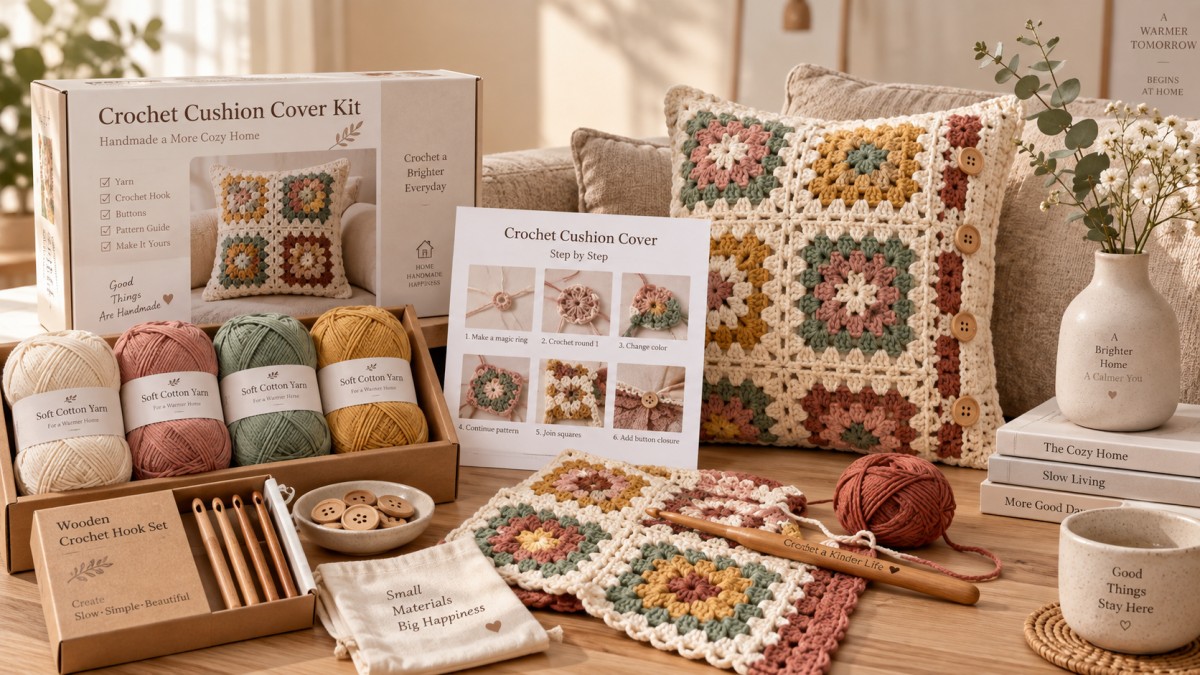
The best instructions anticipate hesitation. Rather than adding generic troubleshooting at the end, place short confidence checks inside the sequence. After a difficult increase round, for example, a note can tell the maker what the piece should look like: “Your work should now sit flat and form a shallow circle.” That sentence gives the user a way to self-correct before the error travels through the rest of the project.
Charts can help, but only when they are readable at the printed size. A detailed symbol chart reduced to fit a small folded leaflet may technically be included while remaining unusable. Buyers should review an actual production proof, not only a high-resolution digital file. Line weight, symbol contrast, page folds, and the color of the paper all affect usability. QR-linked video can be useful for a challenging technique, but it should support the printed pattern, not replace the basic instructions. A customer should still be able to complete the core project without relying on a phone or a platform that may later change.
There is also a commercial decision to make: is the kit truly intended for beginners, or is it an intermediate project with beginner-friendly packaging? These are not the same thing. Calling a complex amigurumi or multi-piece wall decor project “easy” may improve initial click-through, but it can also attract customers who are not prepared for the work. Better product positioning reduces support pressure before the kit even enters the cart.
Pattern Quality Should Be Reviewed Alongside Material Quality
For sourcing teams, instruction review should sit in the same development workflow as yarn selection, hook sizing, packaging, and final inspection. A pattern cannot be approved only because it reads well to the designer. It needs to be worked through by someone who did not create it. Ideally, that tester follows the supplied materials, uses the exact hook size, and records every point where they need to infer an action.
This is particularly relevant when home decor ranges combine multiple craft types. A retailer may offer crochet kits beside wood signs, fabric decorations, ceramics, and handwoven accents. The customer expects a consistent level of clarity across the range: what arrives in the box, how it is used, and what finished result to expect. A ready-to-hang item such as the Halloween Sign Halloween Spooky Porch Sign Vertical Wooden Porch Sign for Door Decorations, Farmhouse Hanging Wall Sign for Home Outdoor Garden Decor has a pre-attached rope and a straightforward use case. A crochet kit does not need to be equally simple, but its guidance should make the next action equally obvious.
This consistency matters for suppliers working with varied retail programs. A Ningbo-based supply network that covers handicrafts, wooden and fabric crafts, along with established partners in ceramics, plastics, and handwoven goods, can support broad home decor assortments. But material capability alone is not enough. When a product requires customer assembly or making, pattern development and translation control need to be treated as part of production readiness.
A Practical Review Before Retail Launch
Before committing a crochet design to a large order, buyers can ask for a sample kit with the final printed instructions, rather than a draft PDF. Check whether the bill of materials matches the pattern color names, whether the yarn allowance seems sensible for the stated project, and whether the finishing steps explain how to hide ends or attach decorative pieces. If the kit includes small accessories, their role should be clear from the pattern and packaging.
It is also worth reviewing the first page independently. A customer should be able to answer four questions in under a minute: What will I make? What skill level is expected? What is included? Where do I start? If any answer requires hunting through several pages, support requests are likely to follow.
Clear pattern design will not eliminate every question; craft products are personal, and customers work at different speeds and skill levels. It does, however, remove the friction that should never have been there. For a retail program, that means fewer preventable tickets, a more credible beginner promise, and a kit that feels thoughtfully made from the first stitch to the finished home decor piece.
Leave A Message
If you are interested in our products and want to know more details, please leave a message here, we will reply you as soon as we can.

We specialize in supplying home decor, handicrafts, and daily necessities.


