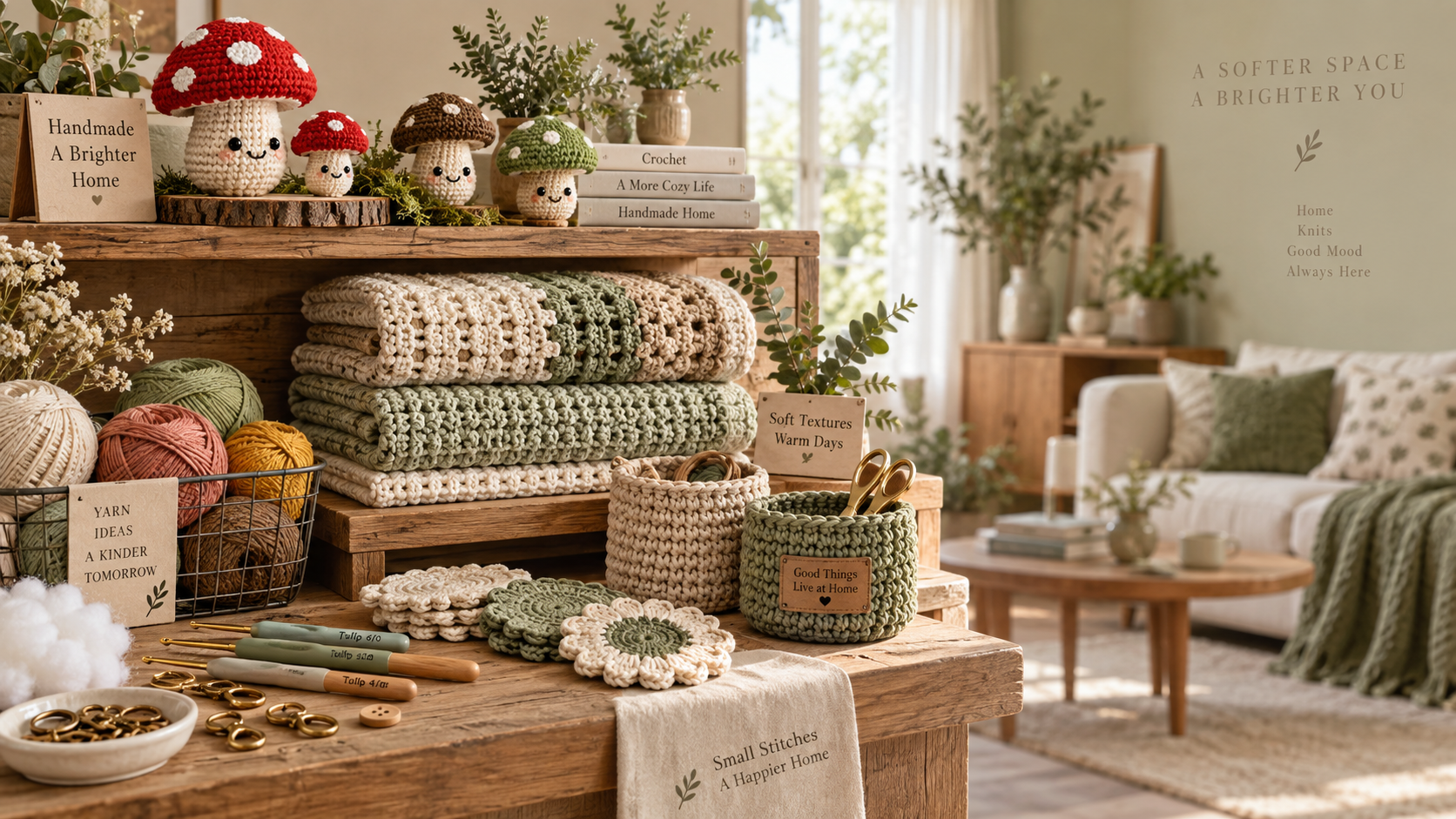
Assortment balance starts with the intended retail role of each crochet kit. Amigurumi kits work as compact giftable projects with character-driven appeal. Blanket kits create a higher-commitment home textile project and occupy more visual space in a display. Accessory kits sit between them, often offering a practical finished item with a shorter path to completion. Treating all three as interchangeable craft products leads to uneven price architecture, misleading difficulty expectations, and avoidable returns.
A strong selection separates the project types by time commitment, material quantity, finishing requirements, and the kind of satisfaction expected from the finished result. The visible design is important, but the kit experience is determined by whether the yarn, hook, stuffing, pattern instructions, and small components suit one another.
How the Three Kit Types Differ
Amigurumi has the smallest material footprint, yet it should not automatically be classified as beginner-level. A small animal or doll often involves a magic ring, increases and decreases, stitch markers, stuffing control, and sewing limbs in correct positions. A pattern can use only basic stitches while still being difficult to finish neatly. The real distinction is whether the instruction sequence prevents common assembly errors, especially when right and left parts must mirror each other.
Blanket kits tend to be technically simpler per row, but their difficulty is cumulative. A repetitive stitch pattern is suitable for relaxed making only when yarn changes are easy to manage and the instruction format makes row repeats unmistakable. A kit with several shades needs enough yarn allowance for joins, border work, and reasonable tension variation. A small discrepancy in yarn lot color is much more obvious across a large blanket surface than on a tiny figure.
Accessory kits cover the widest range. A coaster set can be an approachable first project; a lined bag with handles and a zipper is a different proposition entirely. Finished utility also changes the material requirement. A decorative pouch can tolerate a softer yarn, while a bag expected to hold daily items needs stitch density, reinforced handles, and hardware that does not pull through the crochet fabric.
Material Decisions That Change the Outcome
Yarn composition should follow the project rather than a generic preference for softness or thickness. Cotton yarn gives crisp stitch definition and is well suited to coasters, market bags, and structured accessories. Acrylic is often practical for colorful amigurumi and blankets because it offers broad color choice and easier care, but a loose acrylic construction may pill or lose definition under repeated friction. Cotton-acrylic blends can soften the hand without making a large project overly heavy.
Yarn weight and hook size must be evaluated as a pair. Amigurumi usually needs a tighter fabric than the yarn label's standard gauge so that stuffing does not show through. Including an oversized hook simply because it is easier to hold can leave visible gaps. Conversely, a blanket kit should not demand unusually tight tension for every row; that can make a large project tiring and reduce drape.
Small components deserve the same review as the yarn. Safety eyes, buttons, metal rings, pom-poms, needles, stitch markers, and bag handles should be counted as individual pack-out items, not assumed to be present because they appear in the sample photograph. For figure kits, embroidered facial details provide a useful alternative where detachable components are not suitable for the intended finished item. For accessories, the stated size of rings or clasps should match the thickness of the finished crochet fabric rather than merely fit the yarn strand.
Reading Difficulty Labels More Carefully
Terms such as beginner, intermediate, and advanced are incomplete unless the pattern format explains why. A beginner kit can reasonably include a new technique when it isolates that technique, illustrates it clearly, and does not require it repeatedly before the maker has gained confidence. A multi-part amigurumi project may be better placed at an improver level even when every stitch is basic, because counting, shaping, and joining happen at once.
Instruction quality is particularly visible in crochet kits. The pattern should state the final dimensions, yarn weight, hook size, gauge or tension expectation where relevant, abbreviations, and the sequence for finishing. Photographs should show meaningful stages, such as how to close a sphere, attach ears symmetrically, change colors without a visible seam, or work a blanket border around corners. A polished cover image cannot replace these details.
Translations and abbreviated instructions create a recurring problem: a technically complete pattern can still be hard to follow when terminology changes midway. “Single crochet,” “double crochet,” and regional stitch naming need consistent convention from the first page. When a pattern uses chart symbols, the written instructions should identify whether the chart is read in rows or rounds and where the repeat begins.
Merchandising Logic and Seasonal Assortment
Amigurumi kits are naturally suited to themed collections because the finished object is visible at a glance. Animals, food motifs, holiday characters, and small decorative charms can create a cohesive counter display without requiring large shelf depth. Their compact packaging also makes them useful as a lower-commitment addition beside other seasonal home accents.
Accessory kits benefit from displaying the expected finished use, not just yarn colors. A coaster kit belongs near tabletop decor; a small storage basket has a clearer connection to organization and soft furnishings; an ornament kit can sit beside seasonal decoration. For an autumn presentation, complementary removable decor such as Fall Gel Window Clings for Glass Windows, FallThanksgiving Clings Gel Stickers,Hello Fall Leaves,Pumpkin for Autumn Holiday Window Decor can establish a warm harvest setting around crochet leaf, pumpkin, or garland projects without confusing the kit's purpose.
Blanket kits need enough packaging visibility to communicate scale. A small front-panel swatch is rarely enough, especially when the result depends on color blocking or texture. Show the finished blanket or a clear folded view, state dimensions after completion, and identify whether the design is intended as a baby item, sofa throw, or lap blanket. The package size should still protect yarn from compression, moisture, and damage while avoiding needless empty volume.
Pack-Out and Quality Review Before Range Release
Count accuracy is more consequential in a kit than in a loose yarn sale. One missing needle, eye pair, or final yarn ball can stop the project at its most frustrating stage. The packing list should distinguish included tools from optional tools, and it should identify whether scissors, adhesive, a tapestry needle, or a measuring tape are required separately. A vague “everything included” claim creates a preventable expectation gap.
For blanket kits, reserve yarn calculations should account for the specified stitch pattern and border, not only the central panel. For colorwork, each color needs sufficient allowance because tension varies across makers. For amigurumi, check that contrast yarn is enough for the stated facial or clothing details; tiny accent balls are easily underestimated when several pieces use the same shade.
Physical inspection should include yarn color consistency, clean-cut labels, legible printing, hook surface finish, and component separation inside the package. Rough hooks can snag yarn. Loose metal findings can mark or puncture paper instructions. Stuffing packed without a protective inner bag can migrate through a box and make a complete kit appear incomplete on the shelf.
A balanced crochet project kit range usually works best when each category has a clear job: character-led amigurumi for gifting and discovery, accessories for practical and seasonal variety, and blankets for a more substantial home-focused project. The final selection should be driven by the accuracy of the finished promise: a project whose materials, instructions, and difficulty level all lead to the object shown on the package.
Leave A Message
If you are interested in our products and want to know more details, please leave a message here, we will reply you as soon as we can.

We specialize in supplying home decor, handicrafts, and daily necessities.


