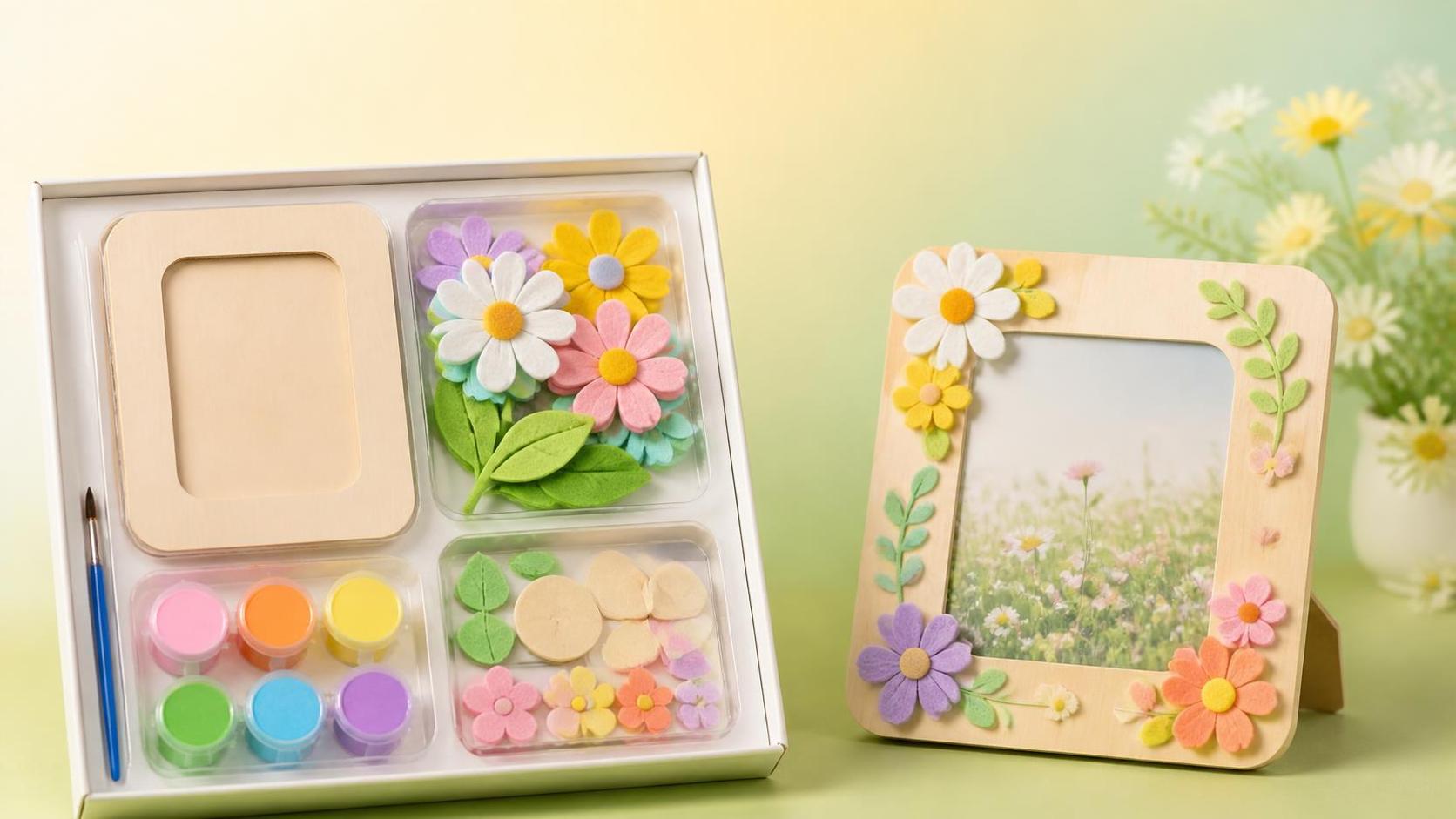
What Buyers Are Really Looking for in a Kids DIY Craft Kit Supplier
The demand for kids DIY craft kits is often discussed as a seasonal retail opportunity, but that description is too narrow for most B2B buyers. Retailers, educational suppliers, promotional distributors, and home decor brands are usually trying to solve a more practical question: can a supplier turn a creative idea into a safe, sellable, repeatable product without introducing quality, compliance, or delivery problems?
A successful kit does more than contain materials. It needs to be understandable to a child and parent, appropriate for the stated age group, durable through transport and retail handling, and visually coherent enough to earn shelf space or online conversion. For buyers in the home decor crafts category, the challenge is even broader. Many collections now sit between children's activity products and seasonal home decoration, so the kit must work both as an experience and as a finished decorative result.
This is why supplier selection should begin with production capability and supply-chain fit, rather than simply comparing unit prices or counting the number of components in a box.
The Product Is a System, Not a Box of Materials
Buyers sometimes approach a DIY kit as a simple assembly project: choose a theme, select a few accessories, add packaging, and order. In practice, each decision affects another. A wooden base may require different paint, glue, drying time, packaging protection, and safety review than a fabric ornament. A ceramic component can improve perceived value but may change breakage risk and freight economics. Handwoven details can add character while making color consistency and production scheduling more difficult.
For this reason, a capable manufacturer should be able to discuss materials in relation to the intended use, not only offer a catalog of existing shapes. Core questions include:
- Who is expected to use the kit: preschool children, school-age children, families, or supervised classroom groups?
- Will the finished item be displayed, played with, gifted, or used as a seasonal window or tabletop decoration?
- Which parts require child-safe material choices, rounded edges, secure attachment, or specific warnings?
- Does the design rely on small pieces, liquid adhesives, paint, fabric trims, cords, or fragile decorative elements?
- Can the packaging protect every component while still presenting the creative outcome clearly?
A supplier with direct experience in handicrafts, wooden crafts, and fabric crafts is generally better positioned to identify these interactions early. The benefit is not necessarily a more complex product. Often, it is a simpler bill of materials that performs more reliably at scale.
Creative Appeal Must Survive Real Retail Conditions
Many DIY concepts look convincing in a sample room and become less effective after shipment, store handling, or a first child-use test. Paint colors can transfer, adhesive sheets can dry out, thin wood pieces can warp, and mixed-material kits can look incomplete when components shift inside packaging. A buyer should ask to review not only a finished sample, but also the unboxed component layout, packing method, instruction format, and likely failure points.
Seasonal products make this especially important. A spring craft kit may have a narrow selling window, leaving little time to correct defects after delivery. Yet a well-designed seasonal range can also avoid becoming disposable. Reusable decorative components, materials that can be stored after the event, and projects that create a visible home display can extend the product's value in the eyes of consumers.
For example, a retailer developing a spring activity-and-decoration assortment might consider products such as Spring Window Clings Gel, Jelly Window Stickers for Glass Refrigerators Home, Welcome Spring Window Decorations - Flowers Butterflies Bird, Kids‘ Love alongside more hands-on craft kits. Soft TPR window clings are relevant because they can adhere to smooth surfaces, be removed and stored, and work across homes, classrooms, and nurseries. But they should not automatically be treated as interchangeable with a DIY craft project. The buyer still needs to decide whether the collection is built around making, decorating, repeat use, or a combination of all three.
“Safe” Is Not a Complete Sourcing Requirement
Safety claims are common in children's craft products, but they can be too vague to support a purchasing decision. “Non-toxic” describes an important intention, not a finished compliance plan. Requirements vary by destination market, product category, target age, materials, and the way components are marketed. Claims, labeling, test reports, and documentation should match the final configuration rather than a loosely similar sample.
Before confirming an order, buyers should clarify which testing and certification documents are relevant for their sales markets and whether they apply to the exact materials, inks, coatings, adhesives, accessories, and packaging used in production. Major European and American retail customers may impose their own supplier requirements in addition to legal obligations. Standards and retailer rules should be verified for each project rather than assumed from a factory's general certification status.
There is also an operational side to safety. Instructions should be legible, age guidance should be consistent across the box and sales listing, and warnings must not disappear during artwork revisions. If a kit includes multiple sourced materials, traceability matters. A supplier that can coordinate wood, fabric, plastic, ceramic, and handwoven components through stable partner relationships can reduce the risk of undocumented substitutions, provided that change-control procedures are discussed clearly.
Why Supply-Chain Structure Matters More Than a Broad Catalog
For buyers sourcing from China, Ningbo remains relevant because of its manufacturing base, export infrastructure, and access to diversified craft materials. But location alone does not guarantee reliable execution. The more useful distinction is between a supplier that merely trades a finished assortment and one that can manage component sourcing, production sequencing, inspection, and packaging across several craft categories.
A manufacturer operating dedicated facilities for handicrafts and for wooden and fabric crafts may provide better control over the materials most commonly used in activity-led home decor. Established partnerships in ceramics, plastics, and handwoven crafts can further broaden what a collection can include without forcing the buyer to coordinate several unrelated vendors.
That network has value when it is actively managed. Buyers should ask how quality expectations are communicated to partner factories, how incoming components are checked, what happens when a component is delayed, and who owns responsibility for final assembly quality. “One-stop sourcing” is useful only when accountability remains clear.
Cost Decisions Should Include the Cost of Complexity
The lowest quoted unit price may conceal a kit that is difficult to pack, prone to damage, or dependent on a material with volatile availability. Conversely, a higher-priced design can be commercially stronger if it reduces returns, looks complete in an e-commerce image, or supports a repeat seasonal program.
Buyers should evaluate landed cost alongside complexity: the number of components, breakage exposure, manual assembly requirements, package dimensions, carton efficiency, and likely inspection time. This is particularly relevant for mixed-media home decor crafts. A small ceramic accent, a fabric bow, and a wooden frame may be individually inexpensive, but together they create more handling points and more opportunities for inconsistency.
It is also worth separating development ambition from first-order volume. A new private-label program may be better launched with a controlled number of colorways and a common component platform, rather than many themes with unique materials. Once sell-through data is available, the range can expand with more confidence.
The Most Useful Next Step Is a Structured Brief
When approaching a kids DIY craft kit manufacturer or wholesale supplier, a clear brief produces better outcomes than a vague request for “popular items.” It should state the target channel, age range, intended retail price position, destination market, required launch date, expected order volume, visual direction, and whether the finished project is meant to function as home decor.
From there, the conversation can move to decisions that genuinely affect the business: which materials are appropriate, which elements require testing attention, where customization is commercially justified, and whether the supply chain can support repeat orders. In this category, the strongest supplier relationship is rarely built on having the largest selection. It is built on the ability to make creative products predictable enough to buy again.
Leave A Message
If you are interested in our products and want to know more details, please leave a message here, we will reply you as soon as we can.

We specialize in supplying home decor, handicrafts, and daily necessities.


