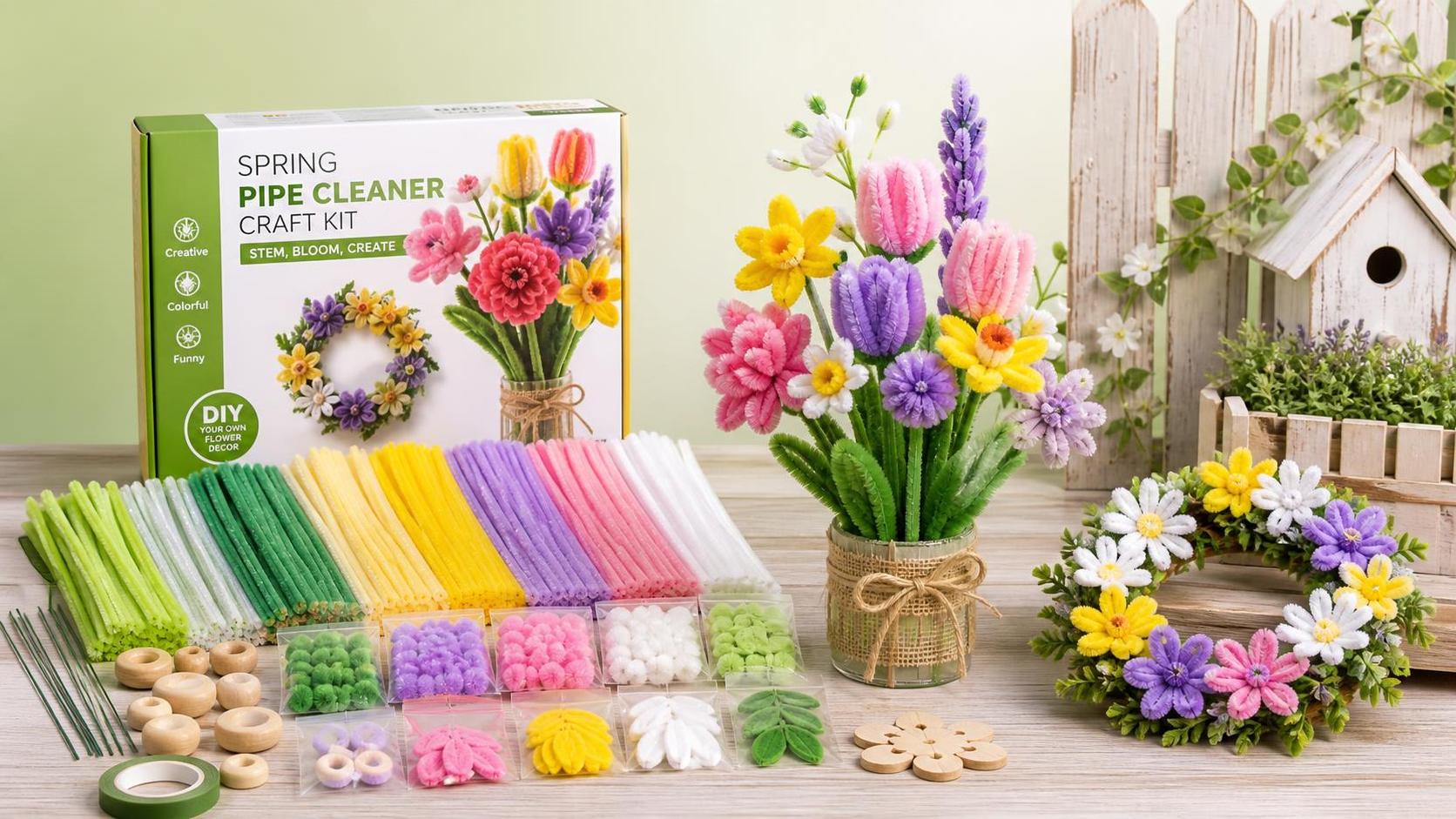
A seasonal craft order can look simple at the start: choose colors, confirm a few activities, and place the purchase order. The problem often appears later, when the delivered pipe cleaners are too soft for the intended shapes, the colors vary between packs, the wire ends feel rough, or the kit arrives without enough of the small components needed to complete each project. A classroom activity, a store display, or a home craft promotion can then become difficult to assemble and even harder to explain to end users.
This is why selecting a pipe cleaner craft kit manufacturer should not begin with a catalog image alone. The useful question is whether the proposed kit can be made, packed, checked, and replenished in a way that fits the actual activity. When the answer is unclear, small sourcing decisions can create avoidable waste, delayed launches, inconsistent finished projects, and unnecessary rework at the packing stage.
Start with the finished craft, not the component list
Many buying problems begin when pipe cleaners are treated as generic materials. They are not. A short, flexible chenille stem for a simple animal face has different requirements from a firmer stem used to create wreaths, flowers, letters, or standing decorations. Before comparing suppliers, define what the user needs to make and how the project should behave after assembly.
For example, if a design needs to hold a loop, petal, or upright shape, ask for samples that have been bent several times. If the kit is intended for younger users, inspect whether the ends are neatly finished and whether the materials are comfortable to handle. If the finished piece will be displayed, compare the density of the fuzzy covering, the consistency of the cut length, and whether the colors still look balanced when placed side by side.
A practical product brief does not need to be complicated. It should describe the project theme, the number of completed items expected from one kit, the required colors, approximate stem length, preferred flexibility, accessory types, packing format, and any instruction insert. This gives a pipe cleaner craft kit manufacturer something concrete to evaluate instead of leaving important details open to interpretation.
The common mistake: approving a sample without testing the workflow
A single sample can look acceptable on a desk and still be unsuitable for a production order. The real test is whether the materials work together in the same sequence that the end user will follow. One pipe cleaner may twist well, while the included pom-poms may be too small for the design. A paper instruction card may show a bright color combination that is difficult to reproduce using the actual contents. Clear bags may look tidy but may not keep small pieces organized once the kit is handled in transit.
Instead of reviewing each item separately, assemble the intended craft from start to finish. Do this more than once, especially when the design includes repeated steps. Notice where extra material is needed, where a child or casual hobby user might become confused, and whether the final shape holds without glue or additional support. These observations are more useful than a broad statement such as “quality looks good.”
It also helps to decide which details are essential and which can vary. Exact shade matching may matter for a branded activity, while a small difference in ribbon texture may be acceptable. A fixed quantity of beads may be necessary if each design requires two eyes, while mixed embellishments may be fine for open-ended crafting. Clear priorities make supplier communication faster and reduce disputes caused by assumptions.
Material choices affect both appearance and handling
Pipe cleaner kits commonly combine chenille stems with felt shapes, pom-poms, wooden pieces, paper cards, stickers, ribbon, yarn, plastic accessories, or small decorative items. Each material has its own sourcing and packing considerations. A visually rich kit is not automatically a better kit if the parts are difficult to sort, easily crushed, or unrelated to the final activity.
When reviewing a proposed assortment, consider the relationship between the materials:
- Do the stems have enough structure for the project, or do they collapse after shaping?
- Are the accessory colors selected to support the instructions rather than merely fill the pack?
- Can small parts be separated by project, or will users need to count and sort before starting?
- Does the package protect soft pom-poms, paper pieces, and finished-looking components from compression?
- Are wood, fabric, ceramic, plastic, or handwoven elements appropriate for the intended decorative style?
These questions are especially important when a craft kit is part of a broader home décor assortment. A spring activity, for instance, may be displayed near porch signs, table decorations, or garden-themed gifts. The materials do not need to match every item exactly, but a coherent color direction and mood can make a collection easier to merchandise.
For a farmhouse-inspired spring presentation, a double-sided wooden sign such as the Wooden Large Vertical Love Grows Here Porch Decor, Garden Welcome Standding Sign Garden Decor Sign, Welcome Wall Sign for Yard Porch Farmhouse Door Decoration can provide a useful visual reference. Its soft green background, white wood-grain look, gardening details, and reversible “Love Grows Here” and “Welcome” messages suggest a gentle palette for complementary craft materials. The sign is a décor item rather than a pipe cleaner kit component, but it illustrates how seasonal craft colors can be selected with a finished home setting in mind.
Turn the sample review into clear production instructions
Once the prototype works, convert the observations into requirements that can be checked during production. Avoid relying on general words such as “premium,” “strong,” or “nice color.” They sound clear but leave room for different interpretations. A more workable instruction specifies the item, its purpose, and the acceptable range of variation.
For example, describe the pipe cleaner as the stem used to form standing flower petals, rather than simply “green pipe cleaner.” State the requested cut length and color reference. If an instruction card shows three flowers, state how many stems and pom-poms are needed to complete all three with a small allowance for mistakes, if desired. If mixed colors are intentional, indicate the minimum assortment rather than expecting an exact random distribution.
Packing instructions deserve the same attention. Decide whether components should be loose in one bag, separated into smaller bags, attached to a backing card, or packed as individual project sets. One-bag packing may suit free-form craft activities. Step-by-step projects are often easier to use when the materials are grouped in a logical order. The best choice depends on how the kit will be opened, stored, displayed, and replenished.
Ask for a pre-production confirmation that reflects the real kit
Before full production, review a confirmation sample that includes the actual proposed packaging, instruction sheet, labels, and accessory quantities. This step is different from approving raw materials. It checks whether the complete kit still makes sense as a user experience.
Look for practical issues: text that is too small to read, parts hidden behind a card, bags that do not close neatly, sharp bends caused by a package that is too narrow, or instructions that require tools not included in the kit. If the project depends on glue, scissors, or markers, this should be clear rather than assumed. A kit should not surprise the user halfway through the activity.
Choose a supplier relationship that supports adjustments
Wholesale sourcing is rarely a one-time decision. Seasonal themes change, packaging may need revisions, and a successful activity may need a follow-up version with a different colorway or level of difficulty. For this reason, it is sensible to evaluate a pipe cleaner craft kit manufacturer on communication as well as product range.
Useful discussions include material alternatives when a requested component is unavailable, realistic lead-time questions, packing options, color matching methods, and how changes are recorded. A supplier that can work across handicrafts, wooden and fabric crafts, and related decorative materials may be helpful when a project develops beyond basic stems and pom-poms. Still, each item should be assessed on its own suitability; broad material access does not replace sample approval.
Keep the approved sample, written specifications, artwork files, and packing notes together for future orders. This simple habit reduces the chance that a later reorder becomes a new interpretation of an old idea. It is also useful when several people are involved in purchasing, design, packaging, and quality review.
When a kit is not performing as expected
If a delivered kit feels inconsistent, separate the issue before assigning a cause. Is the problem with the stem strength, the color mix, accessory count, package damage, or unclear instructions? Compare the affected materials with the approved reference and record the difference in direct terms. “Several stems cannot hold the flower shape shown on the instruction card” is more actionable than “the quality is poor.”
Then review whether the issue was visible in the original brief. If not, update the specification before the next order. If it was clearly stated, provide the relevant approval record and packaging detail. This approach keeps the discussion focused on correction rather than guesswork.
A reliable craft kit is usually the result of careful definition, hands-on sample assembly, and a production review that considers the person opening the package. When those steps are built into the sourcing process, the final assortment is more likely to feel intentional, usable, and consistent with the decorative setting it is meant to support.
Leave A Message
If you are interested in our products and want to know more details, please leave a message here, we will reply you as soon as we can.

We specialize in supplying home decor, handicrafts, and daily necessities.


