

Moments Made Brighter
Fresh ideas, new arrivals, and stories behind every festive detail.
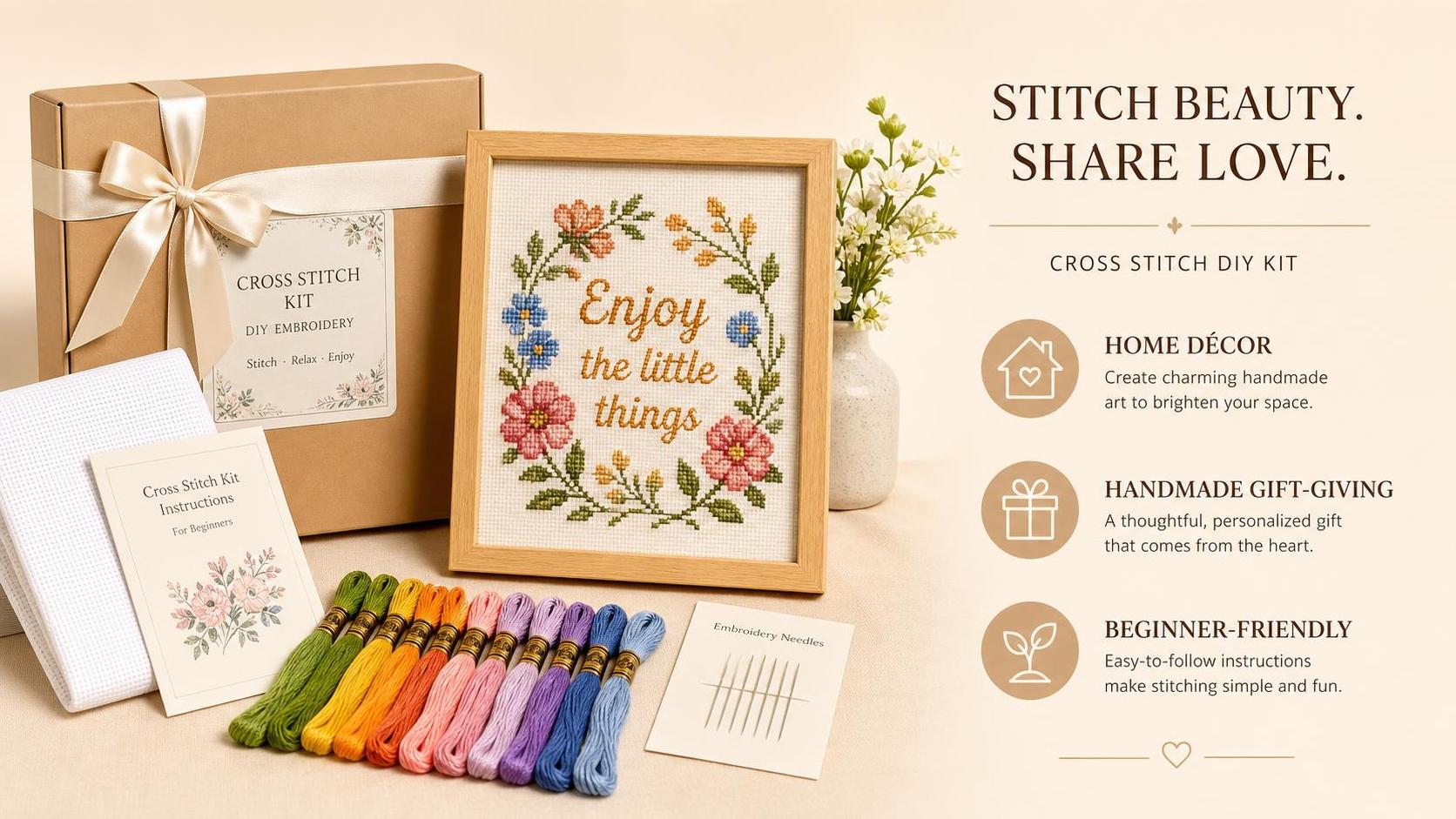
Why Are Cross Stitch DIY Kits Selling Well in Home Decor and Gift Channels?
The strong sales of the Cross Stitch DIY Kit are not just a craft trend. In retail terms, it sits at the intersection of three demand shifts that matter to home decor and gift buyers: people want products that feel personal, they want a leisure activity with a visible result, and they increasingly expect gifts to carry some emotional participation rather than being purely functional. That combination gives this category unusual resilience across both decor and seasonal gifting channels.
A Cross Stitch DIY Kit is often misunderstood as a niche hobby item aimed only at experienced crafters. In practice, the better-selling kits are positioned much more broadly. They are entry-level handmade projects with a low technical threshold, predictable output, and a finished piece that can be framed, displayed, or given away. That matters in home decor because the product is not consumed only as a pastime. It also becomes a small textile decoration, a personalized wall accent, or a handmade keepsake. In gift retail, that same dual identity makes it easier to merchandise.
This is one reason distributors have been paying closer attention to the category. Compared with many decorative accessories, DIY kits carry a built-in story. The customer is not just buying an object; they are buying time, process, and the satisfaction of making something. That gives retailers more than one selling angle. A kit can be presented as a weekend leisure product, a parent-child activity, a beginner craft set, a holiday gift, or a compact decor item with handmade value. Categories that work in multiple retail narratives usually perform better because they are not dependent on a single use occasion.
Why It Fits Home Decor Better Than Many Trend Crafts
Not every DIY product crosses into home decor successfully. Some are fun to make but have limited display value once finished. Cross stitch is different because its visual language already matches how consumers decorate small spaces. Floral motifs, nature themes, simple typography, seasonal patterns, pets, and customized family-oriented designs all translate easily into bedrooms, living rooms, children’s rooms, or entryway corners. The finished product is compact, lightweight, and easy to frame or package, which also supports e-commerce and gift distribution.
Another advantage is pace. Consumers often avoid hobby products that feel too technical or too time-intensive. Cross stitch tends to offer a clearer learning curve than many advanced textile crafts. Buyers can see progress quickly, and that sense of completion is important in repeat purchase behavior. A product that looks manageable on day one has a much better chance of converting casual shoppers, especially in gift channels where the buyer may not identify as a dedicated crafter.
For supply-side businesses, this translates into practical category strength. Kits are usually composed of standardized components such as fabric, thread, needlework accessories, and printed instructions. That makes product development more flexible than in categories that rely on highly specialized materials or unstable artisanal inputs. Companies with a broad home craft supply network, especially those already working across textile, wooden, and handicraft lines, are often in a better position to maintain quality consistency, packaging variation, and seasonal assortment planning.
What Buyers Are Really Looking For
The commercial appeal of a Cross Stitch DIY Kit is not based on one feature. Buyers usually evaluate it through a cluster of signals:
- Whether the design feels giftable rather than purely instructional
- Whether the finished piece suits actual home display
- Whether beginners can complete it without frustration
- Whether packaging supports retail presentation and private label needs
- Whether the assortment can be refreshed with seasonal or customized themes
This is where some wholesalers misread the category. They focus too heavily on the craft specification and not enough on merchandising context. A technically complete kit may still underperform if the artwork is dated, the packaging looks like a hobby store leftover, or the project feels too difficult for a casual consumer. In gift and decor channels, emotional readability matters almost as much as material completeness.
The same logic explains why adjacent DIY formats are often discussed alongside cross stitch. For example, some buyers who build a broader handmade leisure assortment also consider crochet starter sets because they serve similar consumer motivations: stress relief, self-made gifting, and beginner-friendly creativity. A product such as Wholesale OEM ODM Custom Positive Crochet Doll DIY Craft Kit, Personalized Custom Pattern Hand Knitting Doll Starter Pack for Beginner Art Craft Home Leisure & Festival Present fits that wider retail conversation. It is not the same technique, but it addresses the same demand for packaged, approachable craft experiences with room for customization.
A Market Trend, But Not a Blind One
It would be too simplistic to say these kits are selling well just because DIY is fashionable. Trend alone does not keep a category alive. What supports sell-through is the balance between accessibility and perceived value. Cross stitch kits are usually affordable enough to enter the impulse-gift range in some channels, yet substantial enough to feel more thoughtful than a standard decorative trinket. That positioning is useful for retailers navigating cautious consumer spending, where buyers still want an emotional purchase but pay closer attention to usefulness and experience.
The category also benefits from low interpretation risk. A customer does not need much explanation to understand what the product is for. That sounds basic, but it is commercially relevant. In physical retail, products that communicate themselves quickly are easier to place in mixed assortments. Online, they are easier to photograph, bundle, and describe without over-educating the customer. This reduces friction across both specialty craft channels and broader home-gift distribution.
Still, not every SKU deserves shelf space. Buyers should pay attention to the difference between “craft inventory” and “retail-ready concept.” A strong concept usually has a clear user profile, a coherent motif, and packaging that aligns with the intended channel. Beginner kits for family stores should not look like advanced hobby kits. Seasonal gift editions need stronger visual warmth and faster project completion. Customization options, including pattern adaptation, branded packaging, accessory arrangement, or box size, can be valuable when serving chain retailers or regional distributors with distinct merchandising strategies.
What This Means for Distributors
For distributors and agents, the opportunity is less about chasing a viral craft item and more about reading how lifestyle purchasing has changed. Consumers are bringing hobby and decor closer together. They are also treating gifts less as objects to hand over and more as experiences to choose, make, or personalize. The Cross Stitch DIY Kit fits that shift unusually well because it is practical to source, easy to theme, and understandable across different retail environments.
Suppliers with stable production links in handicrafts, wooden and fabric crafts, and related material categories are generally better placed to support this business. The reason is not only manufacturing capacity. It is the ability to coordinate design variation, maintain component quality, and handle both customized and repeat programs without disrupting lead times. That becomes more important when buyers want curated collections rather than isolated products.
So the short answer is yes, Cross Stitch DIY Kit demand is real, but the more useful answer is why it is real: it serves decor, gifting, leisure, and personalization at the same time. Buyers who treat it as a small but strategically versatile category will usually understand its potential better than those who see it as just another craft set.
Leave A Message
If you are interested in our products and want to know more details, please leave a message here, we will reply you as soon as we can.

We specialize in supplying home decor, handicrafts, and daily necessities.


