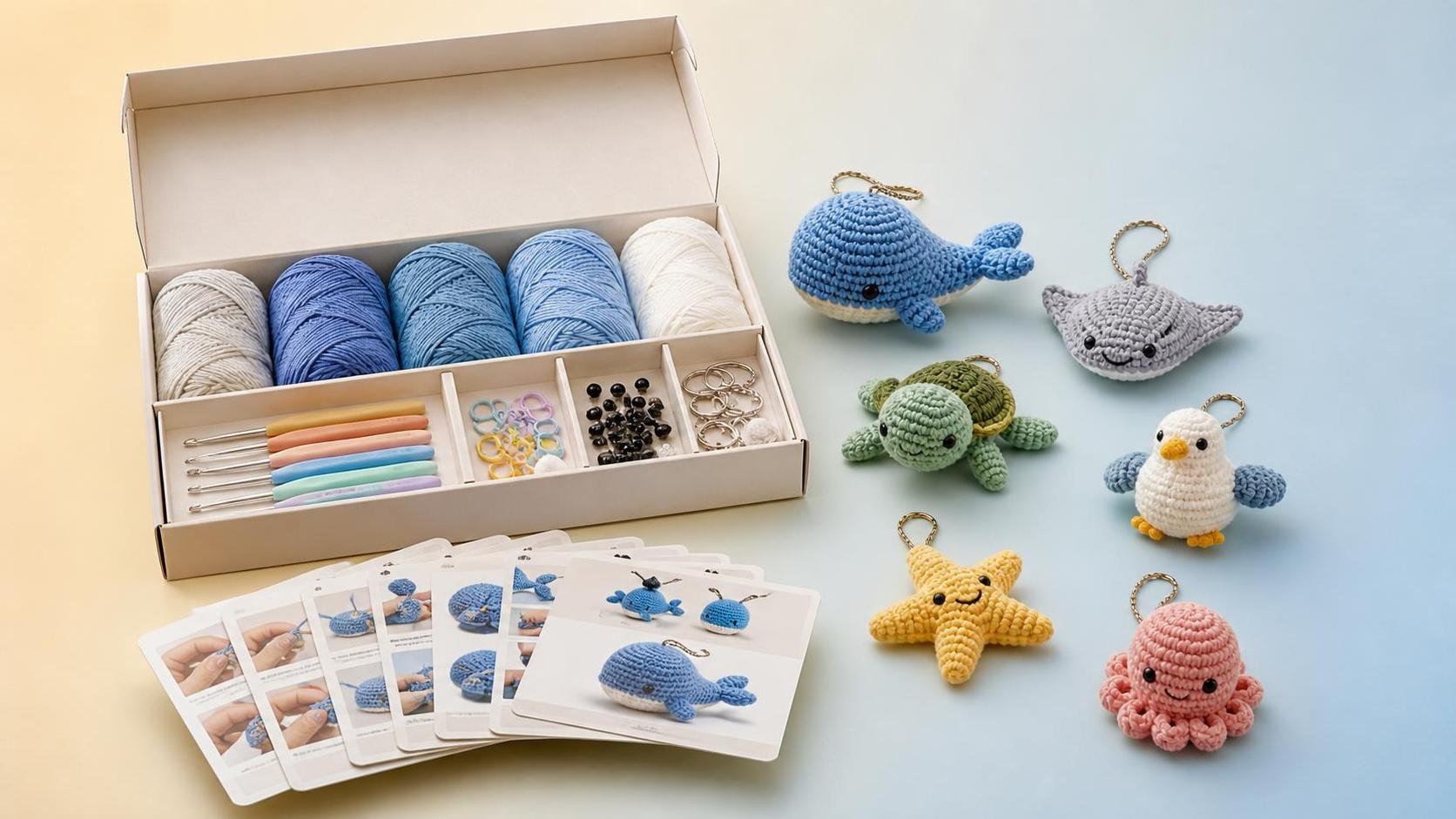
A craft buyer may begin with a simple request: find a crochet kit that looks appealing on a shelf, is easy for beginners to understand, and can arrive in consistent condition across repeat orders. The difficulty usually appears after the first sample review. A kit may look charming in photos but have uneven yarn shades, unclear instructions, missing tools, weak packaging, or a project that is too difficult for the audience expected to buy it.
These problems are frustrating because crochet kits are not just collections of materials. They are small creative experiences. When a person opens the box at home, during a classroom activity, or while looking for a screen-free weekend project, they need to understand where to start and feel capable of finishing. If the project creates confusion at the first step, the item may remain unfinished rather than becoming the decorative piece or handmade gift the buyer imagined.
When a kit looks complete but does not feel usable
One common sourcing mistake is to judge a craft kit only by its finished sample. A finished crochet flower, animal, ornament, or hanging decoration can be attractive, but the retail product must work for someone who has not made it before. The right assessment starts with the user journey rather than the display image.
Ask what happens from the moment the package is opened. Are the materials separated clearly? Is the required hook included, or is that stated plainly? Can a beginner identify the yarn colors? Are stitch terms explained in the intended selling language? Does the finished project have a practical use, such as room décor, a bag charm, a seasonal ornament, or a giftable keepsake?
For a Crochet Kit Manufacturer & Wholesale Supplier, these practical details often determine whether a collection is suitable for repeat wholesale supply. A visually impressive kit with overly complex construction may fit experienced makers, while a simpler project with strong instructions may be more appropriate for casual crafters, family activities, or a gift-oriented assortment.
Separate the project level from the product theme
Buyers sometimes combine “cute theme” with “easy project” as though they are the same thing. They are not. An ocean creature, bouquet, mushroom, or animal theme can be designed at several difficulty levels. The theme attracts attention; the construction determines whether the activity is enjoyable.
Before approving a design, examine the actual steps. Projects become harder when they require frequent color changes, tiny attached details, complicated shaping, precise stuffing, or unfamiliar abbreviations. None of these features are necessarily bad. They simply need to match the expected user. A kit for a committed hobbyist can include more advanced techniques. A kit intended as a quick gift or beginner activity should reduce friction wherever possible.
A useful way to review samples is to divide the process into four moments:
- Opening: Materials should be identifiable without guessing.
- Starting: The first stitches or assembly steps should be clearly demonstrated.
- Building: Repetitive sections need instructions that remain easy to follow.
- Finishing: The maker should know how the project becomes a displayable or giftable item.
If one of these moments is unclear, the issue should be corrected before production, not explained away after the goods are packed.
Material consistency is more important than a perfect first sample
A sample can be made with carefully selected yarn, tools, and accessories, while bulk preparation introduces variations. This is why wholesale buyers should ask questions that go beyond appearance. Yarn thickness, twist, texture, color matching, tool size, stuffing quality, printed insert legibility, and carton packing all affect the final kit experience.
For home décor crafts, texture matters especially. A soft yarn may suit a decorative cushion accent or small figure, while firmer material may better support baskets, ornaments, or standing shapes. The goal is not to insist on one material for every project. It is to ensure that the material supports the expected finished form.
Packaging should also be evaluated as part of product quality. Loose components can make a kit feel incomplete even when every piece is technically present. Small accessories should be secured appropriately. Printed instructions need enough contrast to remain readable under ordinary indoor lighting. If a kit contains small pieces, the outer packaging should describe the contents and intended use clearly according to the buyer’s market requirements.
A broader craft assortment can solve a seasonal gap
Retail assortments do not always need to rely on crochet alone. Sometimes a buyer needs a hands-on product with a similar creative appeal but a different activity format. This is particularly useful when the collection needs variety for children, adults, classroom projects, gift displays, or room décor themes.
For example, an underwater craft can offer a more immediate building experience than a stitch-based project. The Pipe Cleaners Ocean Diorama Craft Kit, Underwater Scene Chenille Stems DIY Set with Jellyfish, Starfish & Shells, Creative Room Decor Art Supplies, Bulk Craft Kit for Kids & Adults, Unique Ocean Lover Gift uses ocean-inspired chenille stems, pearl beads, a natural wood base, and step-by-step instructions to create a small underwater scene. Its materials and format make it relevant for DIY room décor, gifts, classroom projects, and craft activities shared by kids and adults.
This kind of item should not be presented as crochet when it is not. Instead, it can sit beside crochet kits as part of a coordinated creative-craft range. The connection may come from the theme, the gift purpose, the calming hands-on activity, or the finished décor value. Keeping product categories accurate helps buyers communicate clearly with their own customers and prevents disappointment caused by incorrect expectations.
Questions worth resolving before a wholesale order
Many supply issues can be avoided by turning broad requests into specific approval points. “Good quality” is too vague to guide production. A more useful conversation identifies what must remain stable and what can be adjusted.
Start with the following decisions:
- Is the kit intended for first-time makers, intermediate hobbyists, or mixed-age activities?
- Which components must be included in every unit?
- Should the finished project be decorative, functional, seasonal, or primarily giftable?
- Will instructions be supplied as printed cards, folded booklets, or another approved format?
- Which colors, materials, and packaging details require sample confirmation?
- How should replacement components or missing-piece concerns be handled within the order process?
These questions may seem routine, but they prevent a frequent mismatch: the buyer approves a concept while the production team needs a specification. A written component list is particularly helpful. It should state not only the materials but also the intended quantity, color grouping, accessory type, and packing method. When the kit contains multiple small items, this document becomes the reference point for both packing and inspection.
Use samples to test instructions, not only appearance
Instructions are often treated as a final packaging insert, yet they are part of the product itself. A practical review involves asking someone unfamiliar with the project to follow the draft instructions without verbal coaching. Where do they stop? Which diagram is unclear? Do they understand the order of assembly? Are important details shown in words, images, or both?
For crochet kits, instructions should make stitch names and abbreviations consistent from beginning to end. If a pattern includes special techniques, the kit should indicate whether the maker needs prior knowledge or provide adequate guidance. For mixed-material craft sets, instructions should explain how the base, decorative components, and finishing elements connect.
It is also sensible to inspect the finished result after the trial. Does it resemble the intended sample? Can it stand, hang, or sit on a shelf as described? In an ocean diorama, for instance, the wooden base should support the arrangement, and the chenille stems and beads should allow the maker to build recognizable marine-inspired details without needing additional materials.
Choosing a supplier relationship that supports adjustments
A reliable Crochet Kit Manufacturer & Wholesale Supplier should be evaluated not only by the range shown in a catalog but by how clearly product details can be discussed before production. Craft goods involve many small variables, and small variables create visible differences. An unclear yarn shade, an omitted needle, a changed bead size, or an instruction revision can affect the perceived value of the full set.
Ningbo is widely associated with export-oriented manufacturing and sourcing networks, which can be useful when a project combines handmade elements, wooden parts, fabric accessories, ceramics, plastics, or handwoven components. Still, location alone is not a quality guarantee. The practical question is whether the supply chain can maintain agreed materials, communicate changes early, and coordinate the different parts of a craft kit responsibly.
For buyers handling home décor crafts and daily-use creative products, the safest approach is usually to begin with a clearly defined product brief, review a functional sample, approve packaging and instructions, and keep the specification available for repeat orders. This process is less glamorous than choosing a finished sample from a showroom, but it is the part that protects the final user experience.
When a craft kit is easy to open, understandable to make, and satisfying to display or give away, it earns its place in a décor or gift collection. The strongest wholesale decisions come from checking that complete journey before the product reaches the shelf.
Leave A Message
If you are interested in our products and want to know more details, please leave a message here, we will reply you as soon as we can.

We specialize in supplying home decor, handicrafts, and daily necessities.


