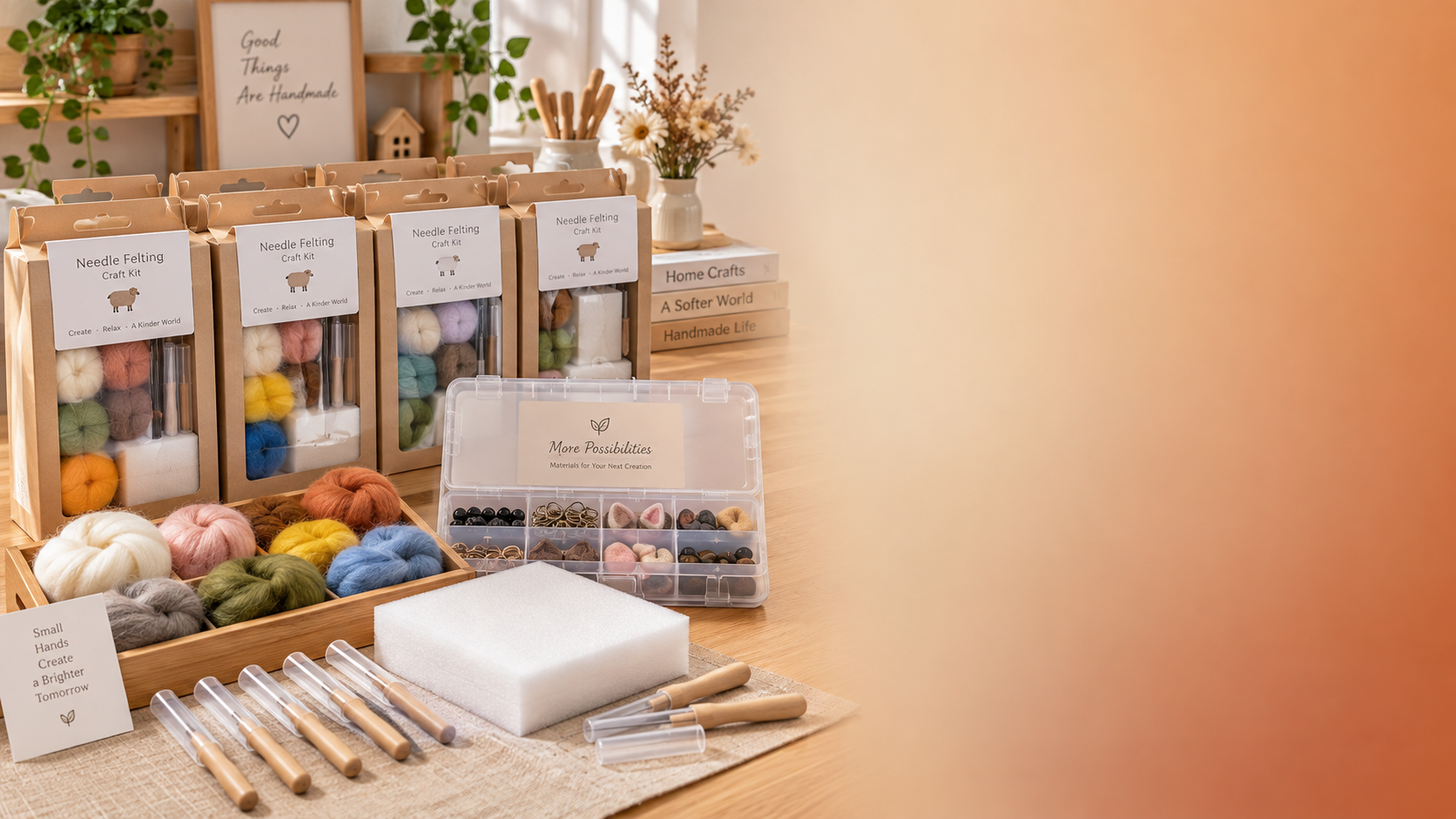
A class organizer may receive a low quote for a needle felting kit and assume the event budget is settled. The problem often appears later: needles break during setup, wool quantities vary from pack to pack, foam pads are too thin for repeated use, or individual components arrive loose and require hours of sorting. For a single hobby purchase, these issues are inconvenient. For a classroom, retail workshop, holiday activity, or paid event, they can affect staffing, safety, timing, and participant satisfaction.
The true cost is therefore not the quoted kit price alone. A practical estimate combines the delivered unit cost with preparation labor, expected replacement materials, packaging requirements, safety controls, and the risk of inconsistent supply. Buyers do not need to purchase the most elaborate kit; they need a kit specification that matches the event format and can be repeated without unexpected operational costs.
Start with the event format, not the catalog photo
Before comparing suppliers, define what each participant is expected to make and how much guidance will be available. Needle felting can range from a short introduction using a pre-shaped wool base to a more detailed project that requires shaping, layering colors, and repeated needle work. The same kit contents may be adequate for an adult craft group but unsuitable for a mixed-age classroom.
These questions establish the real material requirement:
- Will participants create a flat decoration, a small three-dimensional figure, or a functional item?
- Is the activity designed for beginners, experienced crafters, or a mixed group?
- Will instructors demonstrate each stage, or must the packaging support self-guided use?
- Are finished pieces expected to be taken home immediately, displayed, or used in later activities?
- Will the kits be issued individually, shared between tables, or replenished during several sessions?
A short session with a simple outcome may need only wool, a safe felting surface, a small number of needles, and clear instructions. A longer workshop can require additional colors, shaping aids, replacement needles, and more durable pads. Buying a complex kit for a short activity creates unused inventory; buying a minimal kit for an ambitious project can lead to interruptions and emergency purchases.
Build the cost from five layers
1. Delivered component cost
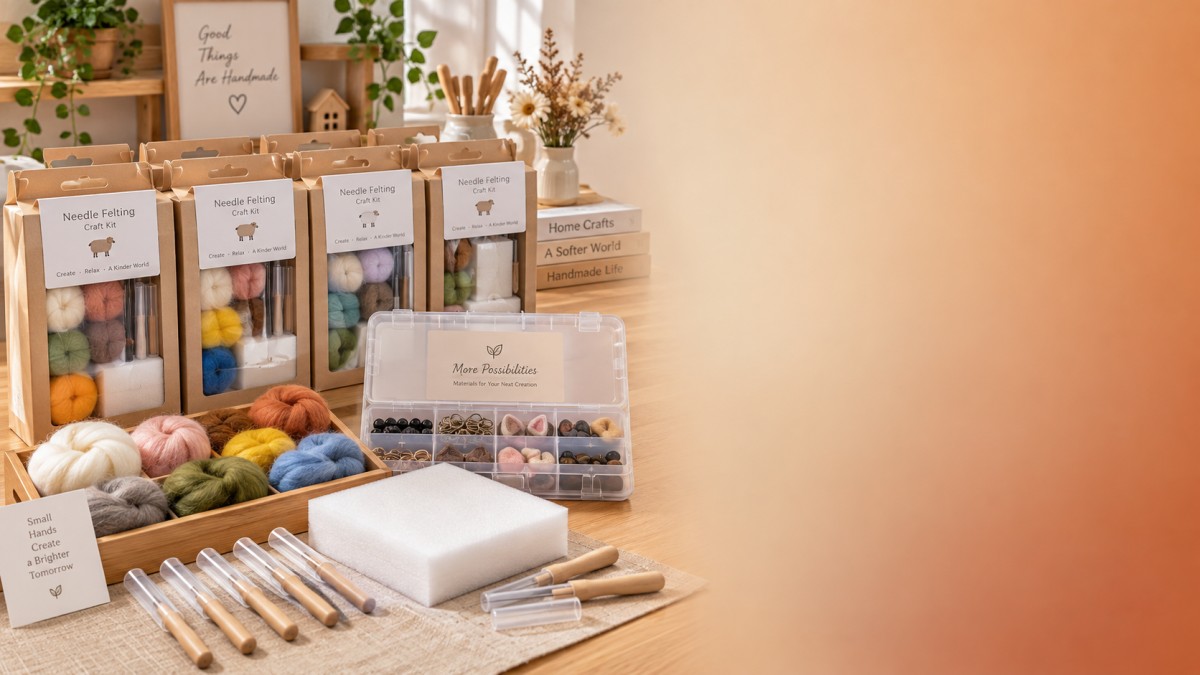
Break the quote down by component rather than comparing only a complete set price. Wool fiber, felting needles, pads or mats, templates, instruction sheets, bags, boxes, labels, and outer cartons each affect cost differently. A kit with more pieces is not automatically better value. For example, extra decorative items may add visual appeal but do not compensate for insufficient core wool or poor-quality needles.
Ask whether the stated wool amount is net usable fiber. Loose wool can be compressed during packing, and color assortments can create waste when participants need a particular shade in greater quantity. The supplier should be able to clarify the fiber type, color mix, approximate allocation per project, and whether the material is packed per kit or in shared bulk bags.
2. Setup and distribution labor
Loose components can make a low-cost kit expensive in practice. When an event team must count needles, divide wool colors, insert printed instructions, and check every pack before distribution, labor becomes part of the purchase cost. This is especially relevant when kits are needed for multiple locations or when the event date leaves little time for repacking.
Individual retail-ready packaging is not always necessary, but it can reduce handling where each participant receives a kit at a registration desk. For table-based activities, grouped packs may be more efficient: one shared bag of replacement wool and needles, plus individual project materials. The right format depends on how the activity will be run, not on whether a package looks more premium.
3. Tool safety and replacement allowance
Felting needles are sharp, fine tools that can bend or break when used at an angle, pushed into a hard surface, or handled by inexperienced participants. A procurement plan should account for spare needles rather than treating breakage as an exceptional event. It should also specify whether needles are packed with protective covers, stored in a handle, or supplied loose.
The felting pad deserves the same scrutiny. A pad that is too small, too thin, or easily torn may not support the intended project. Replacing pads during an event costs more than choosing a suitable density and size at the outset. For settings involving children or first-time users, the activity leader should determine whether supervision, finger guards, simplified needle holders, or an alternative craft format is more appropriate.
4. Customization and print costs
Custom color palettes, branded instruction cards, event labels, and seasonal packaging can be useful, but each adds approval steps and potential variation. The hidden cost is often not the printing itself; it is the time required to confirm artwork, language, component placement, and pack-out details before production begins.
Customization works best when it improves the participant experience or reduces event handling. A simple project card with numbered steps may reduce the need for repeated instructor explanations. By contrast, a decorative box that is discarded on arrival may add cost and carton volume without helping the event. Request a plain version and a customized version of the same specification so the additional cost is visible rather than embedded in a single quote.
Compare quotations on a like-for-like basis
One supplier may quote a complete participant set, while another quotes materials only. One price may include individual polybags and export cartons; another may require separate packing charges. A usable comparison sheet should list the same practical conditions for every quotation.
Freight should be evaluated with packaging in mind. A large foam pad can increase carton volume substantially, while a compact pad or shared table mat may improve shipping efficiency. However, reducing volume should not create an unsuitable working surface. The relevant question is whether the packaging design protects the materials and supports the intended distribution method after arrival.
Use samples to test the operating cost
A sample should be assessed as an event tool, not merely as a product sample. Check whether the wool separates easily, whether the colors match the project instructions, whether needles fit securely in any included holder, and whether the pad remains stable during normal use. Review the written instructions for sequence, clarity, and the amount of assumed prior knowledge.
It is also useful to simulate the setup process. Open several packs, lay out the contents as an instructor would, and estimate where sorting or explanation may be required. A kit can look complete on a sample table but still be inefficient if small components are difficult to identify or if participants need additional materials halfway through the project.
For seasonal gatherings, needle felting may be only one activity among several. Coordinating supplementary decorations can prevent the venue from feeling unfinished without adding another complicated craft station. For example, reusable window décor such as 6 Sheets Fall Gel Window Clings for Glass Windows, FallThanksgiving Clings Gel Stickers,Hello Fall Leaves,Pumpkin for Autumn Holiday Window Decor can be applied to glass or other smooth surfaces for a classroom or Thanksgiving party setting, then removed after the event. Because the soft TPR clings are described as safe, non-toxic, and reusable, they can serve as simple seasonal decoration while staff focus supervision and preparation time on the needle-felting activity.
Order quantities can change the apparent bargain
Minimum order quantities are often the point at which a favorable unit price becomes less favorable in total. A large production run may reduce the cost per kit but create surplus stock, storage demands, or outdated seasonal packaging. Smaller orders may cost more per unit while offering better control when attendance is uncertain or when a program is being tested for the first time.
Separate reusable components from consumables when negotiating quantities. Durable items such as larger work mats, display materials, or storage trays may be purchased once and reused across sessions. Wool, needles, individual instructions, and take-home packaging may need to be replenished for every event. This distinction gives buyers a clearer view of recurring cost rather than treating all kit elements as disposable.
Set acceptance points before production
The most useful purchase order is specific enough to prevent interpretation gaps. It should identify the approved project design, component list, material and color references, pack-out method, instruction version, quantity of spare components, carton marking, and required delivery window. When substitutions are possible, state which items may be changed only after approval and which items must remain fixed.
A dependable needle felting kit for classes is one that arrives in a form the event team can use immediately. The lower-cost option is genuinely economical only when it supports the planned project, limits preparation work, includes reasonable protection against tool loss or breakage, and can be supplied consistently for the schedule in question.
Leave A Message
If you are interested in our products and want to know more details, please leave a message here, we will reply you as soon as we can.

We specialize in supplying home decor, handicrafts, and daily necessities.


