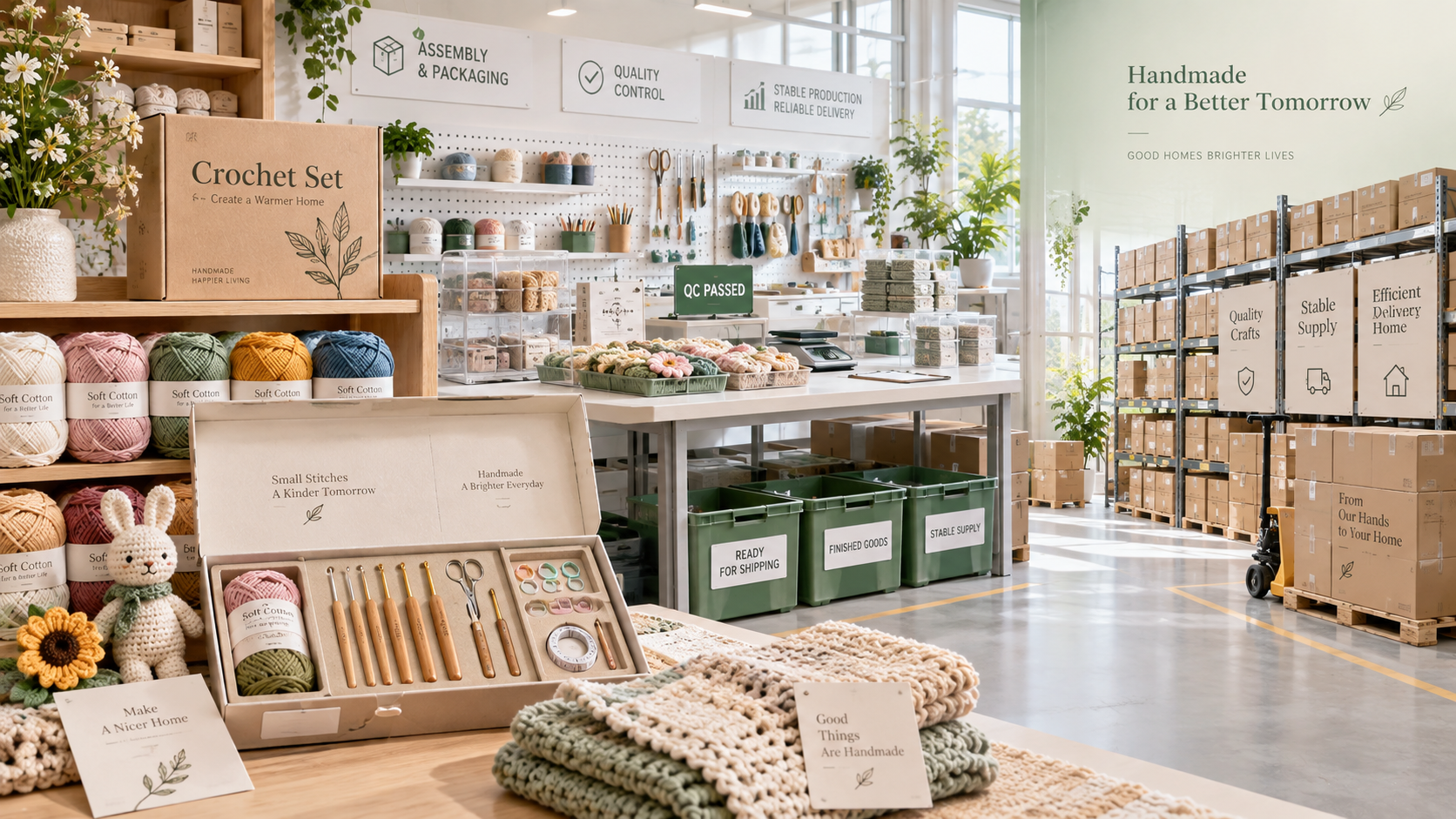
How to Compare Crochet Kit Suppliers on Quality, Capacity, and Lead Times
Choosing the right crochet kit suppliers is essential for buyers who need consistent product quality, reliable production capacity, and predictable delivery schedules.
For home decor retailers and sourcing teams, comparing suppliers goes beyond unit price. Materials, craftsmanship, certifications, factory capabilities, and supply chain stability all affect results.
The strongest supplier is not simply the cheapest option. It is the partner that can meet your quality standard repeatedly while protecting your launch calendar.
Start With the Buyer’s Real Sourcing Requirements
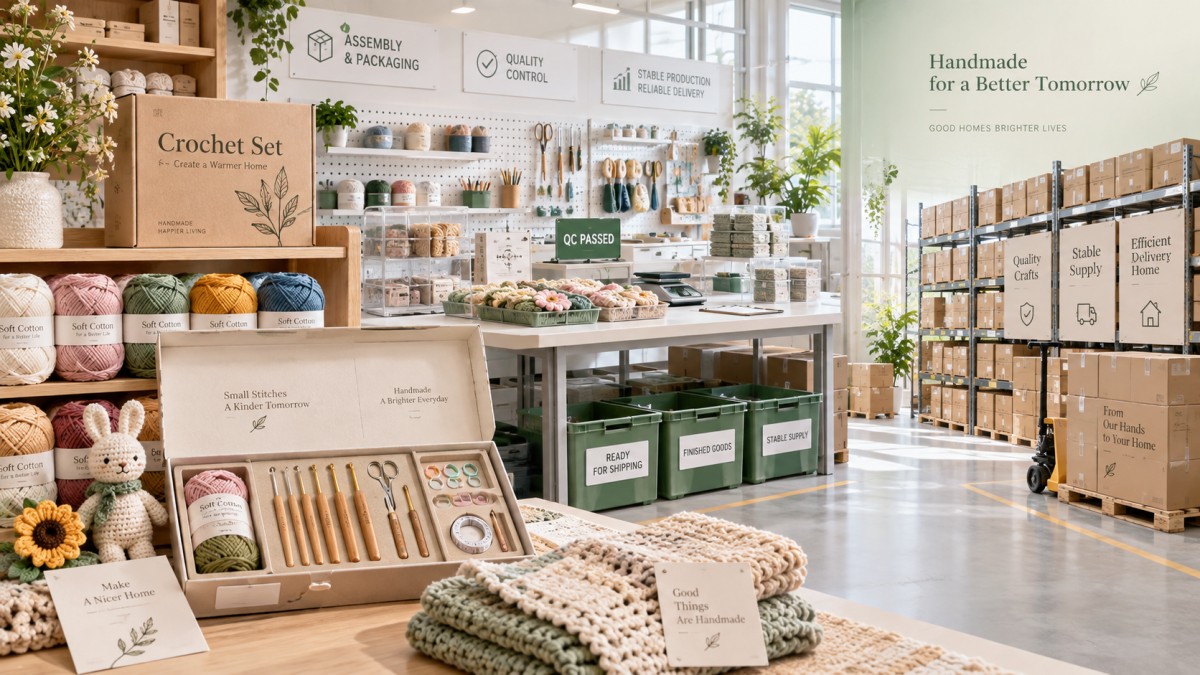
Before contacting crochet kit suppliers, define the commercial requirements behind the order. A clear brief prevents attractive samples from masking production or delivery limitations.
Identify the intended retail channel, price point, target customer, seasonal deadline, planned order quantity, and acceptable quality level. These factors shape every supplier comparison.
For mass-market retail, consistency, safety documentation, and packaging efficiency may matter most. For specialty stores, yarn texture, original design, and perceived gifting value may take priority.
Buyers should also specify whether the kit is designed for beginners, intermediate users, or experienced makers. Skill level affects yarn selection, instructions, tools, and customer satisfaction.
A complete purchase brief should include the kit contents, finished-project size, color palette, packaging format, labeling requirements, barcode needs, and destination-market compliance obligations.
Ask suppliers to quote against the same specification sheet. Comparing different kit configurations, materials, or packaging formats produces misleading price and lead-time conclusions.
Assess Quality Beyond the First Sample
Sample quality is important, but it does not prove that bulk production will match. Buyers should evaluate how crochet kit suppliers control repeatability across production batches.
Begin with yarn composition, weight, colorfastness, softness, thickness consistency, and dye-lot management. Inconsistent yarn can change the finished item and frustrate end users.
Review all included accessories carefully. Crochet hooks, stitch markers, stuffing, needles, safety eyes, labels, and storage components should be functional, safe, and visually consistent.
Instructions deserve the same scrutiny as physical components. They should use readable layouts, tested stitch counts, accurate diagrams, and language appropriate for the destination market.
Request a pre-production sample after finalizing materials and artwork. This sample should represent the exact approved combination, rather than a loosely comparable prototype.
Quality control questions should cover incoming material inspection, in-process checks, final assembly inspection, needle detection where relevant, and packing verification before shipment.
Ask how the factory manages defects found during inspection. A capable supplier can explain corrective actions, rework procedures, reporting standards, and responsibility for replacement goods.
Certifications and social compliance audits also matter when supplying major retailers. Verify documents directly and confirm they apply to the factory handling your actual order.
Compare Factory Capacity and Supply Chain Resilience
Production capacity should be measured against your peak demand, not only the first order. Seasonal crochet kits can create compressed schedules and sudden replenishment needs.
Ask each supplier for monthly output, current utilization, production lines, staffing model, overtime policy, and the percentage of capacity reserved for existing customers.
A factory with available capacity today may still struggle during holiday production. Request a capacity forecast covering your target production months and shipping window.
Capacity also includes sourcing capability. A crochet kit depends on multiple inputs, including yarn, tools, printed instructions, packaging, inserts, and decorative components.
Suppliers with established material networks can reduce risk when a specific component becomes unavailable. However, buyers should confirm whether substitutions require written approval before use.
For home decor assortments, cross-category sourcing experience can be valuable. It supports coordinated colors, packaging, and seasonal themes across craft kits and complementary decorative products.
For example, a supplier experienced with wooden and fabric crafts may help buyers develop coordinated porch, garden, and gifting ranges alongside crochet products.
Retailers creating a seasonal farmhouse collection could pair crochet kits with a Wooden Large Vertical Love Grows Here Porch Decor, Garden Welcome Standding Sign Garden Decor Sign, Welcome Wall Sign for Yard Porch Farmhouse Door Decoration to build a consistent welcome-home theme.
Evaluate whether suppliers own their factories, use subcontractors, or rely on trading partners. Each model can work, but ownership and accountability must be transparent.
Calculate Lead Times From Approval to Arrival
Quoted lead time often describes only factory production. Buyers need a complete timeline that includes development, sample approvals, material purchasing, inspection, booking, and transport.
Ask suppliers to break the schedule into individual stages. This makes it easier to identify the critical path and compare seemingly similar quotations.
A typical timeline may include artwork confirmation, prototype preparation, sample courier delivery, revision cycles, pre-production approval, bulk manufacturing, final inspection, and shipment release.
Material lead time is frequently the hidden risk. Custom yarn shades, specialty packaging, printed patterns, and branded accessories can extend production even when assembly is fast.
Confirm the supplier’s policy for approval delays. A reliable partner should explain how late artwork, revised specifications, or changed quantities affect the committed delivery date.
Shipping planning should include port location, container consolidation options, export documentation, freight booking lead time, and transit variability for the selected destination.
For time-sensitive launches, build contingency into the calendar. An earlier production completion date offers more protection than relying on expedited freight after delays occur.
Compare on-time delivery performance using actual records where possible. Ask for references, recent shipment examples, or performance data from comparable retail programs.
Use Price Comparisons That Reveal the True Cost
Unit price is meaningful only when every quotation covers the same components, quality requirements, Incoterms, packaging level, and inspection assumptions.
Break quotations into yarn, accessories, labor, printing, packaging, tooling, testing, sampling, and freight-related costs. This structure identifies where savings may create risk.
Very low pricing can indicate lighter yarn, simpler instructions, insufficient quality control, lower-grade accessories, or unrealistic assumptions about production efficiency.
Ask about minimum order quantities for each kit design, colorway, and packaging version. A low unit price may be less attractive when inventory commitments become excessive.
Consider total landed cost, including import duties, freight, customs handling, warehousing, quality claims, markdown risk, and potential replacement orders caused by defects.
Payment terms also influence sourcing risk. Reasonable deposits, milestone approvals, and balanced final-payment conditions can improve working-capital control without undermining supplier relationships.
Run a Practical Supplier Comparison Process
Create a weighted scorecard before reviewing quotations. This keeps teams from overvaluing an appealing sample or a small initial price difference.
Weight quality consistency, capacity, lead-time reliability, compliance, communication, commercial terms, product development capability, and supply chain resilience according to your business priorities.
Use the same questions for every candidate. Written supplier responses provide a stronger basis for internal decisions than informal calls or assumptions.
Schedule a factory audit, virtual tour, or third-party inspection when the order value and risk justify it. Verify production areas, warehouse control, and quality procedures.
During evaluation, observe communication quality. Clear responses to technical questions often indicate how effectively a supplier will handle changes, claims, and urgent replenishment requests.
Start new relationships with a controlled trial order when possible. This tests bulk consistency, document accuracy, packing quality, and actual delivery performance before scaling volumes.
Keep supplier scorecards updated after each shipment. Historical performance should influence future allocation decisions more than promises made during the quotation stage.
Make the Final Decision on Reliability, Not Price Alone
The best crochet kit suppliers combine dependable quality systems, realistic capacity planning, transparent timelines, and responsive communication with commercially competitive pricing.
Buyers should favor suppliers that identify risks early and present workable solutions. This behavior is especially valuable for seasonal home decor programs with fixed retail deadlines.
A disciplined comparison process turns supplier selection into a measurable business decision. It reduces quality claims, protects margins, and supports more dependable product launches.
When quality, capacity, and lead times are evaluated together, procurement teams can select partners that support both current orders and long-term assortment growth.
Leave A Message
If you are interested in our products and want to know more details, please leave a message here, we will reply you as soon as we can.

We specialize in supplying home decor, handicrafts, and daily necessities.


