
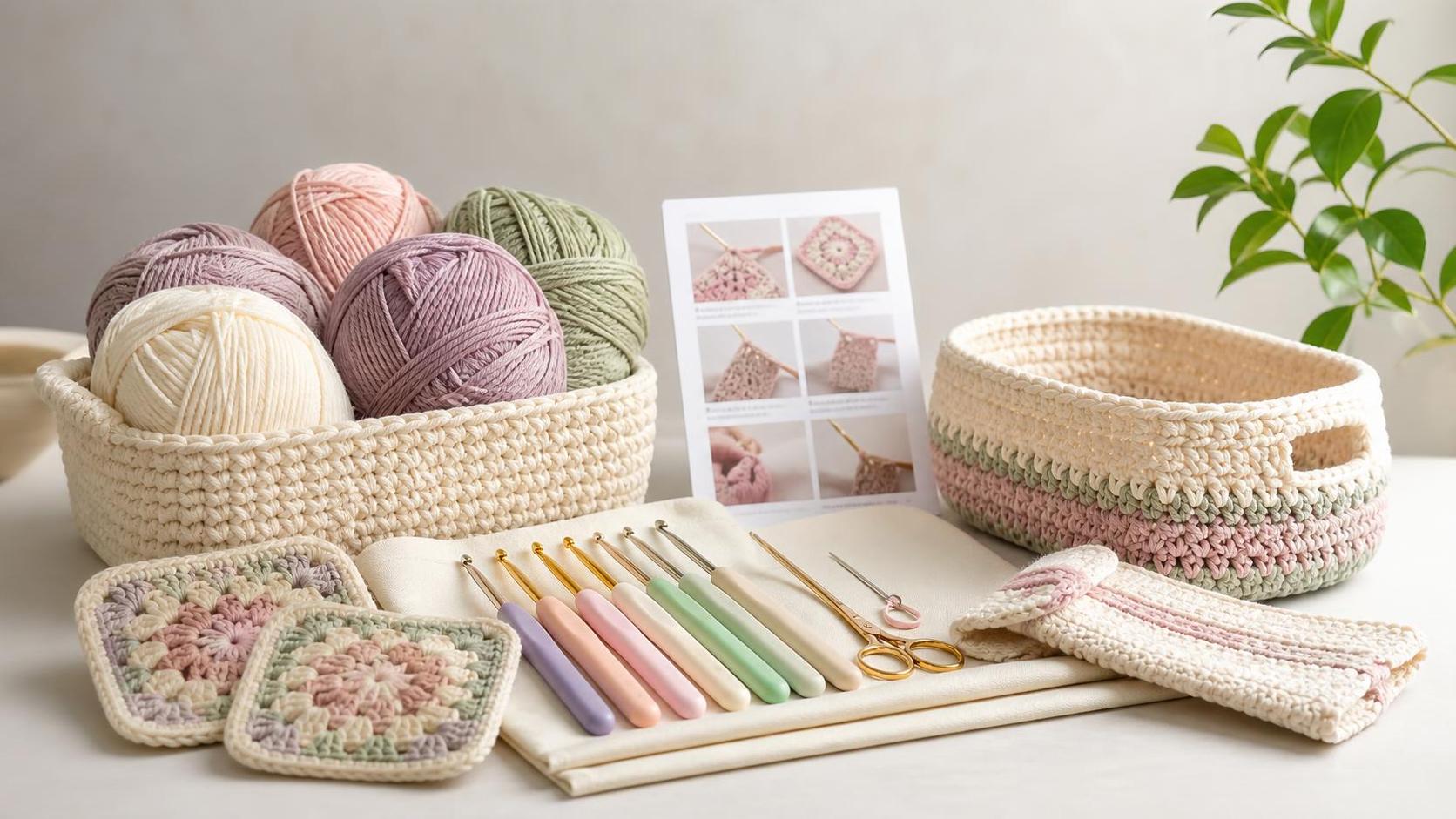
What Is the Best Crochet Kit? A Practical Way to Choose the Right One
What is the best crochet kit? That question usually comes up when someone wants to start crocheting without wasting time on low-quality tools, confusing instructions, or materials that do not match the project they have in mind. It sounds like a simple buying decision, but in practice, the wrong kit can turn an easy beginner project into a frustrating experience.
For retailers, home decor buyers, and sourcing teams, the question has another layer. The best crochet kit is not only about hooks and yarn. It also has to support the kind of finished products customers actually want, hold up well in use, and come from a supply chain that can stay consistent across seasons. That is especially relevant in home decor, where craft trends move quickly and product quality affects repeat orders.
Why choosing the best crochet kit is harder than it looks
A lot of people assume any crochet starter set will do the job. In reality, crochet kits vary widely in material quality, project difficulty, and how clearly they guide the user. Some include too many accessories that look useful but add little value. Others keep the contents simple but miss something essential, such as easy-grip hooks, clear yarn labeling, or instructions that match the actual skill level of the user.
This creates a common problem: the buyer thinks they are choosing a complete kit, but what they really get is a bundle of mismatched items. If the yarn splits too easily, the hook size does not suit the pattern, or the project is too advanced, the kit stops being a helpful starting point. For a business in home decor crafts, this matters because poor first impressions can reduce confidence in the entire product category.
The best crochet kit should lower the barrier to making something useful and attractive. It should help people start, continue, and finish. That is true whether the end user is a hobby beginner making seasonal decor or a retailer evaluating which craft products fit their assortment.
Common mistakes people make when comparing crochet kits
One frequent mistake is focusing only on the number of pieces included. A kit with many tools may look more complete, but quantity does not guarantee usability. Extra stitch markers, duplicate hooks, or decorative packaging do not help much if the yarn quality is poor or the instructions are unclear.
Another mistake is ignoring project fit. Some kits are designed for amigurumi toys, some for accessories, and some for home decor accents like coasters, baskets, table pieces, or seasonal ornaments. If your goal is to make decorative items, the best crochet kit is the one that supports that use case directly. A generic starter kit may work, but a project-aligned kit is usually more practical.
There is also a sourcing mistake on the business side: treating crochet kits as isolated products instead of part of a wider craft assortment. In many home decor programs, crochet overlaps with other seasonal and handmade categories. A buyer who understands that connection can build a stronger collection rather than selecting one-off items without a clear merchandising direction.
How to judge what the best crochet kit really is
The most reliable way to answer the question is to break it into a few simple standards. This works for individual buyers and for wholesale decision-making.
- Start with the user level. A beginner needs soft, workable yarn, a comfortable hook, and a small project with clear steps. An experienced user may care more about pattern variety or specialty materials. The best crochet kit for a beginner is rarely the most complex one.
- Match the kit to the intended result. If the goal is functional home decor, look for projects that produce usable pieces rather than practice swatches only. The project should feel worth finishing.
- Check material consistency. Yarn thickness, hook size, stuffing or accessories if included, and finishing tools should make sense together. A good kit feels coordinated, not randomly assembled.
- Look at instruction quality. A kit can contain good materials and still fail if the directions are difficult to follow. Clear sequence, readable terminology, and realistic project pacing matter.
- Think about repeatability. For business buyers, a strong kit is one that can be sourced steadily, adapted seasonally, and integrated into broader craft and decor lines.
When people skip these checks, they often end up asking the wrong question. Instead of asking what is the best crochet kit in general, it is usually more useful to ask: best for whom, best for what project, and best under what sourcing requirements?
What works best for home decor brands and craft buyers
In the home decor field, crochet is rarely judged by technique alone. It is usually part of a larger product story that includes seasonality, texture, handcraft appeal, and how well the item fits into everyday living spaces. Because of that, many buyers do better when they assess crochet kits alongside related craft categories instead of treating them as standalone novelty products.
For example, a seasonal assortment may include yarn-based DIY items, window decorations, soft ornaments, tabletop accents, and simple party decor. In that context, the value of a crochet kit is not only whether it teaches crochet well, but whether it fits naturally into the shopping habits of people decorating their homes for a season or event.
This is where stable sourcing becomes important. Located in Ningbo, a city known for foreign trade, our company works through two certified factories, one focused on handicrafts and one on wooden and fabric crafts, while also maintaining partnerships across ceramics, plastics, and handwoven products. For buyers, that matters because crochet-related products often sit beside other decor categories in the same collection. A dependable network makes assortment planning easier and helps maintain product quality across different materials and formats.
When the best crochet kit is not enough on its own
Sometimes the real need is not a crochet kit by itself but a coordinated seasonal craft offering. This is especially common in retail and event-driven home decor. A buyer may begin by asking about crochet because handmade products feel warm, personal, and trend-friendly, but later realize the collection also needs easy decorative items for customers who want a quicker result.
That is where related craft products can support the same merchandising goal. For instance, if a Halloween program includes crochet-themed DIY or handmade decor, an item like Halloween Window Gel Clings Ghost Pumpkin Bat Witch Cat Boo Blood Decal Stickers for Halloween Home Party Window Decorations can sit naturally beside it as a lower-commitment decorating option. It uses soft TPR material, comes in 6 sheets, features fun and vibrant designs, sticks easily to smooth surfaces, and is reusable and easy to remove for future seasonal use. That does not replace a crochet kit, but it helps round out a seasonal range for different customer preferences.
In practical terms, the best crochet kit sometimes works best as one part of a broader solution: one product for people who want to make something, another for people who want quick decorative impact, and both aligned under the same seasonal theme.
A simple process to choose the right crochet kit
If you are trying to make a clear decision without overcomplicating it, this process is usually enough.
- Define the end use first. Decide whether the kit is for learning, gifting, resale, seasonal promotion, or home decor crafting.
- Reduce the project scope. Avoid broad kits with too many possible outcomes. A focused project is easier to evaluate and easier for the user to complete.
- Review the materials as a set. Hook comfort, yarn feel, color coordination, and finishing items should support one another.
- Check whether the project has display value. In home decor, the finished result should be something people actually want to keep, use, or show.
- Assess supply reliability. For business purchases, consistency in production and supporting categories is just as important as the kit itself.
- Consider cross-category compatibility. If the crochet item is part of a seasonal launch, see whether it pairs well with other decor products and materials.
This method helps filter out kits that look appealing at first glance but do not hold up when you compare them against actual usage.
Signs that a crochet kit is likely to disappoint
There are a few warning signs worth paying attention to. One is vague project labeling. If a kit says it is suitable for everyone but includes patterns that require advanced stitch control, that mismatch usually leads to frustration. Another is poorly defined material information. If yarn type, hook size, or included accessories are not described clearly, it becomes harder to judge whether the kit is actually complete.
For business buyers, another warning sign is a product that has no natural place in a wider assortment. Even a decent crochet kit can become a weak product if it does not connect with customer demand, seasonal themes, or neighboring categories in the catalog.
Good selection is often less about finding the most impressive-looking kit and more about avoiding avoidable mismatches.
How to avoid making the same buying mistake again
The most useful habit is to create a repeatable evaluation standard. Instead of judging each new crochet kit from scratch, compare it against a small checklist: skill fit, material coordination, instruction clarity, finished-project appeal, and supply continuity. This keeps the decision grounded.
It also helps to think in collections rather than single items. A crochet kit that works well in a home decor range should support the same customer mood, seasonal timing, and price expectations as the surrounding products. Whether the assortment includes handmade ornaments, decorative accessories, or removable window accents, consistency usually matters more than novelty.
When sourcing is involved, strong factory coordination and partner capacity matter because they reduce surprises. That is one reason a stable network across handicrafts, wood, fabric, plastics, ceramics, and handwoven products can make planning easier for buyers who need more than one product type in the same program.
Common Questions
What is the best crochet kit for complete beginners?
Usually, it is a kit with a small and realistic project, soft easy-to-handle yarn, one or two comfortable hooks, and instructions that do not assume prior knowledge. Simplicity is often more useful than a large accessory count.
Should I choose a crochet kit based on the number of included tools?
Not by itself. More tools do not always mean better usability. It is more important that the included materials work well together and support the actual project.
How do home decor buyers evaluate crochet kits differently from hobby users?
They often look beyond the kit itself and consider assortment fit, seasonal demand, display value, and supply stability. The finished item needs to make sense in a broader retail or decor program.
Can seasonal decor products be sold alongside crochet kits?
Yes, especially when they serve different customer needs under the same theme. Some customers enjoy making decor, while others want a quick decorating solution. Combining both can create a more balanced seasonal offering.
Is reusable seasonal decor relevant when planning a craft assortment?
Often yes. Reusable products can complement handmade and DIY categories because they appeal to shoppers who want convenient decorating options. For example, the linked Halloween gel cling product can support party or kids' room decor without asking the user to complete a craft project first.
Conclusion
So, what is the best crochet kit? In most cases, it is the one that matches the user’s skill level, leads to a finished result people actually want, and comes with materials that make sense together. For home decor businesses, the answer also depends on whether the kit fits into a wider seasonal or handcrafted assortment backed by dependable sourcing.
If you are comparing options, focus less on how much is packed into the box and more on whether the kit solves a real need cleanly. That is usually the difference between a product that gets tried once and a product category that keeps performing.


