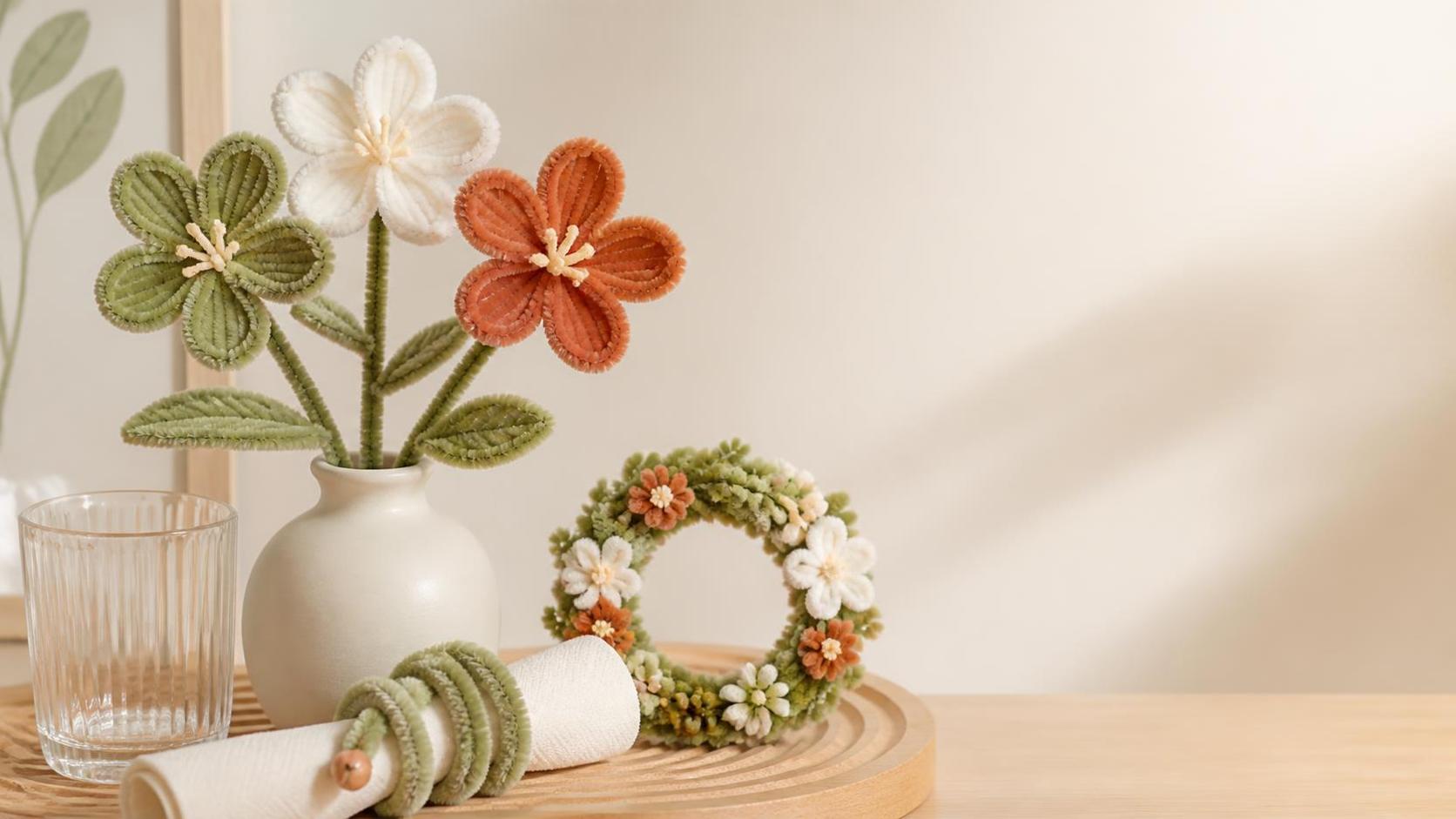
Pipe cleaner crafts step by step can turn a small bundle of wire stems into surprisingly polished home decor, especially when the project is planned with scale, color balance, and placement in mind. The material is simple: a flexible metal core wrapped with short polyester or acrylic fibers. That structure matters. The wire gives shape, while the fuzzy surface softens the line so the finished piece feels decorative rather than mechanical. For indoor decor, standard stems around 30 cm in length are usually easier to control than extra-long versions, and medium thickness tends to hold curves better than very thin craft stems that collapse after a few adjustments.
A clean result starts before the first twist. Sort pipe cleaners by thickness, sheen, and color lot if possible. Mixed packs sometimes contain slight differences in pile density, and that becomes visible when petals, leaves, or spirals sit side by side. If the design will be displayed in a vase, on a shelf, or attached to a seasonal wreath, decide early whether the piece should read as playful, rustic, or neat and graphic. Bright chenille stems with metallic accents suit festive decoration, while matte green, cream, brown, and muted orange usually blend more easily into everyday home decor.
Basic shaping that actually looks finished
Many beginners bend pipe cleaners freely and end up with uneven loops, loose joints, and exposed wire tips. A better method is to work from measured segments. For a simple flower, cut or allocate one full stem for petals, one for the center, and one or two for the stem and leaves. Fold the petal stem into equal sections first. Five petals made from similar loop lengths usually look more balanced than six cramped ones. Twist only at the base of each loop; twisting through the whole petal makes the shape bulky and distorts the fuzzy surface.
When creating spirals for ornaments or tabletop accents, wrap the stem around a smooth dowel, marker barrel, or narrow wooden stick instead of shaping it in the air. This keeps the coil diameter consistent. Slide it off gently and tighten only the lower turn if the spiral needs a hanging point. If the item is meant to sit upright, keep a straight tail of at least 2 to 3 cm so it can be inserted into foam, wrapped around a branch, or secured behind a frame.
For leaves, flatten the loop slightly and pinch one end to create a natural point. A leaf that remains perfectly round often looks more like a balloon than foliage. Small adjustments with flat-nose pliers can help on hidden wire ends, but direct pressure on visible chenille may leave bald spots where fibers shift away from the core.
Step-by-step ideas for home decor use
A pipe cleaner project becomes more convincing when it is designed for a clear location in the room. Mini stems of lavender in a ceramic bud vase, coiled napkin rings for a casual table setting, and star or snowflake ornaments for a seasonal branch all use the same material differently.
One of the easiest decorative builds is a three-flower stem bundle:
- Form three separate blossoms with five loop petals each.
- Wrap a contrasting stem tightly around the center of each flower to hide the twist point.
- Add a straight green stem behind each blossom and twist once below the head.
- Create two small leaves per stem and attach them at slightly different heights so the bundle does not look flat.
- Gather the stems together loosely, then bind them with floral tape or a narrow strip of linen ribbon if the arrangement will be handled often.
This kind of bundle works best in lightweight containers only if the stems are short. Full-length pipe cleaner flowers can become top-heavy, so a narrow vase may need pebbles, sand, or dry foam at the base. If the arrangement is for a shelf niche, reducing height often improves proportion more than adding more blooms.
Another practical project is a seasonal ring for candles or jars. Twist several brown stems into soft vine shapes, then add small berries, leaves, or stars made from short cut pieces. Keep embellishments on the outer edge rather than the inner circle. Decorations placed too close to a candle vessel can look crowded, and near an open flame they may be unsafe. Pipe cleaners are better suited to LED candle displays or to decorative rings around jars, napkin holders, or small planters.
Joining methods and common weak points
The part that usually fails is the joint, not the shape. A single loose twist may hold for a photo, then open during packing or display. For decor items that will be moved, a joint generally needs at least two tight wraps and a tucked tail. Tucking is important because trimmed wire ends can scratch ceramic surfaces, snag fabric, or protrude through ribbon.
Hot glue can help, but only in small amounts and mainly where the adhesive will be hidden. Too much glue mats the fibers and creates shiny spots. Clear-drying craft glue is less visible, though it takes longer to set and does not strengthen a weak wire joint by itself. On wreaths or wall decor, it often works better to wire the piece in place first and use adhesive only to stop rotation.
If a project combines pipe cleaners with wood beads, felt, fabric leaves, or paper tags, test the weight balance before final assembly. Chenille stems are light, so one oversized bead or a damp glue area can pull a motif sideways. In hanging decor, this becomes obvious once the piece is suspended.
Color, texture, and scale in decorative pieces
Pipe cleaner crafts can look refined when the palette is edited. Three or four coordinated colors usually read better than a large rainbow mix unless the style is intentionally whimsical. In home decor, repeated tones across several handmade objects often create a calmer impression. Cream with moss green and soft terracotta can suit autumn tables. White, silver, and deep green fit winter branches. Pastel peach, pale yellow, and sage work well for spring centerpieces.
Texture contrast also helps. A fuzzy stem beside smooth glass, unfinished wood, or matte ceramic looks intentional because each surface defines the other. That is one reason mixed-media craft kits remain appealing. A soft sculptural project such as Mushroom Snail Forest Scene Needle Felting Kit, DIY Wool Felt Craft Set with Tools, Foam Mat & Instructions, Beginner Friendly Nature Diorama Kit, Handmade Enchanted Forest Decor for Adults, Christmas Birthday Gift shows how tactile fibers can become display-worthy decor when shape, color layering, and a stable base are handled carefully. The same lesson applies to pipe cleaner work: softness alone is not enough; the form needs control.
Scale is often misjudged. A tiny ornament can disappear on a large mantel, while oversized pipe cleaner flowers may look coarse on a delicate side table. Before making a full set, place one sample in the intended location. View it from normal room distance, not just from the worktable. A petal that looks detailed in hand may read as a fuzzy dot from two meters away.
Packaging, storage, and maintenance
Finished pipe cleaner decor is easy to crush if packed under weight. For storage, shallow boxes with tissue or divided trays work better than tight bags. Hanging ornaments should be laid flat with the hooks turned inward. Floral stems can be bundled lightly, but compressing the chenille for long periods may leave the pile flattened. If that happens, a gentle brush with clean fingers can restore some volume.
Dust is another issue. Because the fibers catch particles, open-shelf display pieces may need occasional care. A soft makeup brush, dry microfiber cloth, or low-suction hand vacuum with a mesh barrier can be used carefully. Water is usually a poor choice, especially on stems with glued embellishments, metallic finishes, or paper additions. Damp conditions may also encourage rust over time if the internal wire coating is damaged.
For transport, separate delicate protruding parts from the main body when possible. A removable flower head or detachable hanging loop can reduce breakage. If the decor will be shipped in warm conditions, avoid relying on glue alone for structural parts since some adhesives soften in heat.
Pipe cleaner work does not need to stay childlike or temporary. With measured loops, restrained color choices, secure joins, and attention to where the item will live in the room, the material can move from simple craft table output to small-scale decor with real visual charm. Projects that mix soft fiber ideas across techniques can push that further; even a tactile set like the Mushroom Snail Forest Scene Needle Felting Kit, DIY Wool Felt Craft Set with Tools, Foam Mat & Instructions, Beginner Friendly Nature Diorama Kit, Handmade Enchanted Forest Decor for Adults, Christmas Birthday Gift reflects the same principle that makes pipe cleaner decor successful: simple materials look best when structure, texture, and display purpose are considered from the start.
Related Posts
Online Message
Leave A Message
If you are interested in our products and want to know more details, please leave a message here, we will reply you as soon as we can.

We specialize in supplying home decor, handicrafts, and daily necessities.


