
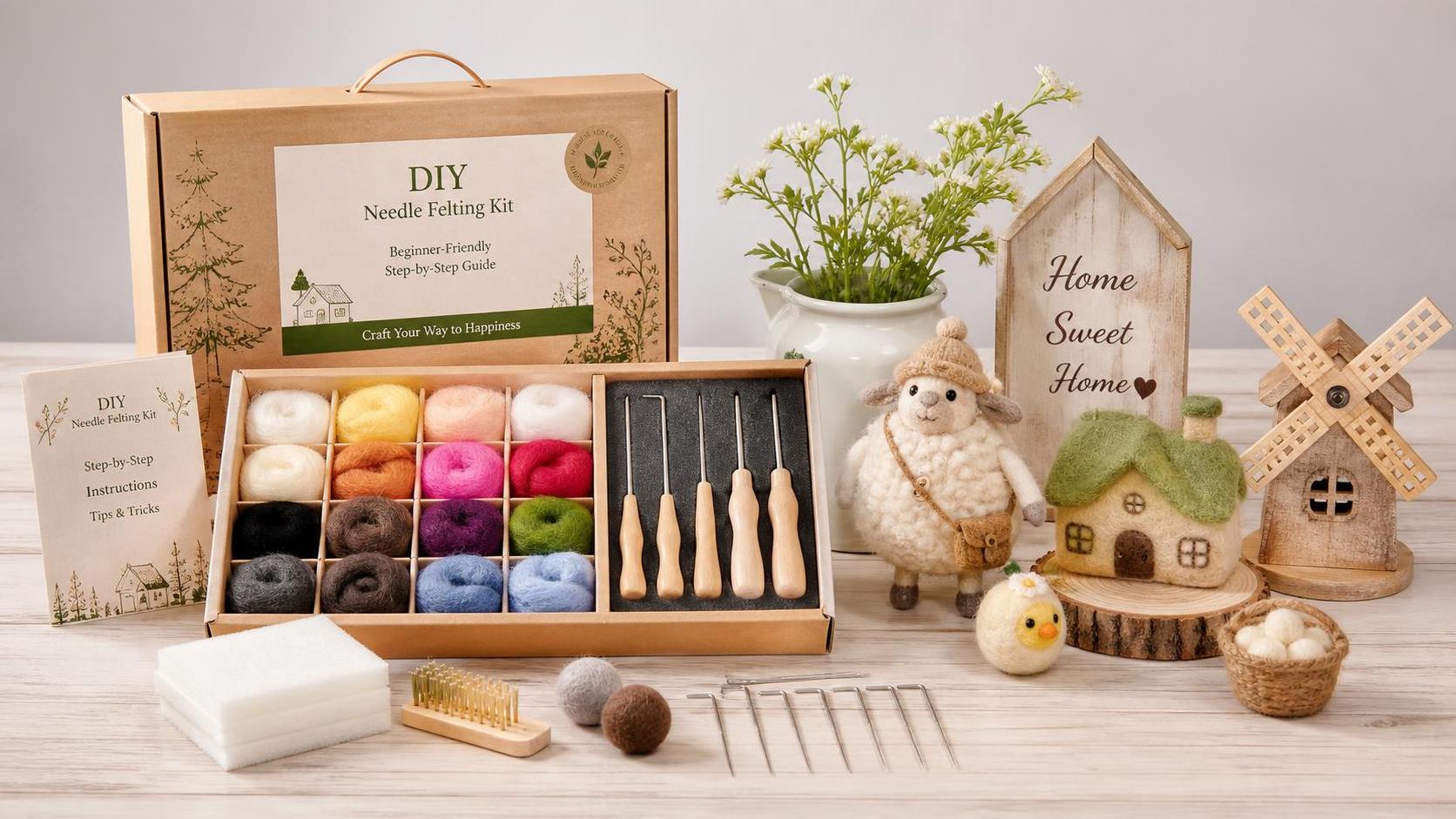
How to Choose a Reliable Wholesale Needle Felting Kits Supplier for Home Decor Projects
A common problem in the home decor trade is that needle felting kits can look similar on a sample sheet but perform very differently once they reach a retail shelf, workshop class, subscription box, or seasonal promotion. Buyers often run into uneven material quality, unclear packing standards, delayed replenishment, or product styles that do not match the tastes of their market.
If you are sourcing from a wholesale needle felting kits supplier, the challenge is usually not just finding a factory that can make kits. It is finding a supply partner that can keep quality stable, communicate clearly, and support product development across changing home decor trends. That becomes even more important when your business depends on repeat orders, giftable presentation, and predictable delivery.
Why this sourcing problem becomes expensive so quickly
Many buyers first notice the issue only after products are already moving through purchasing or sales preparation. On paper, a needle felting kit may include the expected basics: wool, needles, instructions, and simple packaging. In practice, several small problems can appear at the same time. The wool may feel inconsistent from batch to batch, the color set may not match the original approval, the accessory count may vary, or the finished presentation may look less polished than what end customers expect from a home decor craft item.
For retailers and importers, that creates practical pressure. Product pages become harder to standardize. Merchandising teams cannot confidently plan seasonal launches. Customer service teams have to deal with missing parts or unclear instructions. Even when the unit itself is not highly technical, the buying process becomes messy because craft products are judged heavily on texture, appearance, completeness, and ease of use.
In the home decor category, there is another layer to consider: many consumers do not buy needle felting kits only as a hobby supply. They buy them as gift items, family activities, decorative craft projects, or workshop materials. That means packaging style, visual coordination, and product theme matter almost as much as the contents. A supplier that understands only production but not presentation can still create trouble for the buyer.
What usually goes wrong when selecting a wholesale needle felting kits supplier
One common mistake is choosing mainly on quotation without checking how the supplier controls variations across materials and linked production steps. Needle felting kits often involve more than one capability: fiber handling, accessory sourcing, instruction assembly, packaging, and sometimes decorative add-ons for themed collections. If those parts come from loosely managed channels, inconsistency appears quickly.
Another issue is assuming that a supplier who handles general crafts will automatically understand home decor positioning. In reality, buyers in this space often need products that fit farmhouse, seasonal, handmade, rustic, or gift-shop aesthetics. A kit might be technically acceptable and still feel wrong for the shelf because the color mood, inserts, box design, or accessory selection does not align with the final retail environment.
Communication gaps also create avoidable problems. Some suppliers can produce what was asked, but not what was actually needed. For example, a buyer may request a “beginner-friendly kit,” while the supplier interprets that only as fewer parts, not clearer instructions, safer packing, easier shaping, and more forgiving materials. That mismatch causes friction later, especially when the buyer is selling to broad consumer groups rather than experienced crafters.
How to assess a wholesale needle felting kits supplier before placing real volume
A more reliable approach is to evaluate the supplier through a practical checklist instead of a single price comparison. This is especially useful if you are sourcing for chain retail, e-commerce bundles, gift stores, craft distributors, or home decor collections that need a coordinated product story.
- Check production background. A supplier with stable factory resources is usually easier to work with than one relying on fragmented, shifting subcontractors. In our sector, sourcing strength often comes from a combination of owned production and managed partner factories. Located in Ningbo, a well-known foreign trade city in China, our company works with two certified factories: one focused on handicrafts and another specializing in wooden and fabric crafts. We also maintain long-term cooperation with certified partners in ceramics, plastics, and handwoven products, which helps keep quality and supply more stable across mixed craft categories.
- Review category fit. Ask whether the supplier regularly works with home decor crafts, handcrafted items, and daily-use products. This matters because product decisions in this industry are often aesthetic as well as functional. A supplier familiar with home decor buying patterns is more likely to understand seasonal themes, giftable presentation, and coordinated collections.
- Confirm material consistency. For needle felting kits, ask direct questions about wool texture, color matching, part count control, needle packing, and how replacement or replenishment is handled if something is out of tolerance.
- Inspect packaging logic. Do not limit your review to outer box appearance. Check whether the internal arrangement protects needles, keeps loose materials organized, and makes the kit easier for the end user to understand. For retail programs, packaging convenience can affect complaints as much as the craft content itself.
- Test communication on revisions. Before larger orders, make at least one small adjustment request and see how the supplier responds. That reveals whether the team can work through changes in a controlled way or whether every revision becomes a new misunderstanding.
Why broader craft capability matters even when you are buying needle felting kits
At first, it may seem that a wholesale needle felting kits supplier only needs to manage soft materials and simple assembly. In actual buying programs, that is often too narrow a view. Home decor businesses frequently build collections, not isolated items. A seasonal assortment may include felt craft kits, hanging signs, wood decor, small gift accessories, table accents, or workshop-friendly items under one theme.
That is where a broader production network becomes useful. If your supplier can support wooden crafts, fabric crafts, and complementary decorative categories through controlled factory resources, you gain more flexibility when expanding from a single SKU into a more complete program. It also reduces the coordination burden on your side, because product development, quality expectations, and shipping arrangements can be aligned more efficiently.
For example, buyers planning spring or farmhouse-themed assortments may pair soft handmade activities with decorative entryway products. In that context, an item such as Wooden Large Vertical Love Grows Here Porch Decor, Garden Welcome Standding Sign Garden Decor Sign, Welcome Wall Sign for Yard Porch Farmhouse Door Decoration fits naturally into the same merchandising conversation. It is a wooden decor piece designed for porches, gardens, entryways, walls, and general home decor use, with a double-sided layout, rustic lettering, a soft green background, white wood-grain styling, and a farmhouse-style finish. It is not a replacement for a felting kit, but it shows how coordinated sourcing across craft categories can help buyers create a stronger themed offer.
A practical sourcing process that reduces surprises
If you are still comparing options, it helps to treat supplier selection as a process instead of a one-time quote request. Buyers who skip this step often end up solving preventable problems later.
- Start with the end market. Define whether the kits are for beginners, gift buyers, workshop organizers, online hobby shoppers, or home decor retailers. This changes what “good quality” actually means.
- List the non-negotiables. Include component completeness, packaging format, instruction clarity, safety handling for needles, color consistency, and target presentation style.
- Ask for comparable samples. Review samples against a fixed checklist rather than casual impressions. Compare appearance, hand feel, assembly logic, and packing discipline.
- Discuss production boundaries early. Ask what the supplier controls directly, what is sourced through partners, and how quality is checked before shipment.
- Test a themed extension. If your business may later expand beyond kits, ask whether the supplier can also support adjacent decor items in wood, fabric, ceramics, plastics, or handwoven materials.
- Clarify replenishment and lead-time habits. The key issue is not only the first order. It is whether the supplier can continue supporting repeat demand without visible quality drift.
This process does take more effort upfront, but it usually saves time later because it forces both sides to define expectations clearly. In a category where visual quality and user experience matter, that clarity is worth more than a small initial price difference.
Signs that the supplier is a better long-term fit
A strong supplier relationship in this category usually feels organized rather than dramatic. Questions are answered with specifics. Product limitations are explained directly. Material and packaging options are discussed in relation to the end market, not only factory convenience. Sample feedback leads to structured revisions instead of vague promises.
It also helps when the supplier understands that home decor craft buyers often need flexibility. Some programs require rustic styling, some need softer seasonal color palettes, and others need items that sit comfortably in gift shops or craft retail displays. A supplier with experience across handicrafts, wooden crafts, and related decor categories is usually in a better position to support those shifts without resetting the whole sourcing process each time.
The same logic applies when you are combining hands-on products with decorative merchandise. A spring assortment, for example, may benefit from including warm, welcoming decor elements alongside activity-based products. An item with a pre-attached rope, double-sided design, and cheerful garden-inspired artwork can support that theme without making the range feel disconnected. Used carefully, related decor products help buyers build a more complete display story.
How to avoid repeating the same sourcing mistakes
Most repeat problems come from weak definitions, not bad intentions. When a buyer says “good quality” and a supplier says “yes,” both sides may still mean different things. The easiest way to avoid that is to convert general expectations into visible checkpoints. Instead of requesting “better packaging,” specify insert layout, labeling expectations, protective structure, and how components should be presented when the customer opens the box.
It also helps to keep product development close to actual market use. If the kit is meant for casual home crafting, the presentation should feel approachable. If it is intended for a curated home decor shop, the styling needs to be more deliberate. If it is part of a broader seasonal collection, then adjacent items should align in mood and finish. That is one reason many buyers prefer working with suppliers that can support not only one product type but also related handmade and decorative categories.
Finally, do not treat the first acceptable sample as the end of evaluation. The more important test is whether the supplier can maintain that standard repeatedly. Stable supply chains are built through repeatable control, not one good shipment.
Frequently Asked Questions
What should I ask a wholesale needle felting kits supplier first?
Start with category experience, production control, sample handling, packaging options, and how consistency is checked across repeat orders. Those questions usually reveal more than a price sheet.
Is it better to work with a supplier that only makes felting kits?
Not always. A specialized supplier can be useful, but for home decor buyers, a broader craft network can be an advantage when you need coordinated seasonal products, gift items, or mixed-material assortments.
How can I tell whether a supplier understands the home decor market?
Look at how they discuss styling, presentation, seasonal themes, material appearance, and related product categories. A supplier focused only on basic assembly may miss the visual and merchandising side of the business.
Should I source matching decor items from the same supplier?
If the supplier has reliable capability across related categories, that can simplify development and keep your assortment more consistent. The right choice depends on whether the supplier can maintain quality across those categories, not just offer them.
Final takeaway
Choosing a wholesale needle felting kits supplier is usually less about finding the lowest quote and more about reducing friction across quality, presentation, communication, and repeat supply. In the home decor trade, those details affect whether a product line feels dependable and market-ready. A supplier backed by stable factory resources, certified partner capacity, and experience across handicrafts, wooden crafts, fabric crafts, and related decor categories is often better equipped to support that kind of buying decision.
If you are comparing options now, use a checklist, test communication early, and review the supplier’s broader craft capability alongside the kit itself. That approach gives you a more realistic basis for selecting a partner who can support not just one order, but an ongoing home decor sourcing program.


