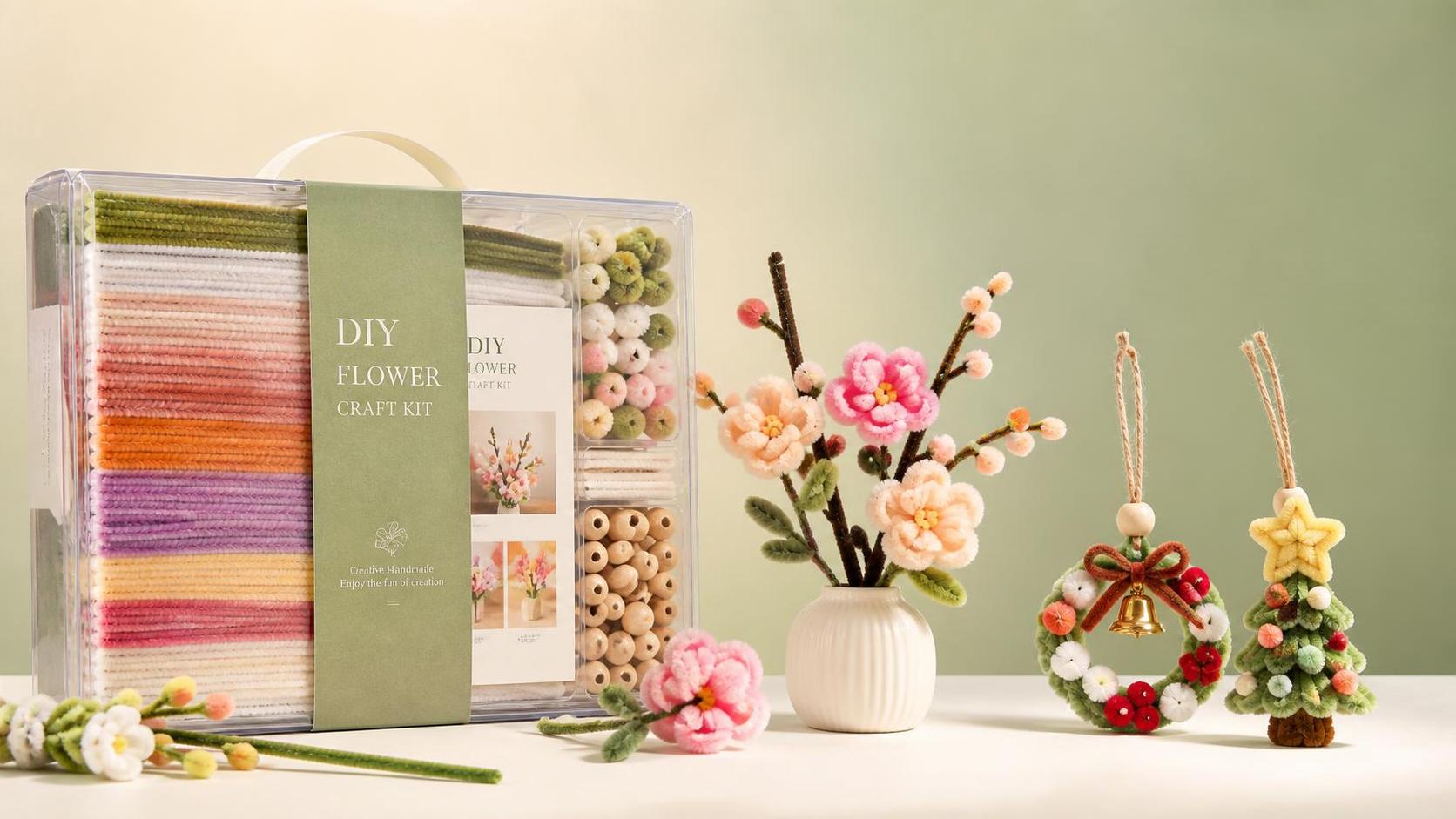
Custom Pipe Cleaner Craft Kits for Retailers: Building DIY Collections That Feel Fresh and Sellable
A well-chosen craft kit does more than fill a shelf. It invites a child to make something with their hands, gives a parent an easy rainy-day activity, helps a gift-shop customer find a small but thoughtful present, and gives seasonal displays a little more color and movement. For retailers, custom pipe cleaner craft kits are a flexible way to bring those moments into a DIY, toy, stationery, gift, or home décor assortment.
Pipe cleaners may look simple, but they are one of the most adaptable materials in the craft category. Their soft, bendable structure makes them approachable for beginners, while their range of colors, textures, and shapes leaves room for more imaginative projects. When packaged as a complete kit, they become easier to merchandise, easier to understand, and far more convenient for shoppers who do not want to collect materials one by one.
For retail buyers, the opportunity is not just about selling craft supplies. It is about creating a product range that can follow the rhythm of the year: everyday creative play, school holiday projects, birthday gifts, classroom activities, and seasonal decorating themes.
Why Pipe Cleaner Kits Belong in More Than the Kids’ Craft Aisle
Traditional pipe cleaners, also known as chenille stems, are familiar to many consumers. They bend without requiring special tools, pair naturally with pom-poms, wooden beads, felt pieces, googly eyes, paper shapes, and fabric accessories, and can be transformed into animals, flowers, ornaments, mini characters, and decorative accents.
That versatility gives retailers several ways to position a kit. A bright animal-making set may fit a children’s activity section, while a neutral botanical kit can suit a lifestyle or home décor display. A small pack with a few guided projects works well near checkout counters or inside gift shops. Larger activity boxes can be promoted before school breaks, family events, or long weekends.
Unlike a single finished decoration, a DIY kit also carries an experience. Customers are not simply purchasing an object; they are choosing an activity, a moment of creativity, or something they can make together. This is especially valuable in product categories where shoppers increasingly look for items that feel personal rather than disposable.
Useful retail segments for custom pipe cleaner craft kits
- Children’s creative play: simple projects with clear visual instructions and age-appropriate components.
- Seasonal activity ranges: Halloween creatures, spring flowers, Christmas ornaments, Valentine’s characters, or Easter animals.
- Gift and impulse-buy areas: compact, attractively packed kits for party bags, stocking fillers, and small gifts.
- Home and lifestyle stores: decorative flower stems, tabletop accents, miniature wreath details, and craft-led display ideas.
- Educational and event channels: activity packs intended for group projects, workshops, classrooms, or family craft sessions.
The same underlying material can serve different customers when the theme, project difficulty, package size, and visual identity are thoughtfully adjusted. That is where customization becomes more useful than a generic assortment.
What “Custom” Should Mean for a Retail-Ready Craft Kit
Customization is not limited to adding a logo to a box. For a retailer, it should begin with the intended shopper and the specific retail environment. A discount store may need a concise project with a clear value message. A museum gift shop may prefer a design connected to nature, animals, or local cultural themes. A home décor retailer may want muted tones and display-worthy finished pieces instead of primary-color craft supplies.
A custom pipe cleaner kit can be developed around several practical choices:
- Color palettes, including seasonal colors, pastel collections, metallic accents, or natural-inspired shades.
- Pipe cleaner length, thickness, density, and finish, such as standard chenille, glitter, metallic, or patterned styles.
- Coordinated components such as pom-poms, foam shapes, wooden parts, felt details, beads, paper cards, or fabric accessories.
- Project themes ranging from friendly animals and fantasy figures to floral décor and holiday ornaments.
- Instruction formats, including illustrated cards, step-by-step leaflets, project boards, or QR-linked inspiration pages.
- Packaging designed for peg hooks, shelves, counter displays, gift presentation, or multipack merchandising.
The best kit is usually not the one with the most pieces. It is the one where every item has a purpose. When customers open a package and immediately understand what they can create, the activity feels inviting rather than overwhelming. For younger makers, fewer steps and recognizable results matter. For older children, hobbyists, or décor-focused buyers, an open-ended kit may be more appealing because it leaves space for individual ideas.
Start with the Finished Creation, Not the Material List
Retailers sometimes begin sourcing by asking for a certain number of pipe cleaners in assorted colors. That can work for a general craft pack, but it does not necessarily create a memorable kit. A stronger development process starts with the end result: What should the shopper be able to make? Where will they use it? Why would they choose this theme now?
For example, a Halloween range can move beyond basic black-and-orange stems by offering a family activity that turns into a window or party display. A kit might include pipe cleaners for spiders, bats, pumpkin characters, and little witch hats, while the surrounding collection can include reusable window decorations. To create a fuller seasonal story at retail, it can be paired with Halloween Window Gel Clings Ghost Pumpkin Bat Witch Cat Boo Blood Decal Stickers for Halloween Home Party Window Decorations. Made from soft TPR material, these reusable, non-toxic clings adhere easily to windows, glass, and doors, then can be removed and stored for the next season. Together, the products offer a simple craft-and-decorating occasion rather than two unrelated Halloween items.
This type of coordinated thinking can improve cross-merchandising. A customer who is preparing for a party or decorating a porch is already in the mood to add playful details. Pipe cleaner crafts can become table decorations, treat-bag toppers, hanging ornaments, or a pre-party activity for children, while gel clings provide an immediate visual impact on doors and windows.
Balancing Creativity with Safety, Usability, and Pack Integrity
Craft kits are tactile products, so quality is felt quickly. Pipe cleaners should be easy to bend and twist while retaining their shape. Wire ends need to be properly finished and contained within the fuzzy material. Decorative components should be consistent in color and size, while small parts require appropriate consideration for the intended age group and relevant market requirements.
Retail buyers should also consider how the kit performs after it leaves the factory. A beautiful package is less useful if components shift excessively in transit, instruction sheets become crumpled, or a customer cannot tell whether the contents are complete. Packaging needs to protect the materials while keeping the presentation clear.
Useful quality questions during development include:
- Does the pipe cleaner hold curves, loops, and simple structures without unraveling?
- Are colors aligned with the approved sample and consistent across components?
- Are the pieces easy to separate and use, particularly for young children and parents supervising an activity?
- Does the instruction artwork match the actual contents of the kit?
- Will the inner packaging keep items organized on a retail shelf and during transport?
- Are labeling, warnings, and packaging requirements reviewed for the target market?
A kit does not need to be complicated to feel considered. A neat compartment tray, a resealable pouch for leftover pieces, or a well-designed project card can make a meaningful difference to the customer experience.
Seasonality Is Valuable, but an Assortment Needs Breathing Room
Seasonal craft products can create strong visual moments in-store, particularly when they are introduced early enough for customers to plan parties, school activities, and home decorating. Halloween, Christmas, Easter, and back-to-school periods all offer clear opportunities for themed pipe cleaner crafts.
However, a retailer that relies only on short seasonal windows may miss the wider appeal of year-round creativity. The most resilient assortment often combines a few evergreen kits with seasonal capsules. Animal themes, flower-making activities, rainbow projects, fantasy characters, and simple jewelry or accessory crafts can remain relevant throughout the year. Their packaging can still be refreshed through color, project examples, or limited-edition add-ons.
For home décor and gift retailers, this balance is particularly useful. A neutral floral kit may be displayed in spring, but it can also work as a creative weekend gift at other times of the year. Likewise, a winter craft project does not have to be exclusively Christmas-focused; snowflakes, woodland animals, and cozy miniature scenes may extend the selling period.
Packaging Should Explain the Experience in Seconds
Many retail decisions happen quickly. A shopper may be holding a child’s hand, comparing several gift options, or looking for a last-minute activity before a weekend. Packaging therefore needs to answer a few immediate questions: What can I make? What is inside? Who is it for? How difficult is it? Is this suitable as a gift?
Clear project photography or illustration is often more persuasive than a long list of materials. If the kit contains enough parts for several projects, that should be communicated visually. If it is an open-ended creativity pack rather than a guided activity, show a small range of possible outcomes instead of suggesting there is only one correct design.
Retailers with private-label programs may also want packaging that sits naturally within their wider assortment. This can include house colors, a recognizable craft sub-brand, sustainable-material messaging where applicable and supportable, or a consistent system for indicating age guidance and skill level. The goal is not to make every package identical; it is to make the range easy for customers to recognize and shop.
A Sourcing Partner Must Connect More Than One Material Category
Pipe cleaner kits often look straightforward until a concept includes multiple materials: chenille stems, fabric shapes, wooden pieces, printed cards, plastic components, boxes, and perhaps ceramic or woven accents for a more decorative project. Managing these elements separately can create inconsistencies in timing, quality, and packaging.
Our company is located in Ningbo, China, a major city for international trade, and operates two certified factories: one focused on handicrafts and another specializing in wooden and fabric crafts. Alongside this direct manufacturing capability, we work with established partner suppliers in ceramics, plastics, and handwoven products. These partners are certified by major European and American retail chains, helping support a stable supply chain across the different material categories that a broader craft or home décor collection may require.
This network matters when a retailer wants more than a basic bag of stems. It allows product development to consider the full kit, its packaging, and related seasonal décor products as part of one coordinated sourcing conversation. Rather than treating each component as an isolated purchase, buyers can work toward a cohesive collection with compatible colors, materials, and merchandising logic.
Questions Worth Asking Before You Approve a Custom Kit
A careful brief can prevent avoidable changes later. Before moving from concept to sample approval, retailers should be ready to discuss their sales channel, intended customer, target price position, launch timing, and the role the kit will play in the assortment. Is it designed to drive impulse purchases, increase basket size, support a seasonal feature, or become a repeatable core line?
It is also helpful to decide whether the project should be tightly guided or creatively open. A complete step-by-step kit reduces uncertainty for customers. A more flexible set encourages repeat use and can appeal to customers who already enjoy crafting. Neither approach is automatically better; the right choice depends on the shopper and retail context.
Custom pipe cleaner craft kits work best when they feel easy to begin, satisfying to complete, and appropriate to the occasion in which they are sold. With thoughtful theme development, practical materials, dependable packaging, and coordinated sourcing, retailers can turn a familiar craft staple into a collection that brings color, activity, and a welcome sense of possibility to the shelf.
Leave A Message
If you are interested in our products and want to know more details, please leave a message here, we will reply you as soon as we can.

We specialize in supplying home decor, handicrafts, and daily necessities.


