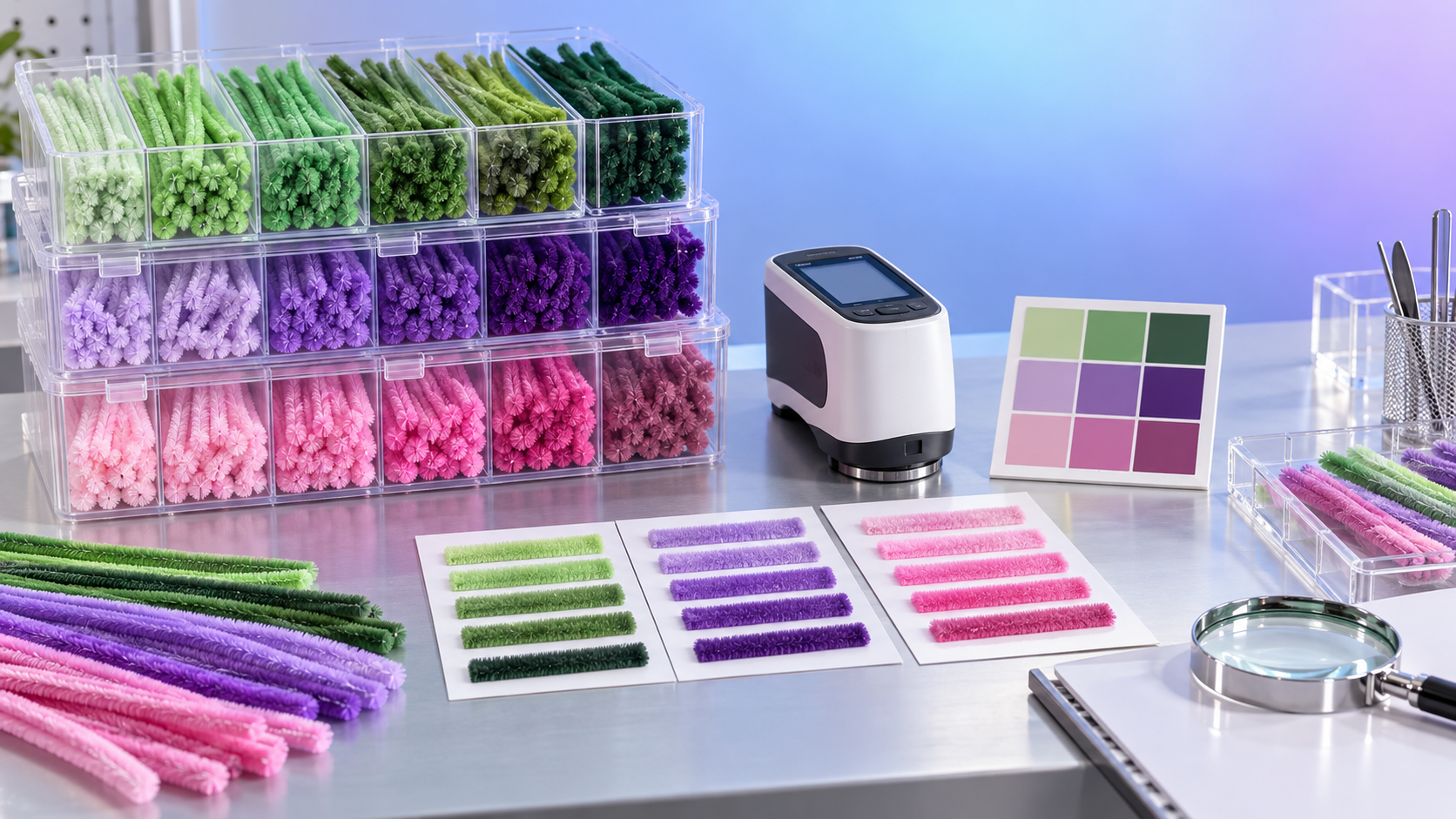
Color variation in pipe cleaner DIY kits is rarely caused by a single mistake. A kit may look inconsistent because the fiber pile, dye lot, wire construction, packaging environment, and visual evaluation method do not behave as one controlled system. The practical issue is not simply whether two stems “look different,” but whether the difference exceeds the approved color standard, changes the intended finished craft, or signals a broader material-control problem.
For kits containing multiple colors, the highest-risk failures are usually obvious shade shifts within one nominal color, uneven dye uptake along a stem, color transfer between components, and a mismatch between approved artwork and the packed product. These failures can generate consumer complaints even when the pipe cleaners remain functional. In a safety review, they also justify checking whether the supplier’s dye and raw-material controls are sufficiently traceable.
The fiber surface determines how color is absorbed
A pipe cleaner is generally made from a twisted wire core holding short textile fibers or chenille pile. The visible color comes from those fibers, not from the metal wire. Different fiber compositions accept dyes differently. Rayon, cotton, polyester, nylon, and blended synthetic fibers have different dye affinities, dyeing temperatures, pretreatment needs, and wash-fastness behavior. Even when two fibers are sold under the same commercial color name, their final appearance can differ in brightness, depth, and undertone.
Fiber variation can occur when a factory changes a pile supplier, introduces a substitute fiber blend, or uses material from a new production lot without re-validating the color formula. A darker or duller appearance may be caused by the substrate rather than by an incorrect dye recipe. Surface texture also matters: denser pile reflects light differently from a sparse pile, making one stem appear deeper in color even if the dye concentration is similar.
This is why a visual approval based only on a small swatch is weak control for a finished DIY kit. The approved reference should identify the substrate type, pile density, and finish condition, not merely state “green,” “pink,” or “purple.”
Dye-lot differences are normal production variables, not automatically acceptable variation
Colorants are manufactured in lots, and their strength can vary within the supplier’s stated tolerance. Dye houses compensate by adjusting formulation and dosage, but this depends on accurate incoming testing and consistent process control. If the dye formulation is transferred from one production run to another without calibration, a visible shade difference can result.
Process variables add further uncertainty. Water quality, bath pH, temperature profile, dyeing time, liquor ratio, drying conditions, and the loading level of the dyeing equipment can all affect shade development. Inadequate mixing can create end-to-end or side-to-side variation. When the chenille pile is dyed before it is twisted around the wire, variation may originate in the yarn stage; when coloration or finishing occurs after assembly, compression and pile orientation can influence the visual result.
“Same Pantone reference” is not enough evidence that the delivered product is color-consistent. Pantone or another color reference can define the intended target, but it does not replace a written tolerance, a specified illuminant, an approved physical standard, and a defined inspection method. Without those controls, a factory and buyer may both believe they are following the same color requirement while judging the product under different lighting and against different samples.
Lighting can create apparent variation that is still commercially significant
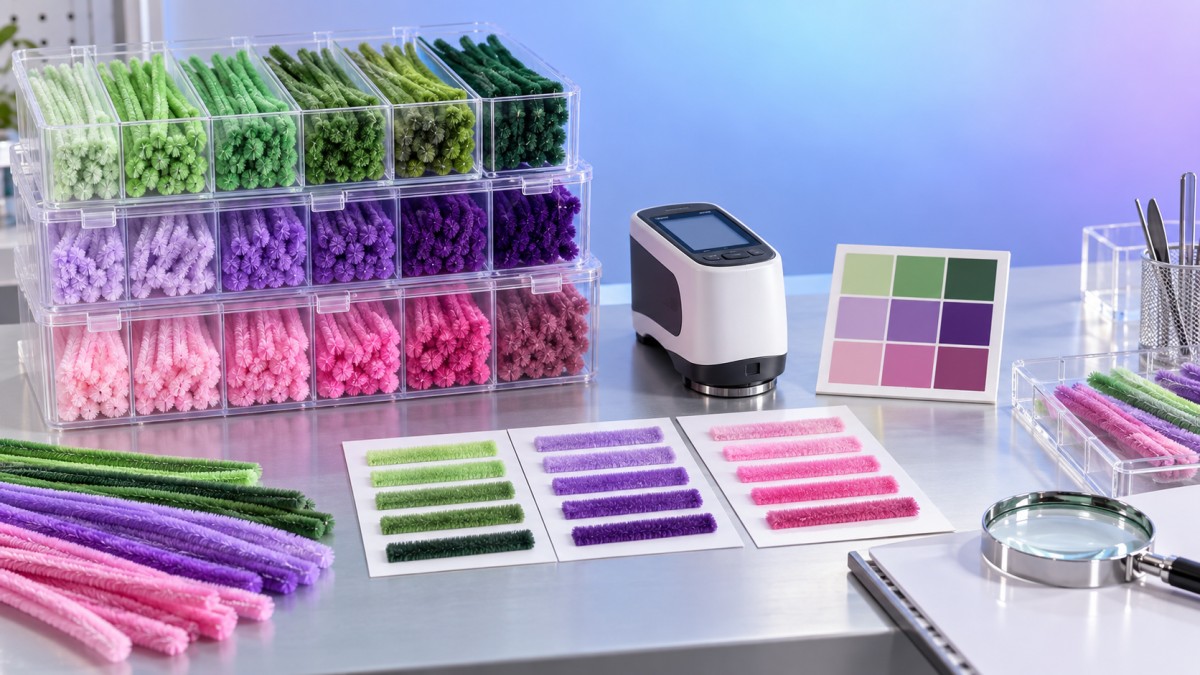
Pipe cleaner kits are often assessed under office lighting, warehouse lighting, daylight, or retail-store LEDs. Some color differences become much more visible under one light source than another. This effect, known as metamerism, occurs when two materials appear matched under one illuminant but diverge under another because their spectral reflectance differs.
For bright craft colors, fluorescent shades, pastels, and dark navy or purple tones, uncontrolled lighting can lead to false acceptance or false rejection. A production sample that passes under cool white LED light may appear noticeably redder, greyer, or bluer in daylight. The remedy is not to demand a perfectly identical appearance under every condition; that may be unrealistic. The remedy is to define the lighting condition that governs approval and to flag colors where metamerism needs additional review.
Instrumental color measurement can improve repeatability, especially when paired with visual assessment by trained inspectors. CIELAB values and Delta E calculations provide a numerical way to compare a sample with an approved standard. However, a number alone should not overrule appearance. The pile surface is textured, stems are cylindrical, and the viewer sees both fiber orientation and shadowing. Measurement should therefore use a consistent sampling method, multiple readings, and a tolerance that has been validated against what is visibly acceptable in the finished kit.
Color variation can be introduced after dyeing
A correctly dyed pipe cleaner can still change before it reaches the customer. Heat, humidity, ultraviolet exposure, pressure, and contact with adjacent materials can alter appearance. Long-term compression during packing may flatten the pile, changing light reflection and making stems look darker or less vivid. High humidity can affect certain fiber finishes and increase the risk of dye transfer if fixation was incomplete.
Migration is particularly relevant in multi-color kits. Red, blue, black, and highly saturated dyes may stain pale components when packed tightly under warm or humid conditions. A color-transfer issue is not simply an aesthetic defect: it can indicate insufficient washing, poor dye fixation, incompatible inks, plasticizers, adhesives, or packaging materials. Inspection should include a practical contact assessment after the kit has been stored under conditions representative of transport and warehouse exposure.
Paper inserts, foam, clear plastic trays, twist ties, and decorative accessories can also affect perceived color. Transparent packaging with a yellow or blue tint alters the appearance of bright components. Printed carton graphics may make a product seem less saturated by contrast. When a kit includes other decorative materials, each component should be reviewed both individually and in the final packed configuration.
For example, reusable TPR window decorations may be specified as vibrant and non-toxic, such as the 6Pcs Easter Window Clings Jelly Stickers Bunny Egg Flower Chick Butterfly for Glass Windows Mirrors Refrigerators, Easter Window Decorations for Home Office Party. They should not be treated as a direct color benchmark for textile chenille stems: TPR and textile fibers reflect light differently, use different pigments or colorants, and respond differently to storage conditions. In mixed seasonal craft assortments, each material category needs its own approved color standard and migration review.
Sampling plans often miss the real pattern of variation
A common inspection error is to pull several stems from the top of one bag and compare them with a single approval sample. This may miss lot-to-lot differences, machine-position variation, or unevenness within a packed assortment. If a kit has repeated nominal colors, inspection should compare stems across inner bags, cartons, and production periods rather than treating one local sample as representative.
Color control should distinguish among several defect patterns:
- Lot mismatch: one batch of yellow differs from another batch labeled as the same yellow.
- Within-stem unevenness: streaking, pale sections, darker ends, or patchy pile.
- Component mismatch: stems intended to form one design do not visually coordinate with included pom-poms, fabric pieces, or printed instructions.
- Transfer and fading: color moves to neighboring materials or loses strength after heat, light, rubbing, or moisture exposure.
- Reference mismatch: the factory matches a digital image or old sample rather than the current controlled master.
The acceptance method should reflect the defect type. A small Delta E difference may be tolerable across a large production lot if it is not visible in normal use, while a slight stain on a white accessory may be unacceptable because it is immediately noticeable. The relevant question is whether the variation changes the kit’s intended appearance, usability, or safety status.
Safety control starts with traceability, not with color appearance alone
Color inconsistency does not prove that a product is unsafe. Yet uncontrolled color production makes it harder to demonstrate that the approved material system has been maintained. If a supplier cannot identify the fiber lot, dye lot, production date, and packing lot associated with a shipment, a later investigation into staining, odor, restricted substances, or consumer complaints becomes unnecessarily difficult.
For products intended for children or likely to be handled extensively, colorant management should be connected to the applicable destination-market requirements and the product’s age grading and intended use. The relevant chemical assessment depends on the finished product and market, rather than on a generic claim that a dye is “safe.” Material declarations, test documentation where required, and change-control procedures should align with the actual sales region and product classification.
A reliable pipe cleaner DIY kit supplier should be able to show a controlled color approval process, retain reference samples, identify the source of key raw materials, and notify the buyer before changing fiber composition, dye source, finish, or packing material. The most useful records are not decorative certificates; they are lot-linked documents that allow a questionable shipment to be compared with the approved standard and traced back through production.
Preventing repeat variation requires controls at the right points
Color approval is strongest when it begins before mass production. The master sample should be protected from fading and contamination, dated, version-controlled, and available to both parties. Digital photos can support communication but should not become the sole standard because screens, compression, and white-balance settings distort color.
During production, incoming fiber and dye lots need verification against the approved specification. First-off samples should be assessed before full packing, with particular attention to bright colors, whites, pastel shades, and colors known to be difficult to reproduce. Final inspection should include both loose stems and packed kits, because compression, bag film, and adjacent colors can create defects not visible at the component stage.
When variation is found, the corrective action should identify whether the cause lies in material substitution, dye-house control, visual standard management, packing exposure, or inspection sampling. Re-sorting finished goods may solve an immediate shipment issue, but it does not correct an unstable color-control system. The durable solution is a traceable specification that links the intended appearance to the actual fibers, dyes, processing conditions, and final packaging used to make the kit.
Leave A Message
If you are interested in our products and want to know more details, please leave a message here, we will reply you as soon as we can.

We specialize in supplying home decor, handicrafts, and daily necessities.


